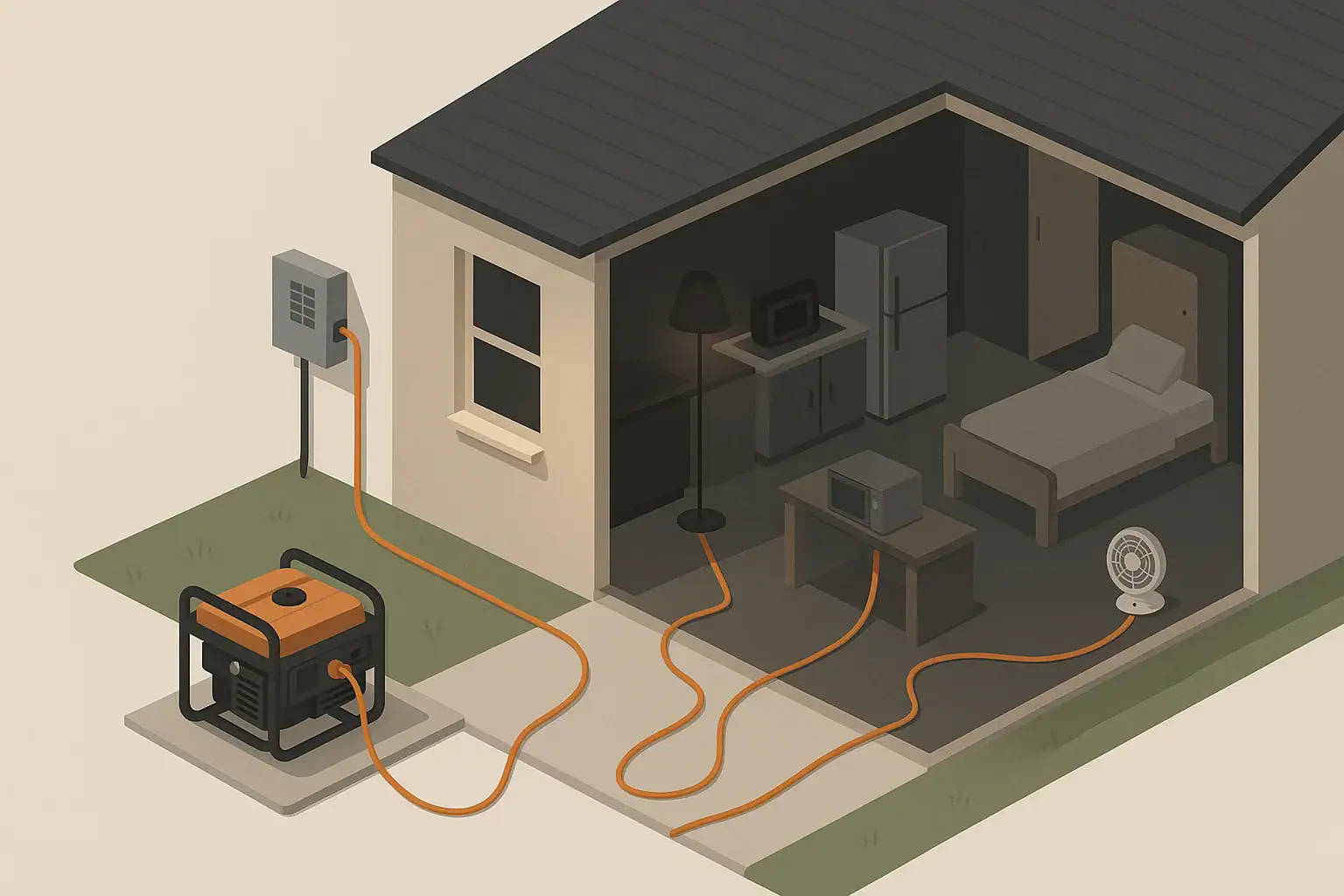
Generator transfer switch vs extension cords: the short answer
If you want to power multiple circuits in your home safely during an outage, a transfer switch is the safer, more complete solution. It lets you connect a generator to selected household circuits without backfeeding the grid.
Extension cords can be acceptable for short-term, limited use with a portable generator, but only when you plug appliances directly into the cords and follow strict safety rules. Extension cords should never be used to backfeed a home’s electrical system through a wall outlet or dryer plug.
In simple terms:
- Use a transfer switch when you want to power built-in home circuits (lights, furnace blower, well pump, fridge on its own circuit, etc.).
- Use heavy-duty extension cords only for a few portable appliances you can safely reach from where the generator sits outdoors.
Why a transfer switch is usually safer and more practical
A transfer switch is a dedicated device installed by a qualified electrician. It connects your generator to selected circuits in your breaker panel and isolates your home from the utility lines when the generator is running.
Key safety and convenience benefits:
- Prevents backfeed: A properly installed transfer switch disconnects your home from the utility before connecting the generator. This helps protect utility workers and neighbors from energized lines. The OSHA portable generator safety quick card warns against backfeeding through outlets.
- Uses your existing wiring: You flip selected breakers and your normal outlets, lights, and hard-wired equipment work as usual.
- Handles hard-wired loads: Furnaces, well pumps, some sump pumps, and many built-in appliances cannot be plugged into extension cords. A transfer switch can power these circuits if sized correctly.
- Clear load management: You can label which circuits are generator-powered and turn them on or off at the switch, helping you avoid overloading the generator.
- Less trip hazard: Fewer cords snaking through doorways and windows.
Because a transfer switch directly affects your home’s electrical system, it should be installed and inspected by a qualified electrician and must follow local codes. Local requirements and utility rules take priority over any general advice.
When extension cords can be reasonable instead
Extension cords can make sense if:
- You only need to run a few portable items (for example, a refrigerator, a small freezer, a lamp, a fan, or to charge phones).
- You are using a small portable generator for short outages.
- You cannot install a transfer switch yet, but still want some backup capability.
However, they must be used correctly to reduce fire, shock, and carbon monoxide risks. The U.S. Consumer Product Safety Commission guidance on portable generators stresses using proper cords and keeping generators outside.
Safe use of extension cords with a generator
Follow these principles whenever you power appliances directly from a generator with extension cords:
1. Generator placement and carbon monoxide safety
- Run the generator outdoors only, far from doors, windows, and vents. The CDC carbon monoxide safety guidance warns that generators should never be used inside homes, garages, basements, or partially enclosed spaces.
- Install working carbon monoxide alarms on every level of your home, with batteries checked regularly.
- Point the exhaust away from the house and neighboring buildings.
2. Choosing the right extension cords
- Use heavy-duty, outdoor-rated cords sized for the load and length (for many household needs, 12-gauge or thicker is often recommended; check your generator and appliance manuals).
- Make sure cords have a grounding prong (three-prong plug) and are in good condition with no cuts, cracks, or taped repairs.
- Use cords with a rating (in amps or watts) that meets or exceeds the appliance’s requirements.
3. How to connect appliances
- Plug the extension cord into the generator’s outlet, then plug the appliance into the cord.
- Keep cords as short as practical to reduce voltage drop and tripping hazards.
- Route cords away from standing water, doorways, and walkways when possible.
- Do not plug one extension cord into another (no “daisy chaining”).
- Do not run cords under rugs, carpets, or through tightly closed windows or doors where they can overheat or be damaged.
4. What never to do with extension cords
- Never plug a generator into a home outlet, dryer outlet, or any other receptacle using a “backfeed” cord. This is dangerous and usually violates electrical code.
- Never try to power hard-wired equipment (like a furnace or well pump) by improvising connections. Those loads should be on a properly designed transfer switch or interlock system.
- Never exceed the generator’s rated output. Add up the running watts of all connected devices and stay under the continuous rating in the manual.
Comparing transfer switches and extension cords
This overview can help you decide which approach fits your home backup plan.
| Aspect | Transfer switch | Extension cords |
|---|---|---|
| Main use | Power selected home circuits | Power individual portable appliances |
| Installation | Requires electrician and permits in many areas | No installation; just proper cord selection and routing |
| Safety | Helps prevent backfeed; uses existing wiring | Safe for direct appliance use when done correctly; unsafe if used to backfeed |
| Hard-wired loads | Can power items like furnace blower or well pump (if sized correctly) | Generally cannot power hard-wired equipment |
| Convenience | Flip breakers; use normal switches and outlets | Run cords to each appliance; more clutter and tripping risk |
| Upfront cost | Higher (equipment plus electrician labor) | Lower (quality cords only) |
Planning a safer home backup setup
Before buying equipment, think through what you truly need to power during an outage and for how long.
1. List your priority loads
Common priorities include:
- Refrigerator and freezer
- Furnace blower or boiler controls (for homes that need heat)
- Sump pump or well pump
- Medical devices that must stay powered (talk with your medical provider about backup needs)
- Internet modem/router, phone chargers, a few lights, and a fan
Mark which items are plug-in appliances and which are hard-wired. Hard-wired items usually push you toward a transfer switch or similar solution.
2. Match your generator and connection method
- If you only need a few plug-in items and can safely run cords, a small portable generator with heavy-duty cords may be enough.
- If you need to run a furnace, well pump, or several circuits, talk with a licensed electrician about a transfer switch or panel interlock that meets local code.
- Always follow the generator manufacturer’s instructions for grounding, fuel storage, and maintenance.
3. Coordinate with local rules and utilities
- Some areas require permits or inspections for transfer switches or generator interlocks.
- Utilities may have specific rules about how backup power can connect to your home.
- When in doubt, your local building department or a licensed electrician is the best source for what is allowed where you live.
Frequently asked questions
Do I legally need a transfer switch for a portable generator?
Many places do not require a transfer switch if you only plug appliances directly into the generator with proper extension cords. However, if you want to power any part of your home’s wiring system (circuits in the breaker panel), most electrical codes require an approved transfer switch or interlock device. Local code and your utility’s rules control what is allowed, so check with your local building department or a licensed electrician.
Can I use a generator interlock instead of a transfer switch?
Some homes use a panel interlock kit instead of a separate transfer switch. An interlock is a mechanical device that prevents the main breaker and the generator breaker from being on at the same time. Whether this is allowed depends on your panel type, local code, and utility rules. A qualified electrician should select and install any interlock and confirm it is approved in your area.
Is it safe to run a refrigerator on an extension cord from a generator?
It can be, if you use a heavy-duty, grounded, outdoor-rated cord that is properly sized for the fridge’s amperage and the length of the run, and the generator is placed outside with good ventilation. Plug the cord into the generator, then the refrigerator into the cord. Do not run the cord through standing water or under rugs, and do not exceed the generator’s rated output.
How far from the house should I place my generator?
Guidance varies, but many safety agencies recommend keeping generators at least several feet away from doors, windows, and vents, with the exhaust pointed away from the home. The CDC generator safety fact sheet emphasizes keeping generators outside and far from openings where exhaust could enter. Follow your generator manual and local fire or building codes, which take priority.
- Simple checklists and realistic planning
- Water, power, lighting, and pantry basics
- Family plans (kids, pets, seniors) and seasonal prep
Affiliate disclosure
As an Amazon Associate, we earn from qualifying purchases. Some links on this site may be affiliate links. If you buy through these links, we may earn a small commission at no extra cost to you. This helps support our content. Learn more.