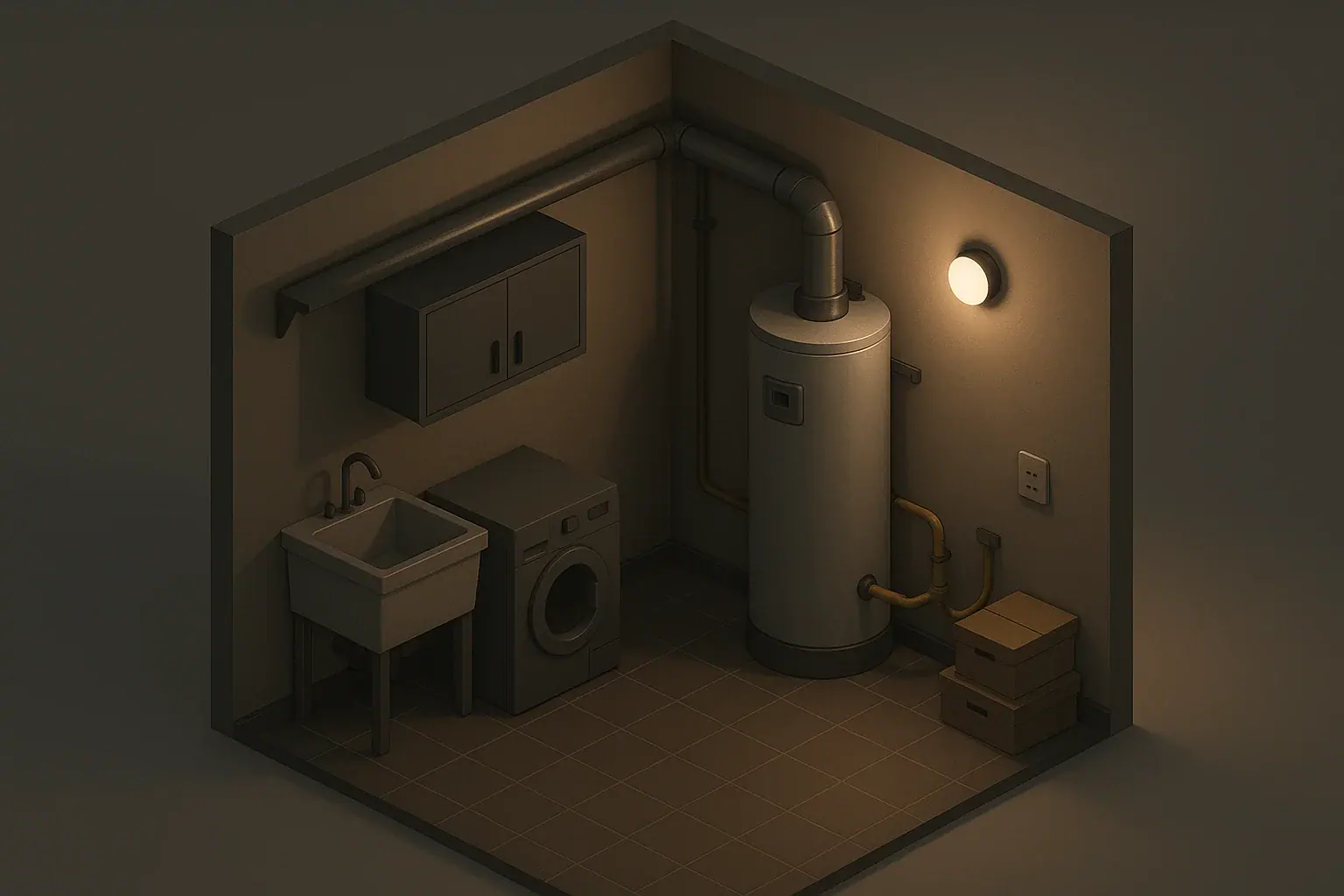
Quick answer: will your gas water heater still work?
Some gas water heaters keep working in a power outage, and some do not. It depends on how the burner is lit and whether the unit relies on electricity for controls or venting.
In general:
- Older or basic tank-style gas heaters with a standing pilot often keep heating water during an outage.
- Newer tank-style heaters with electronic ignition or powered vents usually stop working when the power goes out.
- Most gas tankless (on-demand) heaters need electricity for their controls and will not run without power.
The rest of this guide helps you figure out what you have and what you can safely do until power returns.
How to tell what kind of gas water heater you have
Before a storm or planned outage, take a few minutes to identify your heater type. If you are unsure, ask a licensed plumber or your gas utility for help. Do not open covers or panels you are not familiar with.
1. Tank vs. tankless
- Tank-style: A tall cylinder, usually 30–80 gallons, with cold and hot pipes on top.
- Tankless: A smaller box on the wall with pipes entering the bottom or sides, no large storage tank.
2. Pilot type: standing pilot vs. electronic ignition
Look for labels or diagrams on the front panel or inside the small access door near the bottom. Common clues:
- Standing pilot (more likely to work without power): Instructions mention a pilot light that stays on all the time. The control knob often has positions like OFF / PILOT / ON.
- Electronic ignition (needs power): Labels mention electronic ignition, spark ignition, or hot surface igniter. There may be a digital display or electronic controls.
Never remove burner covers or try to trace wiring if you are not trained. When in doubt, assume it needs electricity and treat it as unavailable during an outage.
3. Venting: natural draft vs. power vent
- Natural draft: A simple metal vent pipe going up from the top of the tank into a chimney or vertical vent. These may work in an outage if they also have a standing pilot.
- Power vent or direct vent with fan: A fan housing on top or on the side with an electrical cord plugged into an outlet, often venting out a side wall in plastic or metal pipe. These need electricity to run safely and typically shut down without power.
What usually happens in an outage, by heater type
These are common patterns, but your specific model may behave differently. Always follow the manufacturer’s instructions on the unit itself.
Standing-pilot tank-style gas heater, natural draft
- Likely outcome: Often continues to heat water during a power outage.
- Why: The pilot flame and gas valve are usually mechanical and do not rely on house power.
- Limitations: You still only have as much hot water as the tank can store. Heavy use will cool the tank faster than it can reheat.
Electronic-ignition tank-style heater or power-vented heater
- Likely outcome: Usually stops heating when power fails.
- Why: The ignition system, safety controls, or vent fan require electricity.
- What you get: You may have some hot water left in the tank from before the outage, but no new heating until power returns.
Gas tankless (on-demand) heater
- Likely outcome: Most will not run without electricity.
- Why: They rely on electronic controls, sensors, and ignition to manage gas flow and temperature.
- What you get: Usually no hot water at all once power is out.
Safety basics during a power outage
Gas appliances can be hazardous if used or modified incorrectly. In an outage, focus on staying safe and avoiding improvised fixes.
- Do not try to bypass safety devices or power a vent fan or controls with homemade wiring.
- Do not use a gas oven or stove to heat your home. This can lead to carbon monoxide buildup and fire risk. The U.S. Consumer Product Safety Commission warns against using ovens or ranges for space heating; see their guidance on carbon monoxide safety.
- Watch for gas leaks: If you smell rotten eggs, hear hissing, or suspect a leak, leave the building, avoid switches or flames, and contact your gas company or emergency services from a safe location.
- Do not relight pilots in unsafe conditions: If you are unsure how to relight a pilot or the area smells like gas, wait for a qualified technician.
- Ensure carbon monoxide alarms have power: Use models with battery backup and test them regularly. The U.S. Environmental Protection Agency explains symptoms and prevention in its page on carbon monoxide poisoning.
Using remaining hot water wisely
Even if your heater stops heating, you may have a limited supply of hot or warm water stored in the tank. Use it carefully.
- Prioritize essentials: Handwashing, quick sponge baths, and washing dishes that must be cleaned.
- Shorten showers: If you still have hot water, keep showers brief and stagger them so the tank can recover if your heater is still operating.
- Avoid full tub baths: They use a large share of stored hot water at once.
- Mix with cold water: Use the lowest comfortable temperature to stretch your supply.
Water in a standard residential water heater is generally safe for normal household use if the system is intact and your local water supply is not under a contamination advisory. If local authorities issue a boil-water notice, follow their instructions even if the water feels hot from the tap.
What you should not do to get hot water
During an outage, it can be tempting to improvise. Some methods are unsafe or unreliable.
- Do not move or tip the water heater to access water. This can damage gas lines, venting, or plumbing.
- Do not use outdoor grills, camp stoves, or portable gas heaters indoors to heat water. These can produce dangerous levels of carbon monoxide and increase fire risk. The U.S. Centers for Disease Control and Prevention warns against using grills or camp stoves inside homes or garages; see their guidance on carbon monoxide after emergencies.
- Do not run a generator in a garage, basement, or near windows or doors to power your water heater or other appliances. Follow the placement and ventilation advice from local authorities and the generator manufacturer.
- Do not modify gas piping or venting yourself. Any changes should be done by a licensed professional.
Planning ahead for future outages
You cannot control when the power goes out, but you can plan how your home handles it.
- Read your heater’s manual: Look for sections on power requirements, ignition type, and operation during outages.
- Label the heater type: Add a small note near the heater (for your household) such as “Needs power for hot water” or “Pilot type – may work in outage,” based on the manual or a professional’s advice.
- Keep water storage on hand: Store some potable water for drinking and basic hygiene so you are not relying only on hot tap water.
- Consider backup power carefully: If you plan to use a generator or battery system, have a qualified electrician design it so it is safe and code-compliant. Follow guidance from your local building department and utility.
- Know when to call a pro: If your heater will not relight after power returns, smells like gas, makes new noises, or shows error codes, contact a licensed plumber or the manufacturer’s service line.
For broader home outage preparation, federal guidance such as Ready.gov’s power outage checklist offers practical steps for supplies, communication, and safety.
Frequently asked questions
Can I relight my gas water heater during a power outage?
If you have a standing-pilot heater that normally works without electricity, you may be able to relight the pilot following the instructions on the unit’s label. Only do this if there is no gas smell and you feel comfortable following the steps exactly. If you are unsure, or if your heater uses electronic ignition, wait for power to return and contact a professional if it still does not work.
Is it safe to turn my gas water heater off during a long outage?
Many people turn the temperature dial to its lowest setting or to “vacation” mode during long absences or extended outages. Whether you should fully shut off gas to the heater depends on the model and your comfort level. If you plan to shut off gas, follow the instructions on the unit and be prepared to have a qualified technician relight and inspect it afterward.
Will my gas water heater restart automatically when power returns?
Some electronic-ignition heaters and tankless units will restart on their own once power and gas supply are stable. Others may need you to reset them or clear error codes. If your heater does not resume normal operation, check the instructions on the unit and call a licensed technician if needed.
Does a gas water heater work during a gas outage but with power on?
No. If gas service is interrupted or shut off by the utility, a gas water heater will not produce hot water even if electricity is available. Do not attempt to restore gas service yourself; wait for the gas company or a qualified professional.
- Simple checklists and realistic planning
- Water, power, lighting, and pantry basics
- Family plans (kids, pets, seniors) and seasonal prep
Affiliate disclosure
As an Amazon Associate, we earn from qualifying purchases. Some links on this site may be affiliate links. If you buy through these links, we may earn a small commission at no extra cost to you. This helps support our content. Learn more.