Why Every Household Needs a Simple Family Emergency Plan
Emergencies are rarely dramatic movie moments. More often, they are short-term disruptions: a power outage after a storm, a water main break, smoky air from a distant wildfire, or a winter ice storm that makes driving unsafe. A family emergency plan turns these stressful moments into situations you can manage calmly.
A good plan is not about predicting every possible event. It is about agreeing on a few simple routines, roles, and communication habits so everyone knows what to do when something feels off. This is especially important for households with kids, pets, seniors, or roommates who keep different schedules.
Instead of focusing on worst-case scenarios, think in terms of likely local issues and short-term disruptions you could face where you live: power, water, extreme temperatures, or needing to leave home for a day or two. Your plan can stay very basic and still make a big difference.
Core Elements of a Family Emergency Plan
Most families do not need a complicated binder. A one-page plan and a few shared habits are usually enough. Focus on these core pieces:
1. Who Is in the Plan
Start by listing everyone who lives in your household and anyone who spends regular time there, such as:
- Adults and teens
- Children, including ages (younger kids may need simpler instructions)
- Older adults who may need extra help
- People with mobility, vision, or hearing challenges
- Pets (dogs, cats, small animals, service animals)
This helps you consider who might need assistance and who can take on more responsibility.
2. Likely Scenarios for Your Home
Next, think about what is realistic where you live, in your type of housing:
- Apartment or condo: Fire alarms, elevator outages, power loss, neighbors close by.
- Single-family house: Power and internet outages, fallen branches, frozen pipes.
- Regional issues: Winter storms, hurricanes, heatwaves, heavy smoke days, minor flooding.
Pick three to five scenarios you want your plan to cover first. For many households, this list includes: power outage, water disruption, severe weather, and needing to leave home briefly.
3. Meeting Places and Contact Points
Choose a few simple meeting locations and contact ideas:
- Right outside home: A safe spot if there is a fire alarm or gas smell.
- Neighborhood spot: A nearby landmark in case you cannot go back into the building.
- Out-of-area contact: A relative or friend in another town you all know to text or call if local phone lines are busy.
Write these down and keep a copy where everyone can see it.
4. Basic Communication Plan
Agree on how you will try to reach each other during a disruption:
- Primary method: text message, group chat, or phone call.
- Backup method: leaving a note at home, talking to a neighbor, or using a landline if available.
- Check-in rule: for example, “If something big happens and we are apart, send a quick text to the group chat and to our out-of-area contact.”
Even simple steps like keeping phones more than half charged when bad weather is expected can help.
Example values for illustration.
| Planning task | Why it matters | Notes to consider |
|---|---|---|
| List household members and pets | Clarifies who needs help and who can help | Include ages and any mobility or sensory needs |
| Choose indoor and outdoor meeting spots | Prevents confusion if you must leave quickly | Pick places easy for kids to recognize |
| Pick an out-of-area contact | Gives everyone a shared person to update | Share their number on paper and in phones |
| Agree on local likely scenarios | Keeps planning realistic and focused | Start with power, water, weather, and smoke |
| Decide primary communication method | Reduces repeated calls and mixed messages | Text often works better than calls in busy times |
| Assign roles for adults and older kids | Makes actions automatic during stress | Match roles to age, comfort, and ability |
| Locate key shutoffs and exits | Helps you act quickly and safely | Ask landlord or building staff if unsure |
Assigning Roles: Making Responsibilities Clear and Fair
In an emergency, small decisions can feel big. Clear roles prevent everyone from asking, “What should I do?” at the same time. Roles do not have to be rigid, but they give you a starting point.
Adult and Teen Roles
Adults and responsible teens can share key jobs. You might assign primary and backup people for each:
- Information lead: Follows local updates, checks weather or air quality when needed.
- Home safety lead: Knows where flashlights, fire extinguisher, and shutoff points are.
- Kid and pet support: Focuses on keeping children and animals calm and together.
- Supplies organizer: Keeps a simple home kit and any go-bags in order.
Rotate roles occasionally so everyone knows the basics, but keep them simple enough that people remember their part.
Kid-Friendly Roles
Kids often feel better when they have a job that fits their age. Emphasize safety and reassurance, not responsibility for big decisions. Possible kid roles include:
- Grabbing their own flashlight or comfort item when asked.
- Helping count water bottles or shelf-stable snacks.
- Staying with a designated adult or older sibling.
- Helping keep pets nearby under adult supervision.
Practice these tasks in low-stress situations, like a family “practice night” with the lights briefly turned off.
Considering Seniors and Neighbors
If you live with or near older adults, include them in your planning where possible. Simple steps might include:
- Agreeing on who checks on them during outages or storms.
- Knowing how they prefer to communicate (phone, text, in person).
- Keeping any essential mobility aids easy to reach.
In apartments and condos, knowing one or two neighbors you can check in with and support can help everyone stay calmer.
Routines for Common Home Emergencies
Routines are short, repeatable actions you follow almost automatically. They reduce decision fatigue and keep everyone on the same page. You can build routines around scenarios like power outages, water disruptions, extreme temperature days, and smoky air.
Power Outage Routine
Power outages are among the most common home disruptions. A simple routine might look like this:
- Pause and take a breath so kids see you staying calm.
- Use a flashlight or battery lantern instead of open flames.
- Check if it is just your home or the whole block by looking outside.
- Unplug sensitive electronics to avoid damage when power returns.
- Keep refrigerator and freezer doors closed as much as possible.
- Use a pre-agreed group text or call to check on family if you are apart.
If you use any powered medical equipment, talk in advance with your health provider, equipment supplier, building management, or local authorities about backup options that fit your situation.
Water Disruption Routine
Water issues can come from pipe breaks, local repairs, or weather. A practical response might include:
- Turning off taps that were left running when pressure dropped.
- Using stored water for drinking and basic hygiene if you keep a small supply.
- Using disposable plates or simple meals that reduce dishwashing.
- Following local guidance about boil-water notices or safe use.
Even in small spaces, a modest amount of stored water can make a disruption more manageable. Choose containers you can lift and store safely.
Extreme Weather and Temperature Routines
Storms, heatwaves, and cold snaps often come with some warning. Use that time to shift into a gentle “readiness” routine:
- Charge phones and any small backup power sources.
- Top off basic supplies like drinking water, easy foods, and pet needs.
- Locate flashlights, extra layers, or cooling items like fans or damp cloths.
- Plan to stay in the coolest or warmest room, depending on conditions.
- Check on neighbors or relatives who may be more affected by temperature changes.
If you live in areas with strong seasonal weather, add simple seasonal steps to your plan, such as covering drafty windows before a winter storm or closing blinds in advance of a heatwave.
Smoke and Air Quality Routines
Wildfire smoke or poor air quality can affect comfort and breathing, even far from an active fire. Common-sense steps include:
- Keeping windows and doors closed when smoke is heavy.
- Limiting strenuous indoor activity during the worst periods.
- Using any available ventilation or filtration features in your home according to manufacturer instructions.
- Planning quiet indoor activities for kids to reduce restlessness.
Follow local updates for guidance on when air quality is improving or worsening.
Practice Drills for Families, Kids, and Pets
Practice drills turn your written plan into something everyone can remember. They also reveal small gaps, like a flashlight with dead batteries or a door that is hard to open. The goal is not perfection; it is steady, low-stress practice.
Designing Calm, Age-Appropriate Drills
Keep drills short and routine, not scary. A few ideas:
- Fire drill: Practice leaving the home using your planned exit, then going to the outside meeting spot.
- Power-out practice: Turn off most lights for 10–15 minutes in the evening and use flashlights or lanterns.
- “Can we find it?” game: Time how long it takes to find the main flashlight, water, and basic kit items.
- Communication drill: Ask older kids to send a check-in text to the family group chat from another room.
Tell kids in advance that it is a practice, not a surprise. The idea is to build confidence, not fear.
Including Pets in Drills
Pets can be stressed by alarms and sudden changes. Simple practice helps:
- Practice calmly putting pets into carriers or on leashes.
- Keep a spare leash and basic pet supplies near the door or go-bag spot.
- Teach older kids how to safely hold or guide pets when adults ask.
Make drills quick and reward pets afterward so they associate carriers and leashes with something positive.
How Often to Practice
You do not need constant drills. Many families find that:
- Doing a home exit drill once or twice a year is enough to remember the route.
- Reviewing the meeting spots and contact person every few months keeps them fresh.
- Checking flashlights, basic supplies, and battery-powered items at the start of each season catches small problems early.
If your household changes — a new roommate, a new baby, or a move to a different building — do a short refresher.
Short-Term Evacuation: Go-Bags and Quick Departure Plans
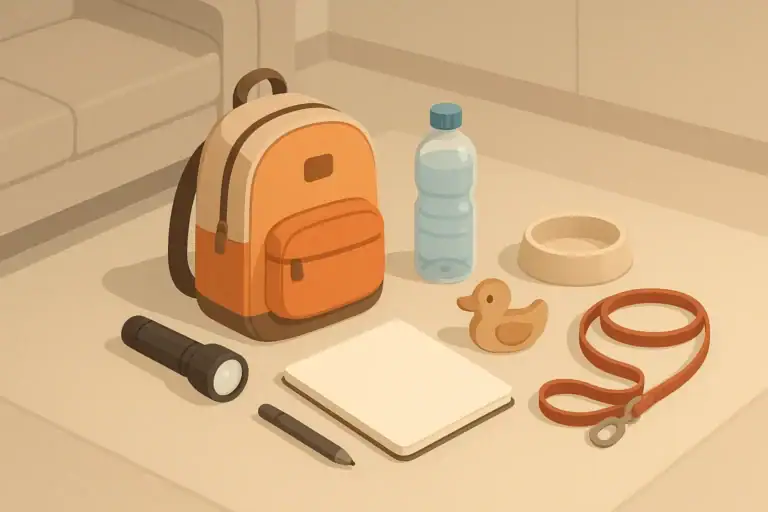
Sometimes the safest choice is to leave home for a short period, such as during a building issue, local flooding risk, or a strong storm. A practical go-bag plan focuses on essentials you would want if you could not return home the same day.
What to Prioritize in a Go-Bag
Your go-bag does not need to be heavy or complex. Focus on items that support comfort, communication, and basic needs:
- Copies of key documents or photos of them stored securely.
- Basic hygiene items like wipes, toothbrush, and any personal supplies.
- Small flashlight and spare batteries.
- Simple, long-lasting snacks and a water bottle.
- Weather-appropriate clothing layers and a lightweight blanket or scarf.
- Any regularly used medications in their original packaging, rotated so dates stay current.
- Pet leash, small amount of pet food, and a collapsible bowl if you have animals.
Store go-bags in a consistent location, such as a closet near the main exit, so you can grab them without searching.
Planning for Vehicles, Transit, and No-Car Households
Departure plans look different depending on how you usually get around:
- Car owners: Keep some fuel in the tank when major storms are forecast, and know at least two routes out of your neighborhood.
- Public transit users: Check typical bus or train lines that serve safer areas or community centers during disruptions.
- No-car households: Consider who you might share a ride with, or where you could safely walk in bad weather if needed.
Keep any paper maps, transit cards, or key fobs in predictable spots so you are not searching for them while trying to leave.
Example values for illustration.
| Food type | Storage tip | Rotation interval idea | No-cook or low-cook use |
|---|---|---|---|
| Canned beans | Store in a cool, dry cabinet | Use and replace during monthly meals | Rinse and mix with spices and oil |
| Canned vegetables | Group cans by type for easy grabbing | Plan a simple “can night” every few months | Eat as a side dish or mixed into salads |
| Nut butters | Keep sealed until needed, then refrigerate if required | Buy sizes you can finish within a few weeks of opening | Spread on crackers or fruits |
| Dry crackers or flatbreads | Seal tightly after opening to limit moisture | Check for staleness every couple of months | Pair with spreads, canned fish, or beans |
| Instant oats | Store in a pest-resistant container | Use regularly at breakfast and restock | Prepare with hot water if available, or soak longer in cool water |
| Shelf-stable milk or alternatives | Rotate by placing newer cartons at the back | Check dates at the start of each season | Drink alone or mix into cereal or oats |
| Ready-to-eat canned soups | Choose varieties you enjoy in regular meals | Use some during colder months and replace | Eat at room temperature if heating is not available |
Keeping Your Plan Updated Without Extra Stress
A family emergency plan is a living document. It works best when it reflects your current household, not the way things were years ago. Keeping it updated can be simple:
- Review it briefly at the start of each season or when clocks change.
- Update contact numbers and meeting spots after any move or major change.
- Replace used or expired items in your basic home kit during normal shopping trips.
- Add notes about what worked well or felt confusing after any real event or drill.
Most of the value comes from talking through the plan a few times and practicing the basics. With clear roles, simple routines, and occasional drills, your family can approach common disruptions with more confidence and less stress.
Frequently asked questions
How often should we review and update our family emergency plan?
Review your family emergency plan at the start of each season or when clocks change, and update it after any household change such as a move, new roommate, or baby. Also revisit the plan after a real event or drill to note what worked and fix any gaps.
What should be in a short-term go-bag for a family emergency plan?
A short-term go-bag should include copies or photos of key documents, basic hygiene items, a small flashlight with spare batteries, water, nonperishable snacks, weather-appropriate clothing, and any regularly used medications. If you have pets, include a leash, a small supply of food, and a collapsible bowl, and keep the bag near your main exit for quick access.
How can I include pets and older adults in a family emergency plan?
Designate who will check on pets and older adults during outages or storms, keep mobility aids and pet supplies within easy reach, and practice calmly loading pets into carriers or leashes. Include simple written notes about medication schedules, communication preferences, and any assistance steps so helpers know what to do.
What’s the best way to communicate with family members during a local outage?
Agree on a primary method such as group text or a family call, plus an out-of-area contact for backups if local networks are congested. Have secondary options like leaving a note, using a landline if available, or checking with a neighbor, and try to keep phones charged when bad weather is expected.
How do we practice emergency drills with young children without causing fear?
Keep drills short, calm, and clearly presented as practice; focus on simple, age-appropriate tasks like finding a flashlight or going to the outside meeting spot. Use positive reinforcement and avoid surprises so children build confidence and familiarity rather than anxiety.
Recommended next:
- Simple checklists and realistic planning
- Water, power, lighting, and pantry basics
- Family plans (kids, pets, seniors) and seasonal prep