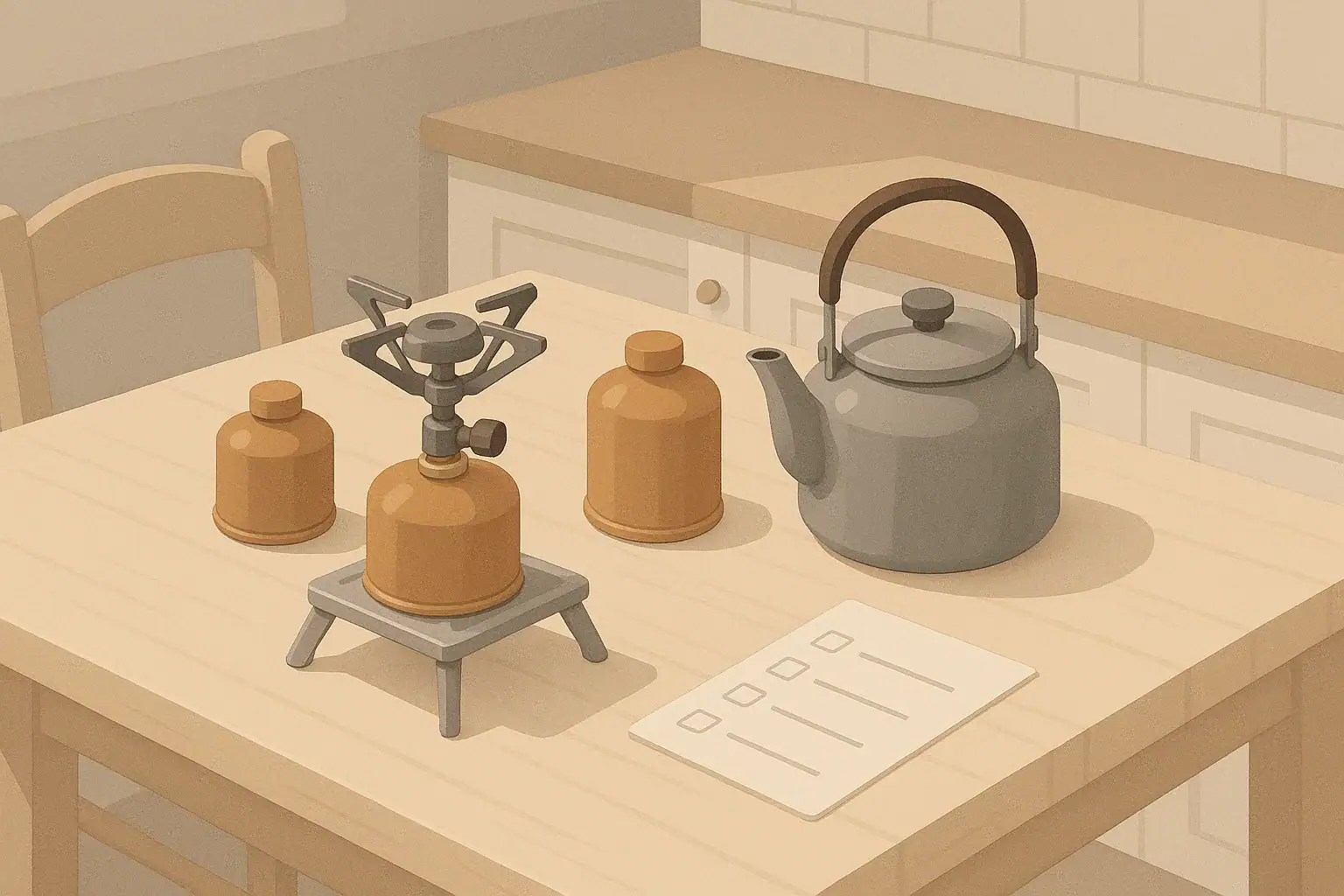
How to quickly estimate your emergency cooking fuel
When the power goes out, most people want to know one thing: do we have enough fuel to heat water and cook simple meals until the power comes back?
This guide gives you a simple, practical way to estimate how much emergency cooking fuel you need, based on:
- How many people you are feeding
- How many days you want to cover
- What kind of fuel and stove you use
- How often you plan to boil water or cook
Because stoves, pots, and weather vary a lot, this is only a planning estimate, not a guarantee. In an emergency, always follow your stove and fuel manufacturer’s instructions and any directions from local authorities.
Step 1: Decide your minimum emergency cooking plan
For short outages, you usually do not need to cook full meals like normal. A simple “minimum plan” is enough for most households:
- Hot meals: 1–2 simple hot meals per person per day (oatmeal, soup, rice-and-beans, pasta, canned chili, etc.).
- Hot drinks: 1–2 cups of hot water per person per day (tea, coffee, cocoa, instant soup).
- Boiled water: Only if your tap water is unsafe and you do not have stored or bottled water.
Write down your plan:
- Number of people in your household: P
- Number of days you want to cover: D
- Hot meals per person per day: M (usually 1 or 2)
- Hot drinks per person per day: H (usually 1 or 2)
Then estimate:
- Total hot meals: P × D × M
- Total hot drinks: P × D × H
Example: 3 people, 3 days, 2 hot meals and 1 hot drink each per day:
- Meals: 3 × 3 × 2 = 18 hot meals
- Drinks: 3 × 3 × 1 = 9 hot drinks
Step 2: Estimate how long each meal or boil takes
Next, estimate how many minutes of burner time you need for each task. These are rough planning numbers for small emergency stoves and typical pots:
- Boil 1 liter (about 1 quart) of water: 8–12 minutes
- Heat a simple canned meal: 5–10 minutes
- Cook pasta or rice: 15–25 minutes total (including boiling and simmering)
- Make hot drinks for 2–4 people at once: 8–12 minutes (one pot of water)
To keep things simple, you can use this conservative rule of thumb:
- Average hot meal: 20 minutes of burner time
- Hot drinks for the household (per round): 10 minutes of burner time
Using the earlier example (18 meals, 9 drinks):
- Meal time: 18 × 20 minutes = 360 minutes
- Drink time: 9 × 10 minutes = 90 minutes
- Total burner time: 450 minutes (about 7.5 hours)
If you expect to boil extra water for safety, add more time. The U.S. Centers for Disease Control and Prevention (CDC) explains when and how to boil water safely on its page on boil water advisories.
Step 3: Convert burner time into fuel needs
Different fuels burn at different rates. Instead of exact numbers, use simple planning ranges and aim for extra margin. Below are very rough estimates for common home emergency setups, assuming careful use and some wind protection.
Small butane or propane canister stoves
These are the single-burner tabletop stoves often used for camping or tabletop cooking. Fuel comes in small metal canisters.
- Planning estimate: 1 small canister for every 2–4 hours of burner time.
- For conservative planning, assume 1 canister ≈ 2 hours of useful cooking time.
Using the 7.5 hours from our example and the conservative 2-hour estimate:
- 7.5 hours ÷ 2 hours per canister ≈ 4 canisters (round up).
20 lb backyard propane cylinder with a compatible stove
Some people use a standard 20 lb propane cylinder (like for a grill) with a compatible camp stove or grill. Actual runtime varies widely by burner size and heat setting.
- For simple emergency cooking (not running a large grill on high), a 20 lb cylinder can often support many days of light use.
- For planning, you can treat 1 full 20 lb cylinder as more than enough for a week of basic meals for a small family, if you cook efficiently and avoid long, high-heat grilling.
If you rely on a 20 lb cylinder, your main concern is safe storage and safe use, not running out during a short outage.
Liquid fuel camp stoves (white gas, etc.)
Liquid fuel stoves use refillable tanks. Fuel use depends on stove design and flame setting.
- As a rough planning idea, many users treat 1 liter of liquid fuel as enough for several hours of cooking on a small stove.
- For conservative planning, assume 1 liter ≈ 2–3 hours of real cooking time.
With 7.5 hours of burner time and a conservative 2 hours per liter:
- 7.5 hours ÷ 2 hours per liter ≈ 4 liters of fuel (round up).
Solid fuel tablets and similar products
Solid fuel tablets are usually for very short-term or backpack use. They are helpful for boiling small amounts of water but are not convenient for full-family cooking.
- Planning estimate: 1 tablet to heat a simple meal or boil a small pot of water, depending on the product.
- For a household, they are best as a backup, not your main plan.
Wood and charcoal
Wood and charcoal can cook many meals, but they require outdoor setups, dry fuel, and careful fire safety. Because conditions vary so much, it is hard to give a simple “calculator” for them.
- If you plan to rely on wood or charcoal, assume you will use more fuel than you expect, especially in cold or windy weather.
- Practice on a normal day so you understand how much you actually use.
Step 4: Build in a safety margin
Once you have your estimate, add a buffer. Emergencies rarely go exactly as planned.
- For 1–3 day outages: Aim for at least 50–100% more fuel than your calculation.
- For 4–7 day outages: Aim for at least 2 extra days of fuel beyond your plan.
Using our example (4 canisters):
- With a 50–100% buffer, you would store 6–8 canisters instead of 4.
It is better to have extra fuel you can use for camping or future storms than to run short when you need it most.
Tips to stretch your cooking fuel
How you cook matters almost as much as how much fuel you have. These habits can noticeably extend your fuel supply:
- Use lids: Always cook with a lid on the pot to reduce heat loss.
- Match pot to burner: Use a pot that just covers the flame. Tiny pots on big burners waste heat.
- Shield from wind: Even light wind can greatly increase fuel use. Use a built-in windscreen or a safe, non-flammable shield recommended by your stove’s manufacturer.
- Pre-soak foods: Soaking beans, rice, or pasta can shorten cooking time.
- Batch cooking: Cook larger batches once, then reheat small portions briefly instead of cooking from scratch each time.
- Choose quick-cooking foods: Instant rice, quick oats, and thin pasta use less fuel than dense or dry beans.
- Turn down the flame: Once water boils, a gentle simmer is usually enough.
Safe storage and use of emergency cooking fuel
Fuel can be dangerous if stored or used incorrectly. Fire, burns, carbon monoxide, and explosions are real risks. Follow your stove and fuel instructions first, and local fire codes or landlord rules where you live.
General safety principles
- Never use outdoor-only stoves or grills inside a home, garage, tent, or enclosed porch. This can cause deadly carbon monoxide buildup and fire.
- Cook outside or in very well-ventilated areas as directed by the manufacturer.
- Keep fuel away from open flames, sparks, and heat sources.
- Store fuel out of children’s reach and away from pets.
- Keep a fire extinguisher rated for the types of fires you might face, and know how to use it.
The U.S. Consumer Product Safety Commission (CPSC) offers guidance on carbon monoxide safety and home fire safety. The U.S. Environmental Protection Agency (EPA) also explains carbon monoxide in indoor air.
Butane and small propane canisters
- Store in a cool, dry place, out of direct sunlight.
- Do not store near heaters, pilot lights, or anything that can spark.
- Do not leave canisters in hot vehicles for long periods.
- Check canisters for rust, dents, or leaks; do not use damaged ones.
- Attach and detach canisters exactly as the stove instructions describe.
20 lb propane cylinders
- Store cylinders outdoors, upright, on a stable surface, in a well-ventilated area.
- Keep away from doors, windows, dryer vents, and ignition sources.
- Do not store cylinders in basements, living spaces, or attached garages.
- Close the valve tightly when not in use and use the correct regulator and hose.
- Have cylinders filled or exchanged by qualified providers and follow local rules.
Liquid fuels (white gas, kerosene, etc.)
- Keep in original or approved containers with tight caps.
- Store in a cool, well-ventilated area away from living spaces when possible.
- Refuel stoves only when they are cool and away from open flames.
- Clean up spills immediately and dispose of rags safely according to local guidance.
Wood and charcoal
- Use wood stoves, fire pits, and charcoal grills outdoors only, away from buildings and overhanging branches.
- Never use charcoal grills or campfires inside a home, garage, or enclosed porch.
- Store charcoal and firewood in a dry place to make lighting easier and reduce smoke.
- Fully extinguish coals and ashes before disposal; follow local rules for ash disposal.
Adjusting your plan for your household
Every home is different. Adjust your emergency cooking fuel plan for:
- Young children or older adults: They may need more frequent small meals or warm drinks.
- Medical needs: Some people need warm foods or specific diets. Talk with their healthcare provider about safe backup options.
- Pets: Most pets can eat room-temperature food, but you may want fuel for warming food or water in cold weather.
- Local risks: If your area often has multi-day outages, plan for more days of fuel and consider multiple cooking options.
Local emergency management offices and fire departments often publish guidance tailored to your region’s hazards. When their advice differs from general guidance, follow local instructions.
Frequently asked questions
How much emergency cooking fuel do I need for three days?
For a small household using a single-burner butane or propane canister stove for simple meals and drinks, a conservative estimate is 2–4 small canisters for three days, assuming careful use and wind protection. Use the steps in this guide to total your expected burner time, then round up and add a safety margin.
Can I use my gas stove indoors during a power outage?
Many built-in gas ranges are designed for indoor use, but safety depends on proper ventilation, ignition method, and local rules. Some models should not be used without electric exhaust fans. If you are unsure, check your range’s manual and follow guidance from your gas utility or local fire department. Never use portable outdoor stoves or grills indoors because of fire and carbon monoxide risks.
Is it safe to store extra propane or butane in my apartment?
Many apartment buildings and local fire codes limit or prohibit storing fuel cylinders indoors or on balconies. Before buying extra fuel, check your lease and local fire regulations, and ask your property manager or local fire department what is allowed. If storage is limited, focus on shelf-stable foods that can be eaten cold and smaller, code-compliant fuel amounts.
What if I run out of fuel during an outage?
If you run low on fuel, switch to foods that can be eaten cold or with minimal heating, such as canned goods, nut butters, and shelf-stable snacks. Use remaining fuel only for essential tasks like preparing infant formula, heating critical medical foods, or boiling unsafe water if no safer option exists. Follow any boil-water or safety instructions from local authorities and the CDC’s guidance on boiling water during emergencies.
- Simple checklists and realistic planning
- Water, power, lighting, and pantry basics
- Family plans (kids, pets, seniors) and seasonal prep
Affiliate disclosure
As an Amazon Associate, we earn from qualifying purchases. Some links on this site may be affiliate links. If you buy through these links, we may earn a small commission at no extra cost to you. This helps support our content. Learn more.