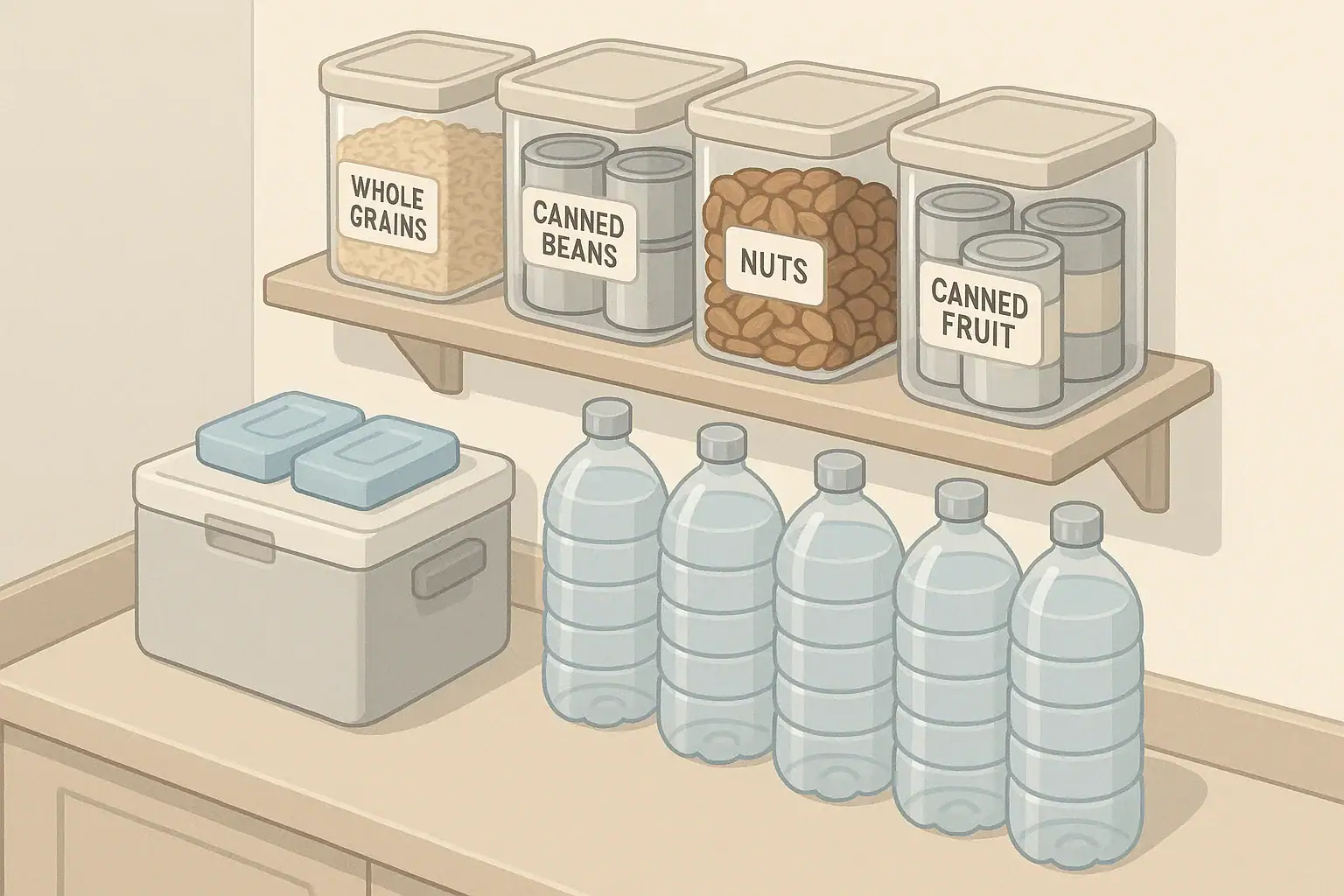
Why a diabetes-friendly emergency pantry matters
If you live with diabetes, a basic emergency kit is not enough. Power outages, storms, or short supply disruptions can make it harder to keep blood sugar steady, especially if you rely on refrigerated food, insulin, or devices that need charging.
A diabetes-friendly emergency pantry focuses on three things:
- Carbs you can count and portion reliably
- Hydration options that do not spike blood sugar
- No-cook foods you can eat safely if you cannot use a stove or microwave
The goal is not to build a perfect long-term diet. It is to give you simple, shelf-stable options that help you avoid severe highs and lows when life is disrupted for a few hours to a few days.
This guide walks through what to store, how to organize it, and what to think about if you use insulin or other diabetes medications. It is general information, not medical advice. Your own plan should follow your diabetes care team’s guidance first.
Planning around your usual carb needs
Start with how you normally manage carbs. In an emergency, the closer you can stay to your usual pattern, the easier it is to manage blood sugar.
Before you shop, write down:
- Your typical grams of carbohydrate per meal and snack (or your exchange/serving pattern).
- Any foods that reliably work well for you when you are sick or stressed.
- Any foods you must avoid because of allergies, kidney disease, celiac disease, or other conditions.
Use that list to choose shelf-stable items that are:
- Predictable: Nutrition labels are clear and easy to read.
- Familiar: You already know how your blood sugar responds.
- Simple: Few ingredients, not heavy on added sugars.
For personalized targets, ask your diabetes clinician or educator what they recommend for you in an emergency and write it on a card you keep with your pantry supplies.
Smart carb choices for the emergency pantry
Carbohydrates are not the enemy in an emergency; unpredictable carbs are. Choose items that are easy to portion and match to your usual carb amounts.
Shelf-stable carbs that work with most plans
- Plain or lightly seasoned whole grains: Instant oatmeal packets (unsweetened or low sugar), quick-cooking brown rice, quinoa cups, or shelf-stable cooked grains. These usually need hot water but not full cooking.
- Canned or shelf-stable beans and lentils: Black beans, chickpeas, lentils, and mixed beans add carbs plus fiber and protein. Look for low-sodium options when possible.
- Whole-grain crackers or crispbreads: Choose options with more fiber and less added sugar. Note the serving size and carb grams on the box.
- Low-sugar canned fruit: Fruit packed in water or its own juice, not heavy syrup. Drain the liquid if you want to reduce sugar further.
- Unsweetened applesauce or fruit cups: Single-serve containers are easy to portion and do not require refrigeration until opened.
- Powdered or shelf-stable milk alternatives: Unsweetened versions (soy, almond, etc.) can provide some carbs and protein without refrigeration until opened.
Protein and fat to steady blood sugar
Pairing carbs with protein and fat can help keep blood sugar from spiking quickly.
- Canned tuna, salmon, chicken, or beans: Choose options packed in water when you can. These are ready to eat from the can.
- Nut butters or seed butters: Peanut, almond, or sunflower seed butter in jars or single-serve packets. Check labels for added sugar.
- Unsalted nuts and seeds: Almonds, walnuts, peanuts, sunflower seeds, or mixed nuts.
- Shelf-stable cheese or protein snack packs: Some cheeses and protein drinks are shelf-stable until opened. Check the carb content and storage instructions.
Label tips for carb counting
When you stock your pantry, take a marker and write on each package:
- Carbs per serving (grams).
- How many servings are in the package.
- A simple note like “15 g carb snack” or “45 g carb meal.”
This makes it easier to choose quickly when the power is out and you are using a flashlight.
Hydration without blood sugar spikes
Dehydration can make blood sugar harder to control. During outages or illness, it may be easier to get dehydrated, especially if you are vomiting, have diarrhea, or are urinating more often due to high blood sugar.
For general emergency water guidance, the U.S. Federal Emergency Management Agency (FEMA) suggests storing at least one gallon of water per person per day for several days for drinking and sanitation. You can read more in FEMA’s guidance on building an emergency supply kit.
What to store for drinking
- Plain water: Bottled water or properly stored tap water in clean containers.
- Unsweetened drinks: Sparkling water, unsweetened tea in bottles, or powdered unsweetened tea you can mix with safe water.
- Low- or no-calorie electrolyte options: Some electrolyte powders or drinks are made with little or no sugar. Check labels carefully for carb content.
When you may need some sugar in drinks
If you are at risk for low blood sugar, your clinician may recommend keeping some regular (sugary) drinks or oral rehydration solutions on hand. These can help if you cannot keep food down but need both fluids and some carbohydrates.
Ask your diabetes care team which products they prefer for you and how much to drink if you are sick or cannot eat normally. Write those instructions on a card and store it with your supplies.
No-cook and low-cook meals for outages
Plan as if you might not have a stove, oven, or microwave. You may have:
- No power at all.
- A gas stove you can light with a match (only if it is safe and recommended by the manufacturer and local authorities).
- A grill or camp stove you can use outdoors only, away from doors and windows.
The U.S. Consumer Product Safety Commission warns that using generators, grills, or camp stoves inside or in partially enclosed spaces can cause deadly carbon monoxide buildup. See their guidance on carbon monoxide safety for details.
Simple no-cook meal ideas
These ideas assume you have a manual can opener, disposable plates or a washable dish, and safe drinking water for rinsing or mixing.
- Bean and cracker plate: Canned beans (rinsed if possible) with whole-grain crackers and a spoonful of nut butter. Add canned vegetables if you have them.
- Tuna or chicken salad: Canned tuna or chicken mixed with a small amount of shelf-stable mayonnaise or oil, served with crackers or on crispbread.
- Nut butter and fruit: Nut butter on crackers with a side of low-sugar canned fruit or unsweetened applesauce.
- Ready-to-drink nutrition shakes: If your clinician has approved specific shakes, keep a few shelf-stable ones on hand and note the carb content.
Low-cook meals with just hot water
If you can safely heat water, you can expand your options:
- Instant oatmeal: Use unsweetened packets and add a measured amount of dried fruit or nuts if desired.
- Instant soups: Choose lower-sodium options and check carb content. Add canned beans or chicken to increase protein.
- Heat-and-eat grains: Shelf-stable rice or grain pouches can sometimes be warmed in hot water or eaten at room temperature if needed.
For any cooking method that uses fuel, follow the manufacturer’s instructions and local fire safety guidance. Never use open flames or fuel-burning devices indoors unless they are specifically designed and vented for indoor use.
Fast-acting carbs for lows
If you use insulin or certain other diabetes medications, you may be at risk for low blood sugar (hypoglycemia). In an emergency, you still need quick sources of sugar you can measure reliably.
The U.S. Centers for Disease Control and Prevention (CDC) provides general information on recognizing and treating low blood sugar in its guidance on low blood sugar (hypoglycemia). Follow your own clinician’s instructions first.
Good options for fast-acting carbs
- Glucose tablets or gels: These are designed for treating lows and list grams of carbohydrate per tablet or tube.
- Small boxes or pouches of juice: Check labels for carb content; choose sizes that match your usual treatment plan.
- Regular (not diet) soda: Keep a few cans if your clinician recommends them for treating lows.
- Hard candies: If you use them for lows, choose a type you know well and write on the bag how many pieces equal your usual carb dose.
Store these where you can reach them quickly, including in your bedroom and go-bag, not just in the kitchen.
Storing insulin, devices, and supplies
Insulin and some diabetes devices have specific storage temperature ranges. Power outages can make this difficult. The U.S. Food and Drug Administration (FDA) offers general information on safe storage of medications, but you should always follow the instructions that come with your specific insulin or device and ask your clinician if you are unsure.
Basic planning points
- Read the package insert: Check how long your insulin can stay at room temperature and what temperature range is allowed.
- Use a thermometer: A simple room thermometer can help you know if your home is getting too hot or cold for medications.
- Cool packs, not direct ice: If recommended by your clinician or manufacturer, you may use insulated pouches with cool packs to keep insulin from overheating. Avoid freezing it.
- Backup meters and strips: If you use a continuous glucose monitor (CGM), keep a backup blood glucose meter, strips, and lancets in case the CGM fails or cannot be charged.
- Charging plan: If you use an insulin pump or CGM that needs charging, consider a small battery pack and the right cables. Prioritize medical devices over entertainment electronics when power is limited.
If you think your insulin or device has been stored outside the recommended temperature range, contact your clinician or pharmacist as soon as you can. In a life-threatening situation, follow emergency medical instructions from local health professionals or emergency services.
Organizing and rotating your diabetes pantry
A diabetes-friendly emergency pantry works only if the food is still good and you can find what you need quickly.
Simple organization steps
- Group by purpose: Keep fast-acting carbs, regular meals, snacks, and hydration items in separate bins or shelves.
- Label clearly: Use large, simple labels such as “Low treatment,” “No-cook meals,” and “Drinks.”
- Keep a written list: Tape a list inside the pantry door with what you have and where it is stored.
- Include tools: Store a manual can opener, disposable utensils, cups, and a small flashlight with the pantry.
Rotation and checks
- Use oldest first: Place new items behind older ones so you naturally rotate stock.
- Check dates twice a year: When you change clocks or test smoke alarms, also check expiration dates on food, drinks, glucose tablets, and medications.
- Update your plan: If your medications, carb targets, or devices change, update your written instructions and supplies.
Frequently asked questions
How many days of diabetes-friendly food should I store?
Emergency agencies often suggest at least three days of food and water for everyone in the household. If you use insulin or other medications that can cause low blood sugar, you may feel safer with more. Ask your diabetes clinician what they recommend for you, then build up gradually toward that goal.
Can I rely on meal delivery or pharmacies during a short outage?
Sometimes services keep running during minor outages, but you cannot count on it. Roads, cell service, or local stores may be affected even if your home still has power. A small supply of shelf-stable food, water, and medications at home gives you a buffer if deliveries or pharmacies are delayed.
What if I cannot eat my usual foods during an emergency?
Stress, illness, or limited choices may mean you cannot follow your usual meal plan exactly. In that case, focus on staying hydrated, avoiding very large amounts of high-sugar foods at once, and checking your blood sugar more often if you can. Contact your clinician or an on-call service as soon as it is practical for advice on adjusting insulin or medications.
Should I change my insulin dose if I am eating less?
Do not change insulin or other diabetes medications on your own based only on general advice. If you are eating much less than usual or are sick, contact your diabetes clinician or on-call provider for specific instructions. In a medical emergency, follow local emergency services’ guidance or go to the nearest emergency department if it is safe to do so.
- Simple checklists and realistic planning
- Water, power, lighting, and pantry basics
- Family plans (kids, pets, seniors) and seasonal prep
Affiliate disclosure
As an Amazon Associate, we earn from qualifying purchases. Some links on this site may be affiliate links. If you buy through these links, we may earn a small commission at no extra cost to you. This helps support our content. Learn more.