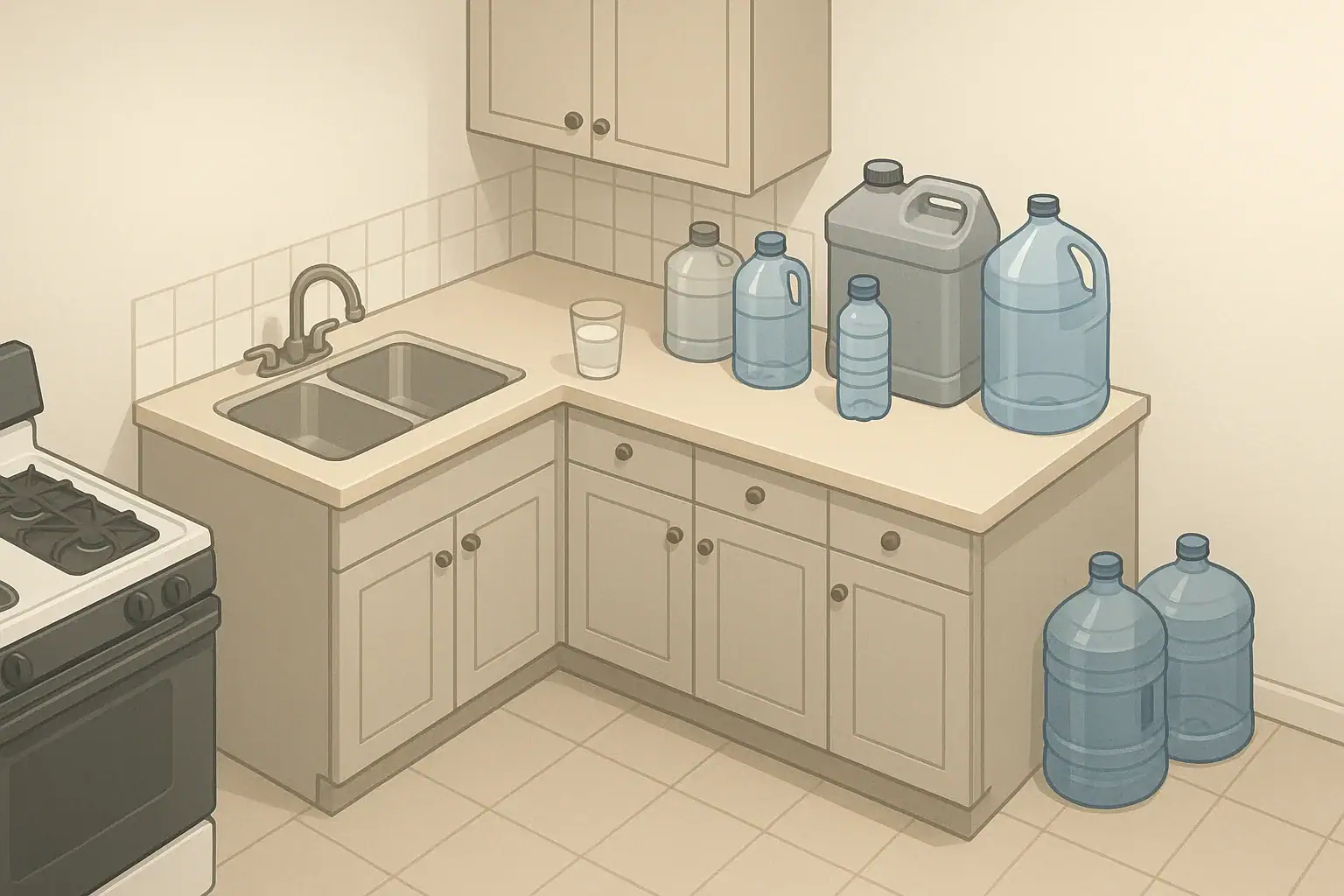
Why Plan for a No-Running-Water Morning
A morning without running water is one of the most common small disruptions in daily life. It can happen after a water main break, a pipe repair in your building, a short power outage affecting well pumps, or frozen pipes in winter. Planning for these short interruptions makes it easier to get ready for work, school, or caring for family without stress.
This guide focuses on a realistic, short-term scenario in a typical U.S. home or apartment: you wake up, turn on the tap, and nothing comes out. You still need to handle basic hygiene, make coffee or breakfast, and clean up dishes safely, while using stored water carefully.
With a few simple supplies and habits, you can move through your morning routine calmly, even when the tap is dry.
How Much Water to Set Aside for Morning Routines
Before talking about the step-by-step routine, it helps to know roughly how much water to keep on hand specifically for mornings. This is separate from longer-term emergency water planning, and is meant to cover one or two days of disruption.
Simple morning water estimate
For a typical household, a small, dedicated “morning supply” can make life much easier. As a rough example for planning:
- Per adult: about 1–1.5 liters for washing up and toothbrushing
- Per child: about 0.5–1 liter for washing up and toothbrushing
- Hot drinks or breakfast: 0.25–0.5 liter per person
- Quick dish rinse and wipe: 1–2 liters total per household
- Pets: follow their usual morning bowl amount, plus a little extra in case of spills
These are example planning numbers, not strict rules. The main idea is to store water in containers that are easy to lift and pour first thing in the morning, not only in heavy, hard-to-move jugs.
Where to keep your morning water
For short-term disruptions, it helps to keep a small, dedicated stash near where you actually use it:
- Bathroom: one or two smaller containers for handwashing and toothbrushing
- Kitchen: a container for coffee, tea, breakfast, and dish wiping
- Bedroom or hallway: a small bottle or jug if you often get ready there
Label these in your mind as “morning water” so you do not accidentally use it all for other tasks early in an outage.
Example values for illustration.
| Task | Why it matters | Example water amount idea |
|---|---|---|
| Face and hand washing | Basic comfort and visible cleanliness | About 0.25–0.5 liter per person |
| Toothbrushing | Fresh breath and routine hygiene | About 0.25 liter per person |
| Shaving or quick grooming | Work or school readiness | About 0.25–0.5 liter if needed |
| Coffee or tea | Morning habit and comfort drink | About 0.25–0.5 liter per person |
| Breakfast cleanup | Prevents dirty dishes from piling up | About 1–2 liters per household |
| Pet water bowl | Maintains pet’s normal routine | Match usual morning bowl fill |
Hygiene Without Running Water: A Calm, Step-by-Step Plan
You can stay reasonably clean and comfortable during a short water disruption by focusing on the basics: hands, face, teeth, underarms, and any areas that get sweaty or dirty. The goal is “good enough for the day,” not a perfect shower.
Set up a small hygiene station
Pick a stable surface in the bathroom or bedroom and set out:
- A small container of clean water (pitcher, jug, or bottle)
- A clean bowl or wide container to catch used water
- Liquid soap or bar soap
- Toothbrush and toothpaste
- Washcloths or small towels
- Hand sanitizer (for hands that are not visibly dirty)
Having everything in one spot keeps spills and waste to a minimum and makes the routine easy for kids and other household members to follow.
Handwashing with a small water source
Handwashing still matters when the tap is off, especially before eating or preparing food. To stretch water:
- Pour a small amount of water over hands into the catch bowl.
- Soap thoroughly for at least as long as a short song or count.
- Rinse with just enough water to remove soap, again into the same bowl.
- Dry with a clean towel or paper towel.
Used handwashing water can later be poured into a toilet bowl for flushing if appropriate for your plumbing and local guidance.
Face and body refresh without a shower
For a quick clean feeling:
- Use a small bowl of clean water and a washcloth.
- Wipe eyes and face first, then neck and underarms.
- Use a second cloth for any other areas you want to freshen.
- Change or wash cloths when water service resumes.
Some people like to keep gentle, fragrance-free wipes on hand as a backup. If you do, dispose of them in the trash, not the toilet, unless explicitly marked as compatible with your plumbing system.
Toothbrushing with minimal water
To brush without a running tap:
- Pour a small amount of water into a cup.
- Dip the toothbrush, apply toothpaste, and brush as usual.
- Use a small sip of water to swish and spit into a sink or container.
- Use the remaining water in the cup to briefly rinse the brush.
This usually takes much less than a full cup, especially if you are mindful about not leaving water sitting in the cup unused.
Shaving and hair care options
If you need to shave for work or comfort, a small amount of warm water in a bowl can be enough. Apply shaving cream or soap, rinse the razor in the bowl, and pat dry when done. For hair, many people simply skip washing for a day during a short disruption. Dry shampoo or a gentle comb-through can help with oil and tangles if desired.
Making Coffee and Breakfast When the Tap is Dry
A familiar morning drink and simple breakfast can make a disrupted morning feel much more normal. The key is to match your plan to the type of water and power you have available.
Deciding which water to use
Use the safest water you have for anything you will drink or use directly in food. If local officials have issued any advisories, follow them carefully. In a typical, short disruption without special advisories, people often rely on:
- Commercially bottled water
- Previously stored tap water in clean containers
- Filtered water that was prepared before the outage
Try to avoid dipping cups or utensils directly into storage containers to keep them cleaner. Pour what you need into a smaller container instead.
Coffee and tea options with and without power
Your morning drink plan depends on whether electricity or gas is still available.
If you still have power
- Electric coffee maker: Fill the reservoir with stored water as you normally would from the tap.
- Electric kettle or hot plate: Boil stored water, then pour into your preferred coffee or tea setup.
- Single-serve brewer: Pre-measure the water needed into a small pitcher so you do not overuse your drinking supply.
Use only as much water as you are sure will be consumed to avoid waste.
If you do not have power
In a combined power and water disruption, you may need a non-electric way to heat water, used only in safe, ventilated areas:
- Gas stove that can be lit without electronic ignition, if safe to do so
- Outdoor grill or camping stove used outside and away from buildings
- Insulated bottle with pre-heated water if you prepared ahead
Never use outdoor cooking appliances indoors, and follow all safety instructions for fuel and heat sources.
Low-water breakfast ideas
Choose foods that require little or no water for preparation or cleanup:
- Dry cereal or granola with shelf-stable milk or milk alternatives
- Peanut butter or other spreads on bread or crackers
- Fruit that was washed before the outage, or that you can wipe clean
- Hard-boiled eggs prepared earlier and stored safely in the refrigerator
- Instant oatmeal or similar foods using only the hot water you boiled for drinks
Plan to use as few dishes and utensils as possible in this kind of morning.
Managing Dishes and Kitchen Cleanup with Limited Water
Kitchens can become messy quickly when water is not flowing. A simple approach to dishes keeps your sink from overflowing with dirty items and helps you avoid using up all your stored water for cleanup.
Prevent dish pileups
First, try to reduce the number of items used:
- Assign each person one cup and one plate or bowl for the morning.
- Use utensils that can be easily wiped and reused.
- Consider disposable items if you already have them and local waste rules allow it, especially for a short, one-time disruption.
Collect all used items in one spot instead of scattering them around the kitchen.
Dry-wipe before any rinsing
Before you apply any water at all:
- Scrape leftover food into the trash or compost.
- Wipe plates and bowls with a paper towel or designated cloth.
- Rinse nothing yet; just get them as clean as possible while dry.
This step makes any later washing much more efficient, and often means you can wait until water service returns for full dishwashing.
Minimal-water dishwashing method
If you need to wash some items before water is back (for example, baby bottles, cutting boards, or anything used with raw animal products), you can:
- Fill one small basin or large bowl with warm, soapy water using stored water.
- Wash priority items first in that same soapy water.
- Rinse quickly with a small pour of clean water over each item, catching the rinse water in a second basin.
- Air-dry items on a clean towel or rack.
The used rinse water can sometimes be reused for pre-soaking less critical dishes or for non-food-related cleaning; just keep food safety in mind and avoid cross-contamination.
Toilet Use and Basic Sanitation During a Short Water Outage
Toilets are a concern in any water disruption. In some homes, toilets can still be flushed manually by pouring water into the bowl or tank, even when taps are off. In others, especially multi-unit buildings or homes with special plumbing systems, different rules may apply. Always follow local guidance or building management instructions for your specific setup.
Stretching toilet flushes
Common strategies during a brief outage include:
- Using the “if it’s just urine, wait” approach, flushing less often.
- Pouring a bucket of water directly into the toilet bowl to trigger a flush, if your system allows it.
- Keeping a dedicated bucket of non-drinking water (such as collected rainwater where safe and legal, or stored clean water not needed for drinking) for flushing only.
Do not flush wipes, paper towels, or other materials that could clog pipes, especially during a disruption when repairs may be harder to schedule quickly.
Trash management and odors
With limited water, more waste may go into the trash instead of the sink or toilet. To keep the bathroom and kitchen comfortable:
- Use small trash bags for bathroom and kitchen waste and tie them off when full.
- Take full bags to your building’s collection area or outside trash bin as soon as practical.
- Keep lids closed on any indoor trash cans to reduce odors.
For pet waste, follow your usual disposal method, but consider bagging promptly to limit smells indoors.
Adapting the Routine for Apartments, Houses, and Different Households
The same basic ideas apply in most living situations, but details differ for small apartments, larger houses, families with kids, and homes with seniors or people with mobility needs.
Small apartments and shared bathrooms
If you live in a small apartment or share a bathroom:
- Choose compact water containers that fit near the sink or on a shelf.
- Agree on a simple morning order so everyone gets time at the hygiene station.
- Store extra water under beds, in closets, or in other out-of-the-way spots, then refill smaller jugs for daily use.
Labeling or color-coding containers for “drinking,” “handwashing,” and “toilet use” can help avoid confusion if several people share the same space.
Families with children
For kids, routines and clear steps make a big difference:
- Explain, in simple language, that water is taking a “short break” and you have a plan.
- Show them how to wash hands with a small pour and where to put used towels.
- Pre-pour small cups of water for brushing teeth to reduce spills.
- Have a small step stool so younger children can reach the hygiene station safely.
Letting kids help by carrying a light bottle or placing cups in a tray can give them a sense of control and keep the mood calm.
Seniors and people with mobility or health needs
For anyone who may find it difficult to carry water or stand at a sink for long:
- Use smaller, lighter containers and place them at waist height to avoid lifting.
- Set up a hygiene station near a chair so tasks can be done seated.
- Keep frequently used items (toothbrush, washcloths, hand sanitizer) within very easy reach.
- Plan for extra water use if caregivers need to assist with washing or toileting.
If someone in the home relies on medical equipment that uses water, talk with their healthcare provider ahead of time about backup plans that fit their specific situation.
Example values for illustration.
| People and pets | Days to cover | Storage approach | Rotation reminder idea |
|---|---|---|---|
| 1 adult | 1–2 mornings | Several small bottles near bathroom and kitchen | Refill every month on the same date |
| 2 adults | 2–3 mornings | One medium jug plus smaller pour pitchers | Rotate when you change calendar season |
| Family with kids | 2–3 mornings | Multiple labeled jugs: drinking, washing, toilet | Refresh during school breaks or holidays |
| Household with pets | 2–3 mornings | Extra small container just for pet water | Top off when buying pet food |
| Shared apartment | 1–2 mornings | Each person keeps a personal water bottle stash | Refill on first weekend of each month |
| Senior in small home | 2 mornings | Lightweight containers placed at easy reach | Refresh when regular home help visits |
Simple Habits to Make the Next No-Water Morning Easier
A no-running-water morning is much easier to handle when you already have a routine. A few small habits can prepare you for most short disruptions without extra stress or storage space.
- Keep at least one or two days of “morning water” in easy-to-pour containers.
- Store a basic hygiene kit (soap, hand sanitizer, washcloths, toothbrushes) in one clearly marked spot.
- Know how you would make coffee or tea if water or power is limited, and keep any needed supplies together.
- Practice your low-water dish routine once or twice so it feels familiar.
- Talk through the plan with everyone in your home so a future disruption feels like an inconvenience, not a crisis.
With a little preparation and a calm, step-by-step approach, most households can move through a no-running-water morning, get ready for the day, and catch up fully once service returns.
Authoritative sources
Safety recommendations can change. Confirm critical details with current official guidance and local authorities.
- CDC: Carbon Monoxide Poisoning Basics
- US EPA: Emergency Disinfection of Drinking Water
- USDA FSIS: Keep Food Safe During Emergencies
Frequently asked questions
How much water should I store specifically for a no-running-water morning routine?
Aim for about 1–1.5 liters per adult for washing and toothbrushing, 0.25–0.5 liter per person for hot drinks, and roughly 1–2 liters total for quick dish rinsing per household. Keep this water in small, easy-to-pour containers near the bathroom and kitchen so it’s accessible first thing in the morning.
Is hand sanitizer an acceptable substitute for handwashing during a short water outage?
Hand sanitizer with at least 60% alcohol is a good substitute when hands are not visibly dirty and you are not preparing food. If hands are visibly soiled or after certain tasks like diapering, use stored water and soap or wet wipes to remove dirt first, then sanitize as needed.
What is the safest water to use for coffee and toothbrushing when the tap is off?
Use commercially bottled water or previously stored tap water kept in clean, sealed containers for drinking and food preparation. Follow any local boil or safety advisories, and avoid dipping cups or utensils directly into large storage containers to reduce contamination risk.
How can I flush the toilet if there’s no running water?
Pouring a bucket of water quickly into the toilet bowl will usually trigger a flush; a rapid pour of roughly 1.5–3 gallons (about 6–12 liters) often works for many designs. Keep a dedicated bucket of non-drinking water for flushing when possible and avoid flushing wipes or other non-degradable items.
How should I clean baby bottles or cutting boards with very limited water?
Wash priority items in a small basin of warm, soapy water and rinse each briefly with a small pour of clean water, catching rinse water in a second container if needed. Air-dry on a clean towel and sanitize if items were used with raw animal products; reuse rinse water only for non-food cleaning to prevent cross-contamination.
- Simple checklists and realistic planning
- Water, power, lighting, and pantry basics
- Family plans (kids, pets, seniors) and seasonal prep
Affiliate disclosure
As an Amazon Associate, we earn from qualifying purchases. Some links on this site may be affiliate links. If you buy through these links, we may earn a small commission at no extra cost to you. This helps support our content. Learn more.