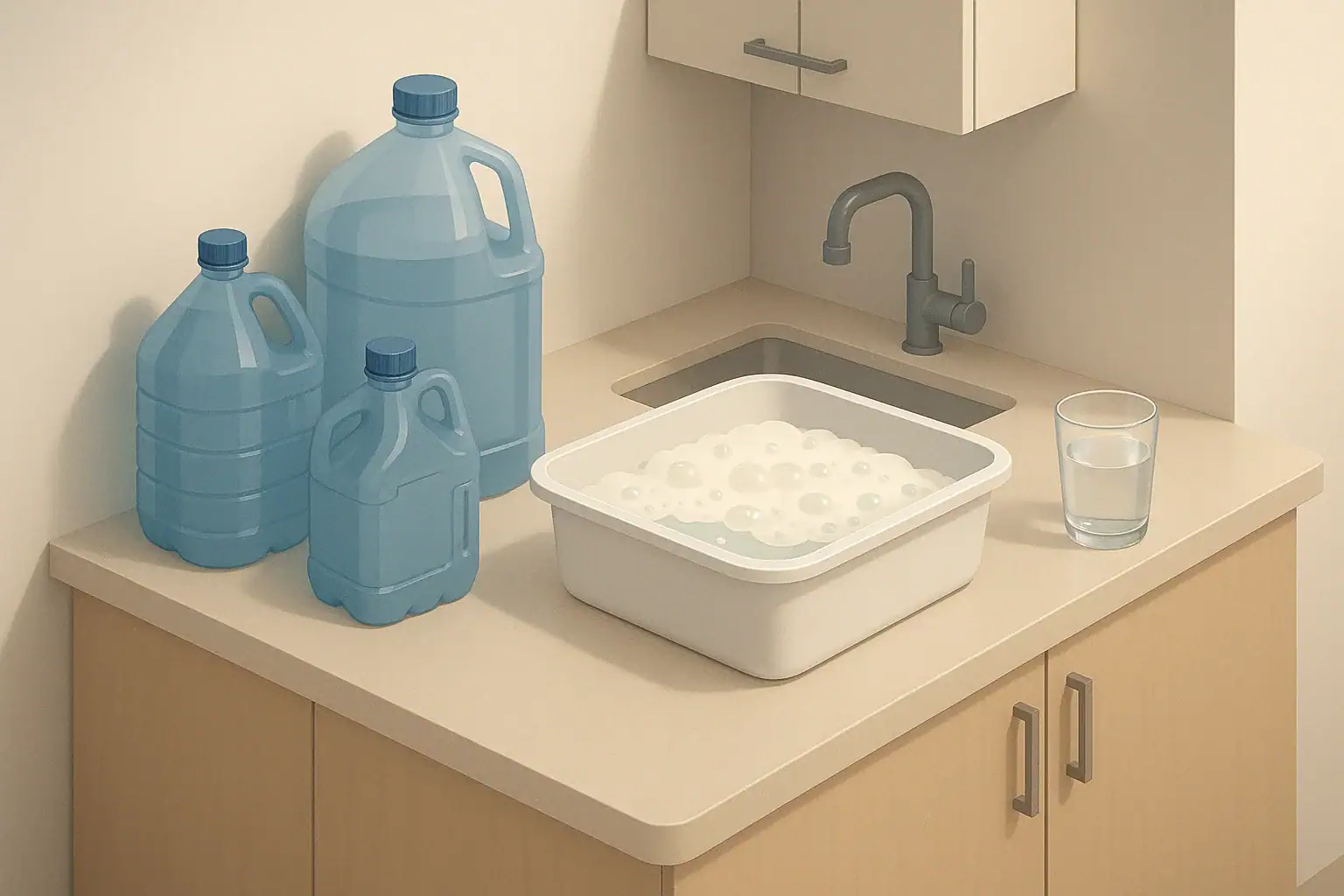
During a short-term emergency, it is easy to focus on drinking water, lights, and staying warm or cool. Dishes can seem like a low priority. But in a water outage, boil advisory, or power loss that affects hot water, dirty dishes can pile up quickly and become hard to manage.
You do not need to aim for a perfectly spotless kitchen in these situations. The goal is more modest: keep eating surfaces and utensils clean enough to be used again safely, while stretching your limited water and energy. A simple dishwashing plan helps you:
- Protect limited clean water by avoiding waste
- Prevent smells and pests from leftover food scraps
- Reduce stress by keeping some order in your kitchen
- Make it easier to keep preparing simple meals at home
This guide focuses on realistic home situations in the United States: apartments and small spaces, renters who cannot make big changes, families with kids, and households with pets or older adults. The steps are meant for short-term disruptions lasting from a day or two up to a couple of weeks.
Why Emergency Dishwashing Matters When Water Is Limited
During a short-term emergency, it is easy to focus on drinking water, lights, and staying warm or cool. Dishes can seem like a low priority. But in a water outage, boil advisory, or power loss that affects hot water, dirty dishes can pile up quickly and become hard to manage.
You do not need to aim for a perfectly spotless kitchen in these situations. The goal is more modest: keep eating surfaces and utensils clean enough to be used again safely, while stretching your limited water and energy. A simple dishwashing plan helps you:
- Protect limited clean water by avoiding waste
- Prevent smells and pests from leftover food scraps
- Reduce stress by keeping some order in your kitchen
- Make it easier to keep preparing simple meals at home
This guide focuses on realistic home situations in the United States: apartments and small spaces, renters who cannot make big changes, families with kids, and households with pets or older adults. The steps are meant for short-term disruptions lasting from a day or two up to a couple of weeks.
Basic Principles: Using Less Water While Staying Practical
Emergency dishwashing does not have to be complicated. A few core ideas can make a big difference, whether you are washing in a tiny sink, a plastic bin, or a large bowl.
Prioritize What Really Needs Washing
In low-water situations, you likely cannot wash every item after every use. Focus on:
- Utensils that go in mouths: forks, spoons, knives, cups, and bowls
- Cutting boards and prep tools used with raw foods
- Items for infants or people with weaker immune systems, using extra care and clean water
Consider wiping or setting aside items that only touched dry or low-mess foods, and focus your limited water on items that really need it.
Switch to Low-Dish Meals
When water is tight, adjust what you cook. This can reduce the number of things you need to wash at all.
- Use one-pot or one-pan meals when possible.
- Serve food in reused, lined containers when safe, such as plates lined with clean paper or reusable liners that can be wiped.
- Plan no-cook meals using shelf-stable foods that need minimal preparation.
- Give each person a designated cup and utensil set for the day to avoid extras.
Separate Food Waste From Wash Water
The less food that goes into your dishwater, the longer that water can be used for stages like pre-rinsing or soaking. Get into the habit of:
- Scraping plates thoroughly into a trash bag or compost container.
- Wiping grease and sauces with a napkin or small piece of paper towel before dishes touch water.
- Keeping solids out of sinks and tubs if you are using them as wash basins, so drains do not clog.
These habits help your small amount of water go farther, whether you are using tap water from storage or treated water from emergency supplies.
| If this is true | Then consider this approach | Notes |
|---|---|---|
| You have some running water but low pressure | Fill a basin and turn tap off while washing | Saves water compared to running tap the whole time |
| No running water but several stored containers | Use a 2- or 3-basin wash setup | Measure water so you know how much you are using |
| Very limited drinking water only | Use disposable liners and minimal wiping | Reserve clean water for drinking and essential hygiene |
| Power is out, but water is available | Heat small amounts on stove or grill if safe | Warm water improves cleaning, but is not required |
| You have kids who snack all day | Assign one cup and one plate per person | Rinse or wipe between uses instead of full washes |
| Someone has extra sensitivity to germs | Reserve the cleanest water for their items | Wash their dishes first in each batch |
Simple Supplies to Set Aside Before You Need Them
You do not need specialty gear to wash dishes with limited water. Many everyday items can double as emergency dishwashing tools. Setting aside a small kit in advance can make any outage or water disruption much easier.
Containers and Basins
A multi-basin system lets you wash, rinse, and optionally do a final sanitizing dip using the same small amount of water. Useful items include:
- Plastic tubs or dishpans that fit in your sink or on a counter.
- Sturdy buckets that can hold several quarts of water.
- Large bowls or pots as backup basins, especially in small apartments.
Try to choose containers that nest for storage and can be used for other purposes in everyday life, such as soaking laundry or organizing supplies.
Cleaning Tools That Use Less Water
Certain tools make it easier to scrub effectively without constantly running a faucet:
- Scrub brushes with handles for pans and plates.
- Non-scratch pads or cloths that can be rinsed and reused.
- Small spray bottle that can hold soapy water for pre-wetting dishes.
- Dedicated sponge or cloth only for dishes, kept separate from general cleaning rags.
Store these tools dry between uses to reduce musty odors.
Soap and Safe Add-Ons
Plain dish soap is usually enough for emergency dishwashing. It works with cold water and is widely available. You may also want:
- Extra dish soap stored in a cool, dry place.
- Small measuring spoon or cup so you do not pour in more soap than needed.
- A way to heat water if your regular hot water is unavailable and it is safe to use a stove, grill, or camp stove in a ventilated area.
If you use any additional agents, follow label directions and focus them on situations where you have enough clean water for proper dilution and rinsing.
Step-by-Step: Washing Dishes With a Two- or Three-Basin Method
The multi-basin method is common in many small kitchens and adapts well to emergencies. It works whether you are using a sink with running water or pouring water from storage containers.
Step 1: Set Up Your Wash Area
Clear a section of your counter, table, or sink. Then set up:
- Basin 1: Wash – Warm or cold water with a small amount of dish soap.
- Basin 2: Rinse – Clean water without soap.
- Basin 3 (optional): Final dip – If you are using any additional treatment step, this is where it belongs.
If you have very little water, use a two-basin system: one for washing and one for rinsing, or even one wash basin plus a small container for pouring rinse water as needed.
Step 2: Scrape and Pre-Wipe Thoroughly
This is the most important water-saving step. Before dishes touch the wash basin:
- Scrape leftover food into the trash, compost, or a sealed container for later disposal.
- Wipe greasy pans and plates with a small piece of paper towel or a designated grease cloth that can be thrown away.
- Stack dishes by type (cups, plates, utensils) near your wash area.
The cleaner you can get each item before washing, the longer your wash water will stay usable for multiple items.
Step 3: Wash in Order From Cleanest to Dirtiest
Using the same basin of wash water for as many items as possible helps conserve water. To get the most use from that basin:
- Wash glasses and cups first, since they usually have less residue.
- Wash utensils next.
- Follow with plates and bowls.
- Leave pots and pans for last, especially those with heavy grease or stuck-on food.
Use a brush or sponge to scrub, letting items soak briefly in the wash basin only when needed.
Step 4: Rinse Efficiently
You can rinse dishes without a constantly running tap. Some options:
- Basin rinse: Dip each washed item into your rinse basin, then let it drip dry.
- Pour-over rinse: Use a small container or measuring cup to pour a thin stream of rinse water over each item, catching the runoff in a tub for pre-soaking heavily soiled dishes.
- Spray rinse: Use a clean spray bottle of water to lightly rinse items, followed by a quick drip or towel dry.
In very low-water scenarios, you may rely more on wiping and spot-rinsing than on full immersion rinses.
Step 5: Air-Dry Whenever Possible
Once rinsed, allow dishes to air-dry on a drying rack, clean towel, or a section of clean counter. Air-drying avoids using extra towels that would need frequent washing and reduces extra handling of dishes right after washing.
Step 6: Know When to Replace Your Wash Water
At some point, your wash basin will become too cloudy or greasy to remain effective. Signs it is time to refresh include:
- Water looks milky or has a visible layer of grease.
- There are many food particles floating in the basin.
- Clean dishes do not look or feel clean after washing.
When you discard used wash water, do so in a toilet, bathtub, outdoor drain, or another location that will not affect nearby surfaces or attract pests. Avoid pouring solids down drains if possible.
Adapting Dishwashing to Different Home Situations
Households vary widely. A plan that works well in a large house with a backyard may not make sense in a small apartment. You can adapt the same basic ideas to your space, family size, and mobility needs.
Small Apartments and Shared Housing
If you live in a small space or share a kitchen with roommates or neighbors, consider:
- Using collapsible basins or nesting bowls that store in a cabinet.
- Assigning color-coded or labeled cups and plates (using position or pattern rather than text) so each person reuses their own items throughout the day.
- Placing a small trash bag or compost container right by the sink for easy scraping.
- Setting simple house rules during an outage, such as washing personal dishes immediately after use.
Families With Kids
Children can create a lot of dishes in a short time. To keep things manageable:
- Give each child a single cup for the day, perhaps with a unique color or shape.
- Offer snacks that need minimal dishes, like items that can be eaten from reusable containers or clean hands.
- Involve older kids in simple dishwashing tasks, such as scraping and stacking dishes in order of cleanest to dirtiest.
- Keep breakable items to a minimum during outages to reduce accidents in low light.
Seniors and People With Limited Mobility
If someone in your household has limited mobility or strength, standing at a sink for long periods may not be realistic.
- Use lighter basins and only partially fill them with water.
- Set up a sitting dishwashing station at a table with towels underneath.
- Keep most-used dishes and supplies within easy reach to avoid bending or reaching.
- Consider simplifying the number of dishes in rotation so there is less to wash overall.
Pets in the Household
Pet bowls can get dirty quickly, especially in warm weather. In a low-water situation:
- Designate one or two sturdy bowls per pet and reuse them through the day.
- Rinse or wipe food bowls with a small amount of water after meals, and give them a more thorough wash when water allows.
- Keep pet washing separate from human dishes to avoid cross-contamination of food scraps and residues.
When You Have Almost No Water: Minimal-Dish Strategies
There may be times when your stored water must be reserved mostly for drinking and essential hygiene. In those cases, adjust your expectations and aim for reasonable cleanliness using very small amounts of water.
Reduce the Number of Real Dishes
If you anticipate a very tight water situation:
- Use clean, reusable liners for plates, such as silicone mats or washable cloth napkins that can be shaken out and air-dried between uses.
- Favor handheld foods and simple snacks that do not require utensils.
- Reuse the same cup and utensil for each household member all day, with occasional quick rinses or wipes as water allows.
Use Wiping and Spot Cleaning
With very little water on hand, a full wash and rinse for every dish may not be practical. Instead:
- Wipe dishes thoroughly with paper towels or clean cloths to remove visible food.
- Use a small spray bottle with diluted dish soap to lightly mist surfaces, then wipe them clean.
- Let items air out in a clean area before stacking or reusing them.
This approach is not a long-term substitute for full washing but can help during brief, strict water shortages.
Know When to Switch to Single-Use Items
In some emergencies, such as local flooding or breaks in water service, you may have almost no safe water for cleaning. In that case, short-term use of disposable items may make sense if you have them on hand and local waste collection is still operating. If you choose this route, use them sparingly and store used items in closed bags to avoid attracting pests.
| Need | Simple supplies | Safe use note | Disposal idea |
|---|---|---|---|
| Scrape food waste | Small scraper, trash bags, compost container | Keep scraps off counters and floors | Seal bags and store away from living areas |
| Wipe grease | Paper towels or designated grease cloth | Use before dishes touch wash water | Bag used wipes to reduce odors |
| Protect hands | Reusable gloves | Rinse gloves briefly after use and hang to dry | Replace if damaged or heavily soiled |
| Clean wash area | All-purpose cleaner, separate cleaning cloth | Keep counters and basins visibly clean | Wash cloths with regular laundry when possible |
| Handle dirty dishwater | Buckets, access to toilet or bathtub drain | Avoid splashing on walkways and seating areas | Pour slowly and strain solids if needed |
| Temporary drying space | Clean towel, drying rack, or tray | Let dishes air-dry fully before stacking | Launder towels regularly when water returns |
Simple Routine to Practice Before an Emergency
You do not need to wait for a storm, water main break, or power outage to try these methods. Practicing a low-water dish routine on an ordinary weekend can show you:
- How many basins or containers fit comfortably in your space.
- How much water your household uses for one meal’s worth of dishes when you are careful.
- Which tools you like best for scrubbing and rinsing.
- Where to store a small dishwashing kit so everyone can find it quickly.
By turning these steps into a familiar routine, you can move more calmly and efficiently when an actual disruption happens. Even modest preparation helps keep your kitchen usable, your water supply stretched, and your household more comfortable through short-term emergencies.
Authoritative sources
Safety recommendations can change. Confirm critical details with current official guidance and local authorities.
- CDC: Carbon Monoxide Poisoning Basics
- US EPA: Emergency Disinfection of Drinking Water
- USDA FSIS: Keep Food Safe During Emergencies
Frequently asked questions
How much water should I expect to use for emergency dishwashing with limited water?
Water use varies by household size, meal type, and whether you use a two- or three-basin system, but emergency dishwashing typically aims to minimize water per meal. Practice your routine before an outage to measure how much you actually use and adjust by reducing soaking time and pre-wiping dishes. Tracking real use in your own kitchen helps you plan stored water volumes that match your needs.
Can I clean and sanitize dishes effectively with cold water and dish soap?
Cold water and dish soap will remove food and grease and make items safe for short-term reuse, but cold-soap washing does not reliably sanitize. For added sanitation, use the cleanest water available with heat (hot water where safe) or a proper disinfectant following label instructions, and allow items to air-dry fully. Prioritize thorough cleaning for items used by infants or people with weakened immune systems.
Is it safe to reuse wash or rinse water for multiple dishes?
You can reuse wash and rinse water to conserve supplies if you wash in order from cleanest to dirtiest and monitor water clarity. Replace the water when it becomes cloudy, greasy, or contains many food particles, since effectiveness drops at that point. Straining solids before reusing rinse runoff can also extend how long water remains useful.
Where should I dispose of used dishwater during an indoor outage?
Pour used dishwater into a toilet, bathtub drain, or another drain designed to handle gray water, taking care to avoid splashing on living areas. If you must discard outdoors, choose a location away from food prep areas and avoid attracting pests. Strain out solids before disposal and seal food scraps in bags for trash or composting.
When is it appropriate to switch to disposable plates and utensils during a water shortage?
Switch to disposable items when you need to reserve most stored water for drinking and essential hygiene, or when no safe disposal or sanitation method is available. Use disposables sparingly and store used items in closed bags to prevent odors and pests until local waste collection resumes. Reusable single-person sets can be a better long-term option if you have even minimal water for periodic cleaning.
- Simple checklists and realistic planning
- Water, power, lighting, and pantry basics
- Family plans (kids, pets, seniors) and seasonal prep
Affiliate disclosure
As an Amazon Associate, we earn from qualifying purchases. Some links on this site may be affiliate links. If you buy through these links, we may earn a small commission at no extra cost to you. This helps support our content. Learn more.