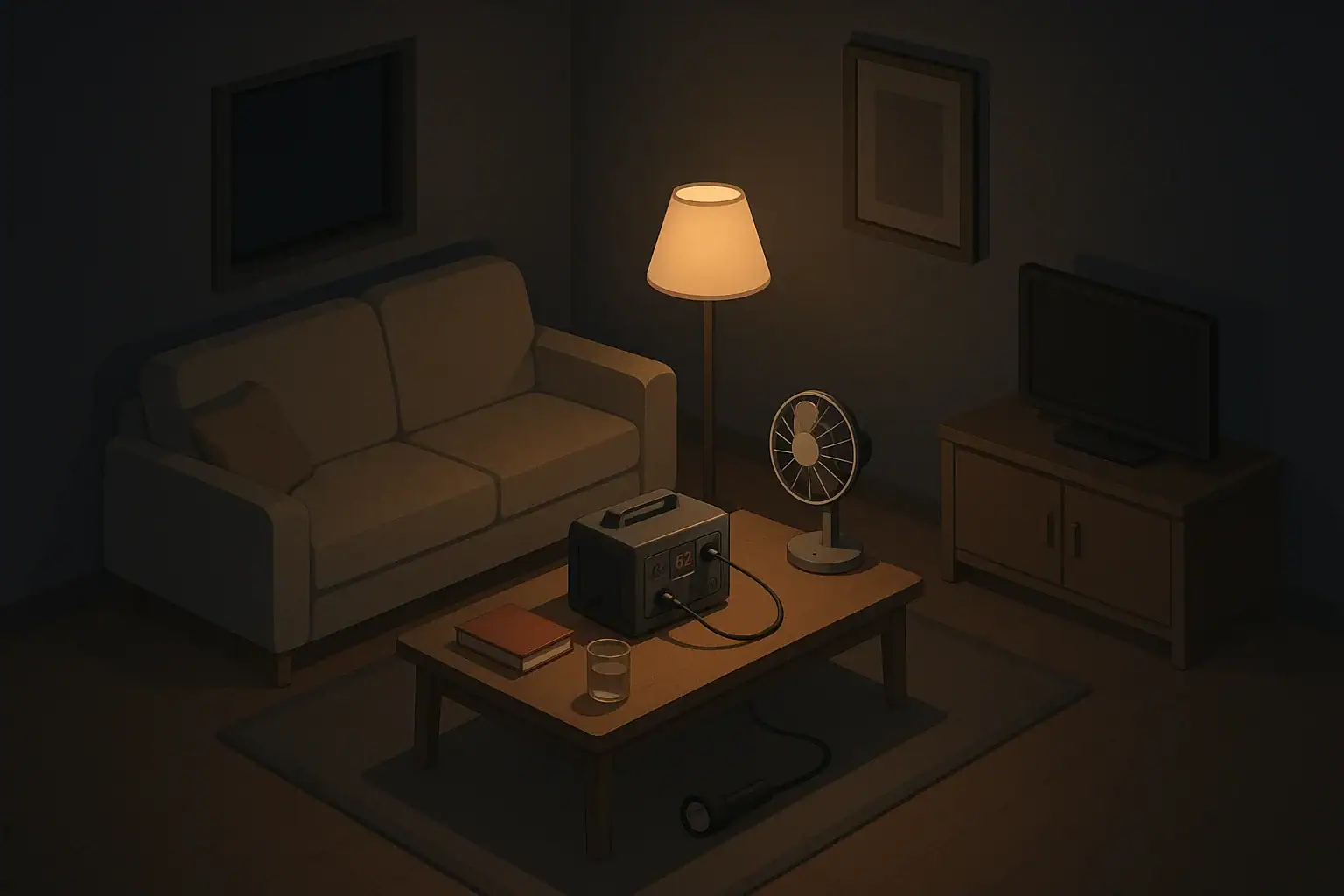
What Are Rolling Outages and Why Plan for Them?
Rolling outages are planned, temporary power shutoffs that move from area to area on a schedule or rotation. Utilities use them to prevent the grid from becoming overloaded during heatwaves, cold snaps, wildfires, or other high-demand situations.
Unlike a storm-related blackout, rolling outages are:
- Short: Often 30 minutes to a few hours at a time
- Repeated: May happen several times a day or over several days
- Somewhat predictable: Sometimes announced in advance or follow published time blocks
Because the power comes and goes, the goal is not to live normally. The goal is to have a simple, repeatable routine that keeps your home safe, food protected, and family reasonably comfortable each time the lights go out.
This kind of planning is especially useful in apartments, small homes, and rentals where installing permanent backup systems may not be possible.
Step 1: Map Your Rolling Outage Routine
Planning for rolling outages starts with understanding how often they may occur and what matters most in your household during short blackouts.
Know Your Likely Outage Pattern
Where possible, check typical utility guidance for your region. In many areas, rolling outages may follow patterns like:
- Outages lasting about 1–2 hours at a time
- Multiple outages per day during extreme weather
- Blocks of neighborhoods rotating through shutoffs
Even if exact timing is uncertain, you can plan around the idea of several short daily interruptions.
List Your Top Priorities
Focus on what truly needs to keep working during each outage cycle. Common priorities include:
- Safety: Lighting for stairs and hallways, safe use of candles or fuel, ability to open doors and exits
- Comfort: Air movement in heat, warmth in cold, quiet activities for kids
- Food: Keeping the refrigerator and freezer closed, having no-cook meals ready
- Water: Having some water stored in case outages affect pumps or treatment
- Communication: Charged phones and a way to receive updates
- Health-related devices: Battery plans for essential equipment, where applicable
Create a Simple Before-During-After Checklist
Because rolling outages repeat, a basic checklist helps you move smoothly through each cycle:
- Before power goes off: Charge phones, fill water pitchers, cool the home, pre-freeze ice packs, top off battery banks
- During outage: Use minimal lighting, avoid opening the fridge, limit device use, focus on low-energy activities
- After power returns: Quickly recharge key items, check fridge/freezer temperature, run short cooling or heating cycles if needed
Example values for illustration.
| If this describes your situation… | Then focus first on… | Notes |
|---|---|---|
| Small apartment, no balcony, no gas stove | Lighting, no-cook meals, phone charging | Use compact battery packs and shelf-stable foods. |
| House with garage and some storage space | Food protection, small backup power, water | Store extra water, use coolers and ice packs. |
| Family with young kids | Comfort, routine, entertainment | Prepare quiet games, lights in kids’ rooms. |
| Home with older adult or mobility needs | Safe paths, essential devices, communication | Light hallways, plan for powered equipment. |
| Hot climate with frequent heat advisories | Heat management, hydration, shading | Fans on backup, curtains closed in daytime. |
| Cold climate in winter | Layering, safe non-electric heat options | Focus on insulation and warm clothing. |
| Pet owners in small spaces | Temperature, water, calm environment | Prepare extra water and a quiet, cool or warm spot. |
Lighting and Safe Movement During Short Blackouts
lighting planning turns rolling outages from stressful to manageable. The aim is to move safely and keep a few key areas usable without draining batteries too quickly.
Prioritize Critical Lighting Zones
Identify where light matters most when the power snaps off:
- Front door and main entry
- Hallways and stairs
- Bathroom
- Kitchen or food prep area
- One common room for everyone to gather
Plan one primary light source for each of these areas, plus at least one backup.
Use Safer, Low-Effort Options First
Battery-powered lights are generally safer and easier than open-flame options, especially in apartments and small spaces. Consider:
- Portable LED lanterns for general room light
- Flashlights or headlamps for focused tasks
- Small motion-activated lights in hallways and bathrooms
- Plug-in night lights with built-in backup features, where available
If you choose to use candles or fuel-based lanterns, follow basic safety guidance: stable surfaces, away from curtains and bedding, never leave unattended, and keep them out of reach of children and pets.
Set Up a “Lights Out” Kit
Keep a small, clearly labeled container in an easy-to-find spot that always stays stocked with:
- 2–3 compact lanterns
- Several flashlights or headlamps
- Extra batteries in common sizes
- A simple battery-powered clock, if you rely on digital devices for time
Make it a household rule to return items to the kit once power comes back on and everything is recharged.
Protecting Food and Water During Rolling Outages
Repeated short blackouts can slowly warm your refrigerator and freezer if doors are opened often or outages run longer than expected. Planning your food and water strategy helps prevent waste and keeps meals simple.
Refrigerator and Freezer Habits
A few small habits can make a big difference:
- Keep the fridge and freezer set to appropriate cold settings during normal times.
- Avoid opening doors during each outage; plan ahead and take out what you need just before.
- Group items you use most often together so you can grab them quickly when power is on.
- Use reusable ice packs or frozen water bottles in the freezer to help hold the cold.
If an outage block is expected soon, chill drinks and prepare a small “grab-and-go” container with items you will need during that specific window, such as snacks or ingredients for one meal.
Build a No-Cook Rolling Outage Pantry
During short outages, cooking options may be limited, especially if you rely on electric stoves or microwaves. Keep a small pantry section for:
- Ready-to-eat canned foods (and a manual can opener)
- Nut butters, crackers, and shelf-stable spreads
- Instant foods that can be made with hot water only, if you have a safe way to heat water
- Snack items that do not require refrigeration
Plan simple, repeatable meals that do not depend on long cooking times.
Water Considerations in Rolling Outages
Many urban systems keep water running during short electrical outages, but it is still wise to have basic storage in case pumps or treatment facilities are affected, or if you live in a building where water pressure depends on electric pumps.
Simple steps include:
- Keeping several store-bought or clean, refillable containers of drinking water
- Filling a pitcher or a few bottles before an expected outage block
- Having a small supply of basic water treatment options, such as simple filters or tablets, if local guidance suggests it
For multi-story buildings, understand how your plumbing works. If your water stops during outages, you may need to fill containers in advance for flushing toilets and basic washing.
Backup Power Basics for Short, Repeated Blackouts
Rolling outages often do not justify large, permanent backup systems. Instead, consider small, flexible options that keep a few key items running and recharge quickly when the power returns.
Decide What Actually Needs Power
Most households can get through short outages by powering only a few essentials, such as:
- Phones and a basic communication device
- One or two LED lights
- A small fan in hot weather
- Low-power medical or assistive devices, where necessary
Large appliances like full-size air conditioners, electric ranges, and central heating systems usually require more power than small backup units can provide. For rolling outages, it is more practical to plan for comfort strategies that do not rely entirely on those systems.
Small-Scale Backup Options
Common options for short blackouts include:
- USB battery banks: For charging phones, small fans, and tiny lights
- Portable power stations: For running a few small devices or a light-duty appliance for limited periods
- Uninterruptible power supplies (UPS): For briefly running a modem, router, or important electronics during sudden cutoffs
When choosing and using any backup power source, read and follow the manufacturer’s safety instructions, avoid overloading outlets, and keep devices well-ventilated.
Charging Strategy Between Outages
Because rolling outages usually come with powered windows in between, your plan should focus on topping off batteries whenever grid power returns:
- Plug in power banks and portable stations as soon as the power comes back.
- Charge the most important items first: phones, medical devices, basic lighting.
- If you have access to solar charging, use daylight hours to supplement grid charging.
phones are charged overnight and topped off whenever you know a rolling outage window is approaching.
Think of each powered window as a “refuel” period. The more consistently you recharge, the better you can handle a longer-than-expected outage block.
Comfort, Heat, and Cold Management
Short, repeated outages can be particularly uncomfortable during heatwaves or cold snaps. While full climate control may not be possible, small changes can keep conditions more manageable.
Staying Cooler During Hot Weather Outages
When rolling outages happen during high heat, focus on keeping your home cooler before each outage and making use of airflow:
- Close curtains and blinds on sun-facing windows during the day.
- Use fans while you have power to pre-cool rooms and move air.
- Identify the coolest room in your home as a shared rest area.
- Wear lightweight, breathable clothing and stay hydrated.
- Use battery-powered fans strategically during outages.
Staying Warmer During Cold Weather Outages
In colder periods:
- Layer clothing, including socks and hats, even indoors.
- Use extra blankets or sleeping bags in a shared room to consolidate warmth.
- Close doors to unused rooms to reduce the space you are trying to keep warm.
- Use safe, non-electric heating sources only as recommended and only in spaces with proper ventilation.
Heat your living area while power is available, then close windows and doors to retain warmth as long as possible.
Family, Kids, Pets, and Neighbors
Rolling outages can be disruptive to routines, especially for children, older adults, and pets. A calm, predictable plan can reduce stress during each blackout cycle.
Children and Daily Routines
Help children by making the plan simple and familiar:
- Explain what rolling outages are in age-appropriate terms.
- Keep a small blackout box with books, games, and coloring supplies that do not need power.
- Use battery-powered night lights in kids’ rooms if outages may occur at bedtime.
- Practice a short routine, such as gathering in one room, turning on a lantern, and choosing a quiet activity.
Pets and Short Blackouts
Most pets will handle short outages well, but consider:
- Having extra water and food stored for them.
- Providing a cool or warm resting area depending on the season.
- Keeping leashes, carriers, and any medications in a known spot.
Noise-sensitive animals may be unsettled if alarms or equipment beep when the power cycles off and on, so give them a calm, familiar place to retreat.
Checking on Neighbors
In multi-unit buildings or close neighborhoods, a simple check-in plan can be helpful, especially for older adults or people with mobility limitations:
- Agree on a time to check in during extended outage periods.
- Share basic information about who has which resources, such as extra flashlights or a way to charge phones.
- Be mindful of privacy and boundaries while still offering support.
Simple Communication and Information Plan
Rolling outages can interrupt internet, cellular coverage, and digital communication, especially if local infrastructure is strained. Plan how you will stay informed and reach others.
Keep Key Devices Charged
For most households, the primary communication tools are:
- Mobile phones
- Modem and router, if home internet remains available
- Basic battery-powered or hand-crank radio for local updates
Adjust your habits so that phones are charged overnight and topped off whenever you know a rolling outage window is approaching.
Write Down Critical Information
Because contact lists and instructions are often stored in phones, it is helpful to keep a written backup with:
- Important phone numbers for family, neighbors, and local services
- Your utility account number and outage reporting line
- Any building management or landlord contact information
Store this list where everyone in the household can find it, such as near your outage kit.
Set Expectations with Family and Friends
Let friends and relatives know that rolling outages may affect your ability to respond quickly. Agree on:
- How often you will check in during high-demand weather events
- Preferred methods of contact when service is limited
- Where you would meet if there were a larger disruption in your area
Example values for illustration.
| Device type | Typical watt range (example) | Planning notes |
|---|---|---|
| LED lantern or lamp | 5–15 watts | Low draw; suitable for long use on small power stations. |
| Phone charger | 5–20 watts | Charge fully during powered windows, then unplug. |
| Small USB fan | 5–10 watts | Rotate use among rooms; prioritize hottest times. |
| Modem/router | 10–30 watts | Use a UPS or power station for brief connectivity. |
| Laptop | 30–90 watts | Limit to essential tasks to conserve battery. |
| Small medical device | Varies by device | Consult device guidance and plan dedicated backup. |
| Compact refrigerator or cooler | 50–150 watts | May be feasible on larger portable power for limited periods. |
Putting Your Rolling Outage Plan Into Practice
A rolling outage plan works best when it is simple enough to remember, even when you are tired or busy. To keep it realistic:
- Start small: set up one lighting kit, one no-cook shelf, and one basic backup power option.
- Walk through your home at night and identify any tripping hazards that would be dangerous in the dark.
- Practice your “power just went out” steps once or twice with your household.
- Check your batteries, water, and pantry items a few times a year, such as at the start of summer and winter.
By focusing on clear priorities—light, food, water, communication, and comfort—you can move through short, repeated blackouts with a calm routine rather than scrambling each time the lights go out.
Authoritative sources
Safety recommendations can change. Confirm critical details with current official guidance and local authorities.
- US EPA: Emergency Disinfection of Drinking Water
- USDA FSIS: Keep Food Safe During Emergencies
- U.S. CPSC: Battery Safety
Frequently asked questions
How long do rolling outages typically last and how should that shape my rolling outage plan?
Rolling outages commonly run from about 30 minutes to a few hours per block, and may repeat several times a day. Plan around short interruption cycles by charging devices and preparing food and lighting before expected outage windows so you can rely on simple, repeatable routines each time power goes out.
What are the safest lighting options for apartments during short, repeated blackouts?
Battery-powered LED lanterns, flashlights, and headlamps provide safe, low-effort illumination without open flames. Reserve candles or fuel-based lights as a last resort and only use them on stable surfaces, away from flammable materials, and under supervision.
How can I protect perishable food during repeated short blackouts?
Keep refrigerator and freezer doors closed as much as possible, group frequently used items together, and use frozen water bottles or ice packs to help maintain cold temperatures. Prepare a small “grab-and-go” container before expected outage windows and check temperatures after prolonged outages to decide on safe use or disposal.
Which small-scale backup power options are most practical for a rolling outage plan in a rental or small home?
USB battery banks, portable power stations, and small UPS units are practical choices for charging phones, running a light, or keeping a modem/router live for short periods. Select capacity based on the devices you need and follow manufacturer safety guidance to avoid overloading and ensure proper ventilation.
How often should I check and practice my rolling outage kit and routines?
Inspect batteries, water, and pantry items at least twice a year and before seasons with higher outage risk, such as summer heatwaves or winter storms. Practice the simple “power just went out” steps with your household once or twice so the routine becomes automatic during actual outages.
- Simple checklists and realistic planning
- Water, power, lighting, and pantry basics
- Family plans (kids, pets, seniors) and seasonal prep
Affiliate disclosure
As an Amazon Associate, we earn from qualifying purchases. Some links on this site may be affiliate links. If you buy through these links, we may earn a small commission at no extra cost to you. This helps support our content. Learn more.