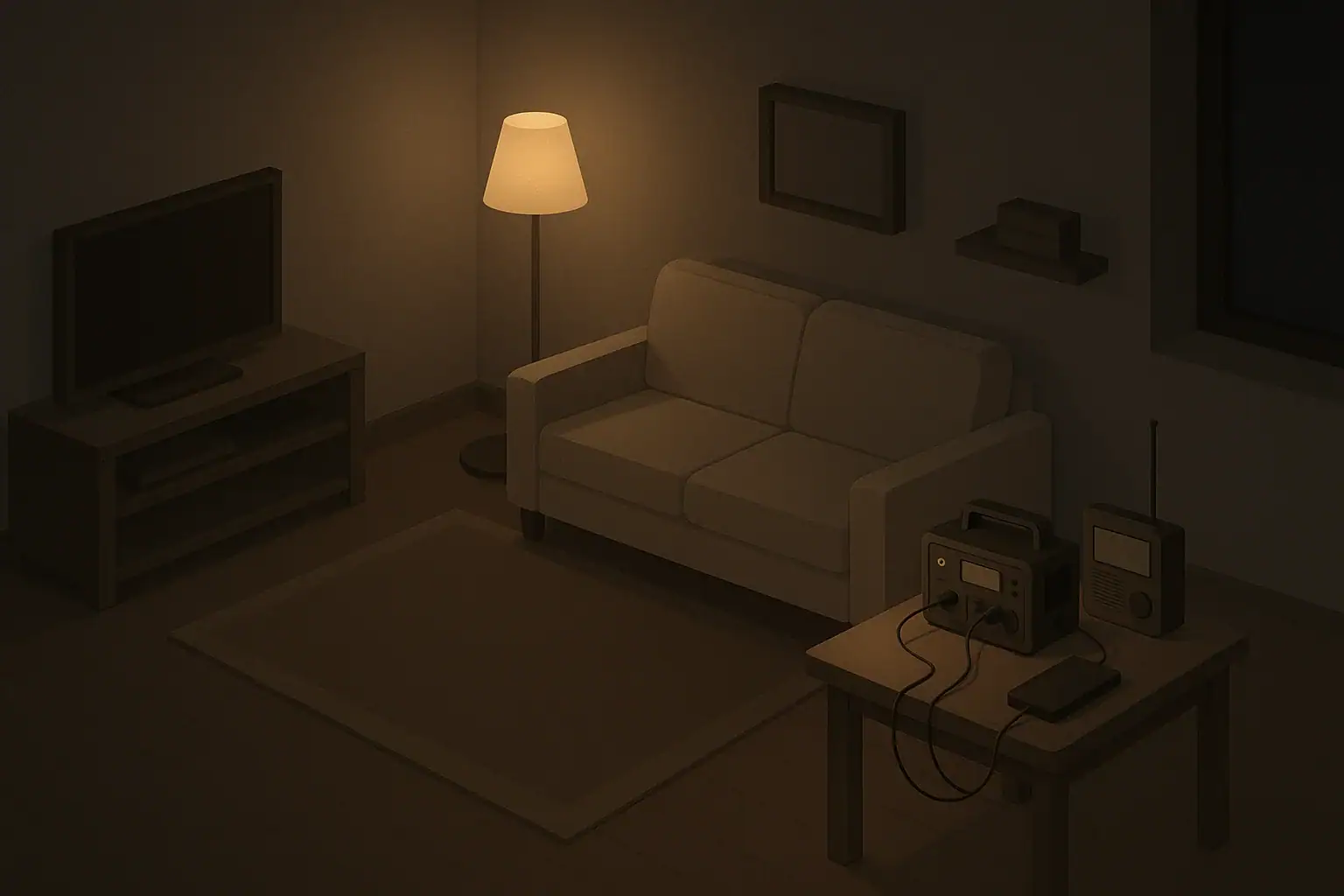
A shared charging station can be a small, deliberate spot in your home that keeps phones, radios, flashlights, and power banks organized and ready. This article explains how to pick a good location, what devices to include, and simple habits that help your family stay connected during everyday life and in short emergencies. You do not need expensive gear to start: a stable surface, a surge-protected strip or multi-port charger, a few labeled cables, and one or two power banks can make a big difference. The suggestions below cover safety, cable management, and choices for different household types so you can adapt the setup to your space and needs. Follow the short checklists for daily routines and storm prep to make the charging station something your household actually uses.
Why a Shared Family Charging Station Matters
A shared family charging station is a single spot in your home where everyone can safely plug in phones, radios, flashlights, and power banks. In normal life, it reduces clutter and lost devices. During a power outage or severe weather, it becomes a small communication hub that helps your household stay organized and calm.
Instead of scrambling to find individual chargers and cables, a shared station gives you:
- One known location for essential devices
- A clearer picture of what is fully charged and ready
- Fewer tripped cords and overloaded outlets
- An easy routine for kids, teens, and adults to follow
This approach works whether you live in a small apartment or a larger house. You do not need special equipment, just a little planning and some basic charging gear that fits your family size.
Choosing the Best Spot in Your Home
The location of your charging station matters as much as the gear you plug into it. A good spot makes everyday use easy and turns into a natural gathering place when the power goes out.
Qualities of a Good Charging Station Location
Look for a place that is:
- Central: Near where people naturally pass by, such as a hallway table or living room shelf.
- Visible: In plain sight so everyone remembers to plug in before bed or before a storm.
- Above floor level: On a stable surface away from pets, small children, or potential water spills.
- Close to outlets: Near one or two wall outlets to avoid long extension cords.
- Ventilated: Open enough that devices can stay cool while charging.
Safety Considerations
Charging stations concentrate power use in one area, so basic safety is important:
- Avoid stuffing chargers behind couches or in cramped corners.
- Use surge-protecting power strips where appropriate.
- Route cords so they do not become trip hazards.
- Keep drinks and plants away from outlets and power strips.
- Do not cover charging devices with blankets, clothes, or papers.
If you live with young children or curious pets, consider a shelf at chest height for adults or using cable clips to keep cords tidy and less tempting to pull.
| Home situation | Better location idea | Why it can work well |
|---|---|---|
| Small apartment, limited outlets | Entryway table near front door | Everyone passes it when leaving or coming home |
| Two-story house with kids | Central spot on main floor | Easy to check devices without going to bedrooms |
| Household with pets | Sturdy counter or wall-mounted shelf | Keeps cords and devices out of reach |
| Shared rental with roommates | Common area like living room shelf | Neutral shared space and easy visual check |
| Senior in the household | Near favorite chair or phone | Reduces walking and makes access easier |
| Very limited floor space | Wall-mounted strip or vertical organizer | Saves space and keeps things off the floor |
Essential Devices to Include
A family charging station can be simple. Focus on the devices that keep you informed, reachable, and able to see in the dark. You can always expand later if needed.
Phones and Tablets
For many households, phones are the primary communication tool. At the charging station, plan room for:
- Everyday smartphones for each adult and older child
- At least one backup phone if you have an older device that still works
- One shared tablet, if you rely on it for news, maps, or offline documents
Encourage everyone to put their phone at the station overnight. During outages, consider pausing nonessential use to extend battery life.
Radios and Alert Devices
When cell networks are overloaded or power is out for an extended time, a basic radio can be useful for weather updates and local information. At your station, consider:
- A small battery-powered or hand-crank radio
- Any local alert device you rely on that needs periodic charging
Place spare batteries for the radio near the station, stored in their original packaging or a small container to prevent contact between loose metal ends.
Power Banks and Small Power Stations
Power banks and small home power units act as your “battery reserve” when the lights go out. At minimum, aim for:
- One small power bank per frequently used phone
- One larger shared power bank or compact power unit, if your budget and space allow
Label power banks with tape or color bands so each person knows which one is theirs. Store them at the station fully charged, and put a reminder on your calendar to top them off monthly.
Lighting and Other Small Devices
Your charging area can also serve as the home base for small emergency devices that need power:
- Rechargeable flashlights or lanterns
- Headlamps for hands-free light
- Rechargeable batteries with their charger, if you use them
In a small space, a single multi-port charger can support flashlights, phones, and power banks as long as you rotate what is plugged in.
Power and Cables: Getting the Basics Right
A shared charging station does not need to be complicated, but a few choices up front make it more reliable and easier to use in a hurry.
Planning for Everyday Use and Outages
Most of the time, your station runs from regular wall outlets. For power outages, think in layers:
- Wall power: Your normal source, used daily to keep everything topped up.
- Stored power: Power banks and small power units you use when the grid is down.
- Optional solar: A small folding solar panel, if you choose, for longer outages and sunny regions.
This layered approach reduces stress when a storm is coming. You know where everything is, what is charged, and how you will use it if the power fails.
Choosing and Managing Cables
Households often have a mix of charging connectors and older devices. To keep things simple:
- Keep at least one working cable for each connector type your family uses.
- Have a few short cables for the charging station and longer ones stored separately.
- Use colored tape or small tags to match cables to devices or people.
- Check cables occasionally for fraying or broken ends and replace if damaged.
For safety, avoid daisy-chaining multiple power strips. If you use a strip, make sure its total load stays within its rating, especially if you plug in items like small radios or power units alongside phones.
Simple Load and Runtime Planning
You do not need exact calculations to use a shared station effectively, but basic estimates help:
- Assume that each smartphone may need roughly one full charge per day if used normally.
- Expect power banks to lose some stored charge over time, even when not used.
- Keep at least one power bank mostly reserved for emergency-only use.
During outages, prioritize charging:
- Primary phones for adults in charge of communication
- Radios or alert devices
- Lighting devices
- Then entertainment devices, if power allows
Organizing for Different Household Types
The best shared charging station is one that your household will actually use. Adjust the setup to match who lives with you and how much space you have.
Families with Kids and Teens
For households with children:
- Use a shallow basket or tray to corral devices at night.
- Consider a “phones on the station” rule before bedtime.
- Assign each child a labeled spot for their phone or device.
- Explain that in a power outage, certain devices take priority.
Let older kids help check battery levels and plug in devices as part of a simple household routine before storms or during winter weather warnings.
Renters and Small Apartments
In small spaces and rentals, flexibility matters:
- Use a compact cart or small shelf that can move if outlets are limited.
- Rely on multi-port USB power adapters to keep wall outlets free.
- Avoid permanent installations that might be hard to remove later.
If your apartment has only a few convenient outlets, choose one central spot and keep the station minimal: a power strip, a handful of cables, a radio, and one or two power banks.
Seniors and People with Mobility Limits
For older adults or anyone with mobility challenges:
- Place the charging station where it can be reached while seated.
- Use larger labels or color coding to distinguish chargers.
- Keep cords neat to reduce tripping risk.
Consider pairing the charging station with a simple paper contact list, stored nearby, in case a device runs out of power and numbers are not memorized.
Pets and Young Children
If you share your home with pets or toddlers:
- Choose a location they cannot easily reach or chew.
- Bundle excess cord length with clips or ties.
- Do not leave small power banks and button-style batteries loose on low surfaces.
A small wall shelf or higher counter can keep everything safer and reduce clutter on low tables.
Daily Habits to Keep Everything Ready
A shared charging station only helps in an outage if devices are charged ahead of time. A few simple routines can keep you ready without adding stress.
Everyday Charging Routine
Consider setting these gentle habits:
- Plug in phones and power banks overnight at the station.
- Keep radios and rechargeable flashlights topped up once a week.
- Check cables briefly when you dust or tidy the area.
Some families find it useful to set a recurring reminder on a calendar app for a quick monthly “power check” of the station.
Before a Storm or Planned Outage
When you know bad weather or a planned power interruption is coming, your charging station becomes your preparation hub. Use a short checklist:
- Charge all phones to near full.
- Fully charge all power banks.
- Top off rechargeable flashlights and lanterns.
- Check that radios and alert devices have fresh batteries or a full charge.
Encourage everyone to reduce nonessential battery use until the risk passes. Even small changes, like dimming screens and limiting video streaming, can help devices last longer if the lights go out.
| Device type | Typical power draw example | Planning notes for outages |
|---|---|---|
| Smartphone | Single-digit watts while charging (example) | Prioritize one phone per adult for calls and messages |
| Small tablet | Roughly double a phone while charging (example) | Use mainly for news, maps, and offline info |
| Battery-powered radio | Low, similar to a night-light (example) | Run periodically for updates instead of nonstop |
| LED flashlight or lantern | Low to moderate depending on brightness (example) | Use lowest setting that is still safe and comfortable |
| Small power bank | Often enough for one to two phone charges (example) | Reserve for key phones, not all devices |
| Compact home power unit | Much higher storage than a power bank (example) | Use for priority devices and brief lighting, not large appliances |
Integrating the Charging Station into Your Home Readiness Plan
A shared charging station is one piece of a broader home readiness approach. When combined with other simple steps, it helps your household handle short-term disruptions more comfortably.
You can connect the station to:
- Communication plans: Keep a written list of important phone numbers near the station and decide who will check in with whom during outages.
- Lighting plans: Store at least one flashlight or lantern per main room and return them to the station for recharging after use.
- Go-bags and stay-at-home kits: Keep a spare power bank and cable in each go-bag and recharge them regularly from the station.
- Seasonal checks: Add the charging station to your seasonal routine, such as before winter storms, hurricane season, or heatwaves.
Over time, the station can become as routine as putting keys in a bowl by the door. It supports everyday organization while quietly increasing your comfort and options when the power, water, or transportation systems are briefly disrupted.
Authoritative sources
Safety recommendations can change. Confirm critical details with current official guidance and local authorities.
- U.S. CPSC: Battery Safety
- CDC: Guidelines for Cleaning Safely After a Disaster
- Ready.gov: Preparedness Tips for People with Disabilities
Frequently asked questions
How often should I recharge power banks stored at a shared family charging station?
For reliable readiness, keep power banks topped off at least once a month since they slowly lose charge over time. If you use a power bank frequently, recharge it after heavy use and consider keeping one larger unit reserved for emergencies.
What safety steps should I follow when using a single charging spot for several devices?
Use a surge-protected power strip rated for the combined load, avoid daisy-chaining strips, and keep the area ventilated so devices do not overheat. Route cords to minimize trip hazards and keep liquids and flammable materials away from outlets and chargers.
How can households with young children or pets make the shared charging station safer?
Place the station on a higher shelf or counter out of reach, bundle excess cord length with clips or ties, and store small batteries or power banks in a closed container. Labeling and neat cable management also reduce temptation and accidental unplugging.
Which devices should be prioritized at the shared family charging station during an outage?
Prioritize charging primary phones for adults responsible for communication, then radios or alert devices, followed by lighting such as flashlights or lanterns. Entertainment devices and secondary items should be lower priority unless power allows.
How many power banks does a typical family need at a shared family charging station?
A practical rule is one small power bank per frequently used phone plus one larger shared power bank for extended outages or to top off several devices. Adjust quantity based on household size, device use, and how long you might expect to be without mains power.
- Simple checklists and realistic planning
- Water, power, lighting, and pantry basics
- Family plans (kids, pets, seniors) and seasonal prep
Affiliate disclosure
As an Amazon Associate, we earn from qualifying purchases. Some links on this site may be affiliate links. If you buy through these links, we may earn a small commission at no extra cost to you. This helps support our content. Learn more.