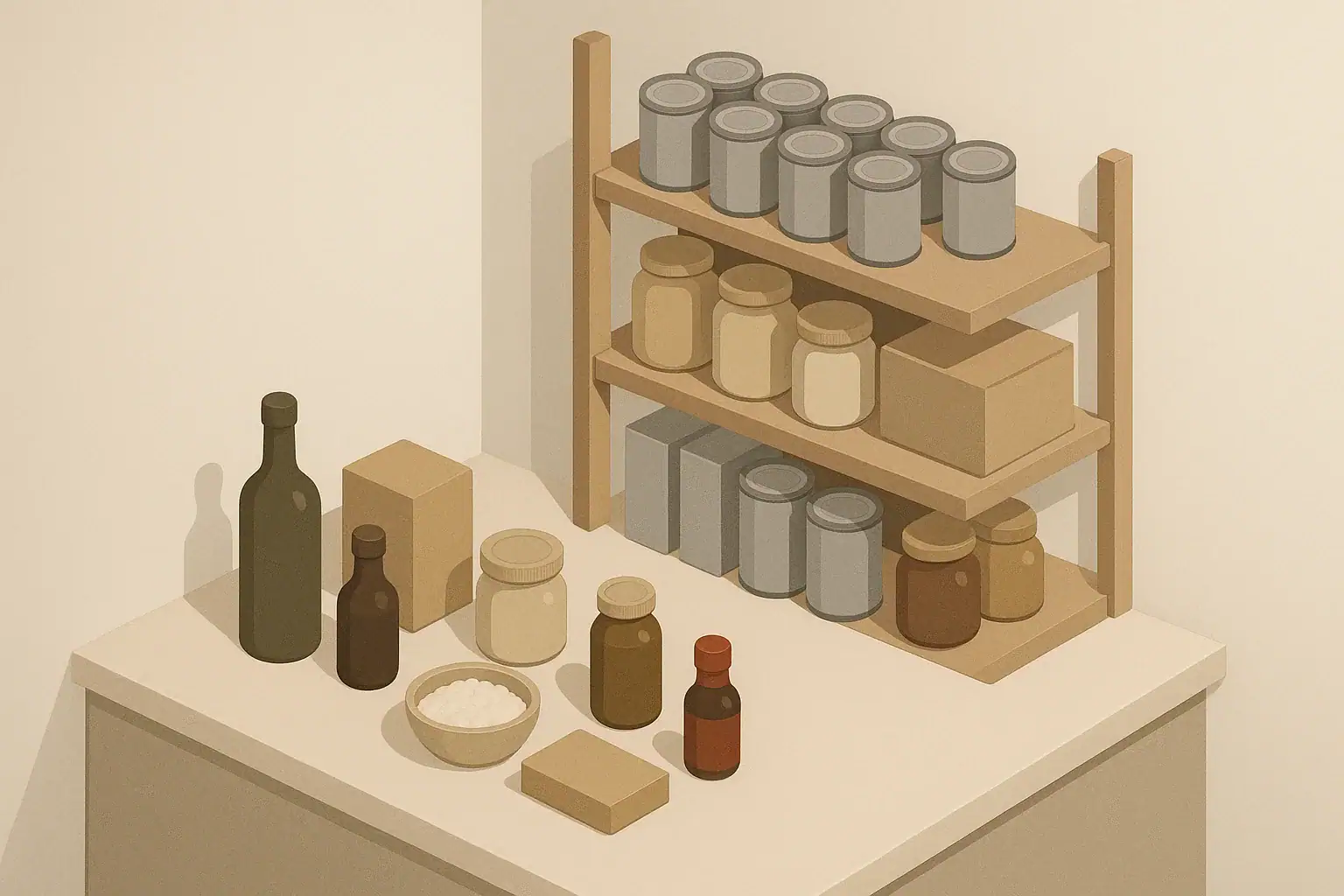
Why Flavor Matters in Emergency Meals
Emergency food planning often focuses on calories and storage life, but flavor is just as important for everyday families. During a power outage, storm, or short-term disruption, having meals that taste good can make stressful situations feel more normal and manageable.
Shelf-stable sauces and flavor boosters turn basic pantry items into meals that people actually want to eat. This is especially helpful if you are working with limited cooking options or trying to feed kids, older adults, or picky eaters.
Thoughtful flavor planning can also help you:
- Reduce food fatigue from eating the same staples repeatedly
- Make simple no-cook or low-fuel meals more appealing
- Encourage everyone to eat enough when routines are disrupted
- Use up pantry staples efficiently, with less waste
The goal is not gourmet cooking. It is having a small, practical set of shelf-stable sauces and seasonings that work with the foods your household already eats.
Key Types of Shelf-Stable Flavor Boosters
You do not need an entire restaurant pantry to keep emergency meals interesting. A few broad categories of shelf-stable flavor boosters cover most everyday situations and can be stored in small spaces, including apartments.
Dry Seasoning Blends
Dry seasonings are light, compact, and typically store well for a long time in a cool, dry place. They are ideal when refrigeration is limited or unavailable.
Useful examples include:
- Basic salt and pepper: Essential for almost any savory dish.
- All-purpose seasoning blends: Good for canned vegetables, rice, beans, and eggs (if available).
- Dried garlic and onion: Powder or granules add depth to soups, stews, and pasta.
- Dried herbs: Such as parsley, oregano, thyme, or mixed herb blends for pasta, canned tomatoes, and beans.
- Spice blends for specific cuisines: For example, blends commonly used in chili, tacos, curries, or barbecue flavors.
Store dry seasonings in tightly closed containers away from heat and moisture. They gradually lose strength over time, so plan to use and replace them as part of your normal cooking instead of letting them sit unused.
Powdered and Dehydrated Flavor Bases
Powdered flavor bases add body and savoriness to simple ingredients. Many can be mixed with hot water to become a broth or stirred directly into dishes.
Common options include:
- Broth or bouillon powder: For quick soups, stews, and to flavor rice or noodles.
- Powdered gravy mixes: To add flavor and moisture to instant potatoes, rice, or canned meats.
- Dehydrated soup mixes: Can be combined with canned vegetables, beans, or pasta.
- Dehydrated onion, chives, or vegetable mixes: Boost flavor in canned sauces, eggs (if available), or rice dishes.
These powders are especially useful if you are relying on a small camping stove or limited fuel, because they cook quickly and do not require long simmering times.
Shelf-Stable Bottled and Jarred Sauces
Many bottled and jarred sauces are shelf-stable until opened and can transform plain staples into full meals. Check labels for storage instructions and note whether items require refrigeration after opening.
Common categories include:
- Tomato-based sauces: Pasta sauce and pizza-style sauce work with pasta, rice, canned vegetables, and canned meats.
- Vinegar-based sauces: Useful for adding acidity and brightness to rice, beans, or canned vegetables.
- Oil-based sauces or dressings that are shelf-stable until opened: Can be used as marinades, toppings, or to dress grain salads.
- Savory cooking sauces: Concentrated sauces that can flavor stir-fries, noodle dishes, or canned vegetables.
Choose a few versatile favorites your household already enjoys. When planning for emergencies, favor sauces that can be used in more than one way, such as working with both rice and pasta or pairing well with canned beans.
Condiment Packets and Single-Serve Portions
Small packets from takeout or single-serve containers can be useful in emergencies because they are:
- Pre-portioned
- Easy to share or ration
- Less likely to require refrigeration after opening
Common examples include small packets of salt, pepper, hot sauce, mustard, mayonnaise-style spreads, and salad dressings. Store them together in a sealed container and check occasionally for signs of leakage or damage.
Example values for illustration.
| Household situation | Better to prioritize | Why it helps |
|---|---|---|
| Small apartment with limited storage | Multi-use dry spice blends and broth powder | Compact, light, no refrigeration needed |
| Family with picky eaters | Familiar sauces and condiment packets | Makes basic foods taste like normal meals |
| Household expecting frequent power outages | Bottled sauces that stay shelf-stable unopened | Useful for quick one-pot meals when power returns briefly |
| Older adults or low-energy cooking | Powdered soup and gravy mixes | Fast to prepare with minimal stirring and fuel |
| Households with sodium concerns | Herbs, spices, and vinegar-based flavor | Add flavor without relying only on salt |
| Families with kids | Mild sauces and sweet or tangy condiments | Encourages children to eat simple staple foods |
Storing Sauces Safely During Power Outages
Flavor boosters are only helpful if they are stored and used safely, especially when refrigeration is unreliable. Most shelf-stable items stay safe unopened in a cool, dry cabinet until their labeled date, but conditions during an outage can change.
Understanding “Shelf-Stable Until Opened”
Many sauces and condiments are manufactured to be shelf-stable before opening but need refrigeration afterward. For emergency planning, focus on:
- Items that are fully shelf-stable, even after opening (often dry or low-moisture items)
- Items you can realistically use up quickly once opened, even without a refrigerator
- Small containers or single-serve packs that will be used in one sitting
Read storage directions and consider how your household actually uses each item. If you typically take several weeks to finish a bottle of sauce, that same bottle may not be practical to open during a long outage.
Managing Opened Sauces When the Fridge Is Off
During a power outage, refrigerators and freezers may no longer keep foods at typical cold temperatures. Some households may use coolers with ice or cold packs for a short period, but it is helpful to plan as if cold storage could be limited.
Consider the following practices:
- Prioritize small containers: They are easier to finish in one or two meals.
- Use packets first: Single-serve condiments avoid the need for refrigeration after opening.
- Open only what you need: Avoid opening multiple bottles of the same type of sauce at once.
- Keep opened items out of direct heat: Store in the coolest part of your home away from stoves, sunny windows, or radiators.
If you do have limited cooler space, reserve it for perishable items that truly require cold temperatures, such as dairy or certain opened sauces that state refrigeration is needed after opening.
Labeling and Rotation
Simple labeling helps you remember what to use first and what needs replacement. This is especially useful if emergencies are infrequent and items sit on the shelf for a while.
Practical habits include:
- Writing the purchase or opening date on bottles and jars
- Placing older items in front of newer ones
- Checking expiration or best-by dates during seasonal cleanups
- Using sauces in normal meals before they age out
By using sauces regularly, you keep your emergency stash fresh without needing a separate stock just for emergencies.
Building a Compact Flavor Kit for Emergencies
A flavor kit can be as small as a shoebox or as large as part of a pantry shelf, depending on your living space and household size. The idea is to group flavor items you rely on during disruptions so you can grab them quickly when the lights go out.
Core Items for Most Households
Many households can cover a wide range of meals with a simple core group of items that pair well with common pantry staples like rice, pasta, beans, canned vegetables, and canned meats.
Consider including:
- Salt, pepper, and an all-purpose seasoning blend
- One or two dried herb blends your household likes
- Garlic and onion powder or granules
- Broth or bouillon powder
- One tomato-based cooking or pasta sauce
- One vinegar-based or tangy sauce
- One mild sauce that kids will eat, if relevant
- A small assortment of condiment packets stored in a sealed bag or container
Keep the kit in a place that does not get overly hot, such as an interior pantry or a cabinet away from the stove. If you live in a region with very hot summers, consider how indoor temperatures may affect storage and rotate items more regularly.
Flavor Boosters for No-Cook and Low-Fuel Meals
In some emergencies, cooking might be limited to a camp stove, grill, or none at all. Planning sauces and seasonings that work with no-cook or very quick-cook foods can help you stretch fuel and stay flexible.
Useful combinations include:
- Rice or instant grains + broth powder + dried herbs: Quick flavor with minimal simmering.
- Canned beans + tomato sauce + chili-style seasoning: Simple, hearty bean bowls.
- Canned tuna or chicken + shelf-stable dressing or oil-based sauce: Easy protein topping for crackers or bread.
- Canned vegetables + vinegar-based sauce: Simple, tangy side dish requiring no cooking.
For completely no-cook situations, focus on sauces and dressings that taste good at room temperature and pair well with canned or packaged ready-to-eat foods.
Adapting to Dietary Needs and Preferences
Every household has different preferences and needs. When building your flavor kit, think about:
- Allergies and intolerances: Choose sauces that fit everyone’s needs.
- Sensitivity to spicy foods: Keep both mild and hot options if needed.
- Texture preferences: Some may prefer smooth sauces over chunky ones.
- Familiar flavors: Kids and older adults may eat more readily when flavors feel familiar.
Instead of trying to copy a generic list exactly, start with what your household already eats on busy weeknights and look for shelf-stable versions or similar alternatives.
Example Emergency-Friendly Meal Ideas Using Flavor Boosters
Once you have a few sauces and seasonings on hand, it becomes easier to turn simple ingredients into filling meals. These ideas assume access to basic pantry staples and either no cooking or very simple cooking, such as a single burner or hot plate powered by a backup source.
One-Pot Pasta with Canned Vegetables
This meal works well when you have a little fuel or short periods of electricity.
- Dry pasta
- Jar or can of tomato-based sauce
- Canned vegetables (such as corn, peas, or mixed vegetables)
- Garlic powder, dried herbs, salt, and pepper to taste
Cook the pasta, drain, then return to the pot with sauce and drained vegetables. Season with garlic, herbs, salt, and pepper. Warm through and serve.
Seasoned Bean and Rice Bowls
This option is flexible and uses ingredients that store well.
- Rice or another grain (instant rice reduces fuel use)
- Canned beans, drained and rinsed
- Broth powder or bouillon
- Seasoning blend (such as chili-style or taco-style)
- Optional bottled sauce or condiment for topping
Cook rice in water flavored with broth powder. Stir in beans and seasoning blend. Top with a favorite sauce or condiment packets for extra flavor.
No-Cook Grain Salad with Canned Protein
For warm-weather emergencies where cooking is uncomfortable or difficult, consider grain salads using pre-cooked shelf-stable grains or leftover cooked grains.
- Pre-cooked shelf-stable grains or previously cooked and cooled grains
- Canned beans or canned fish
- Shelf-stable dressing or oil and vinegar-style sauce
- Dried herbs, salt, and pepper
Combine grains, drained beans or fish, and dressing. Season with herbs, salt, and pepper. This can be prepared even if power is out, as long as ingredients are at a safe room temperature and were stored properly.
Simple Soup from Canned Vegetables and Broth Powder
If you have a single burner and a pot, you can create a quick soup using pantry items.
- Canned mixed vegetables or individual vegetables
- Broth or bouillon powder
- Water
- Dried herbs and spices to taste
- Optional: small pasta shapes or instant rice
Combine water and broth powder according to package directions (using amounts as a rough guide). Add canned vegetables and optional pasta or rice. Simmer until heated through and any added grains are tender. Adjust seasoning with herbs and spices.
Example values for illustration.
| Food type | Storage tip | Rotation interval idea | No-cook or low-cook use |
|---|---|---|---|
| Dry spice blends | Store in small, tightly closed containers | Check flavor strength every 6–12 months | Sprinkle on canned beans or vegetables |
| Broth or bouillon powder | Keep sealed, away from humidity | Use regularly in weekly soups or grains | Mix with hot water for quick broth |
| Bottled tomato sauces | Store upright, cool, and dark | Use oldest jars in monthly pasta nights | Heat briefly with canned vegetables |
| Vinegar-based sauces | Keep away from direct sunlight | Review dates during seasonal pantry checks | Toss with canned vegetables for salads |
| Oil-based dressings (unopened) | Rotate so oldest are used first | Use in regular salads every few weeks | Dress grain salads with canned beans |
| Condiment packets | Store in a sealed bag or box | Check for leaks every few months | Add to sandwiches, crackers, or rice bowls |
| Powdered gravy mixes | Keep in a dry container or bin | Use in comfort meals during cooler seasons | Mix with hot water for quick sauce |
Keeping Flavor Planning Simple and Sustainable
Emergency flavor planning does not have to be complicated or expensive. The most effective approach is to build a small collection of shelf-stable sauces and seasonings you already enjoy, then use and replace them as part of everyday cooking.
By keeping your flavor kit realistic, space-conscious, and tailored to your household’s tastes, you create a pantry that supports both ordinary busy nights and unexpected outages. When a storm, heatwave, or other short-term disruption affects your routine, you will have the ingredients to prepare simple, familiar meals that help everyone feel more comfortable and cared for.
Related guide: Shelf-Stable Breakfasts That Don’t Need Refrigeration.
Authoritative sources
Safety recommendations can change. Confirm critical details with current official guidance and local authorities.
- CDC: Carbon Monoxide Poisoning Basics
- USDA FSIS: Keep Food Safe During Emergencies
- CDC: Guidelines for Cleaning Safely After a Disaster
Frequently asked questions
How long do shelf-stable sauces last unopened and after opening during a power outage?
Unopened shelf-stable sauces generally remain safe until the printed best-by or use-by date when stored cool and dry. After opening, storage recommendations vary—many require refrigeration; if refrigeration is unavailable, opt for single-serve packs or small containers and plan to consume them quickly. Always discard any sauce showing off odors, color changes, or visible mold.
Which shelf-stable sauces work best across many emergency meal types?
Tomato-based sauces, broth or bouillon powder, vinegar-based sauces, and concentrated savory cooking sauces are among the most versatile because they pair well with rice, pasta, beans, and canned meats. Oil- or vinegar-based dressings and condiment packets add flavor to no-cook grain salads and canned proteins. Choose a few flavors your household already prefers to maximize use.
Can powdered bouillon and dehydrated soup mixes provide enough flavor and nutrition for emergency meals?
Powdered bouillon and dehydrated soup mixes add concentrated savory flavor and body to grains, soups, and stews, making simple staples more satisfying. They can help stretch limited fuel because they dissolve quickly, but they may be high in sodium and lack the full nutrients of fresh broths. Balance their use with canned vegetables, beans, or other protein sources for better nutrition.
How should I manage opened sauces when my refrigerator is off for several days?
Keep opened sauces in the coolest part of your home and away from direct heat or sunlight, and transfer them to smaller containers to minimize exposure and make them easier to use up. Prioritize single-serve packets and use perishable opened items first; reserve any limited cooler space for truly perishable foods. When in doubt, follow the product’s open-container instructions and discard any sauce with spoilage signs.
What should I include in a compact flavor kit if someone in my household has allergies or dietary restrictions?
Start with familiar, shelf-stable items that meet your household’s needs—such as low-sodium bouillon, gluten-free seasoning blends, and vegan protein-friendly sauces—labeling each item with ingredients if needed. Include both mild and bolder flavors to accommodate picky eaters and single-serve packets to reduce cross-contamination. Regularly check labels during rotation to ensure nothing new conflicts with allergies or diet plans.
- Simple checklists and realistic planning
- Water, power, lighting, and pantry basics
- Family plans (kids, pets, seniors) and seasonal prep
Affiliate disclosure
As an Amazon Associate, we earn from qualifying purchases. Some links on this site may be affiliate links. If you buy through these links, we may earn a small commission at no extra cost to you. This helps support our content. Learn more.