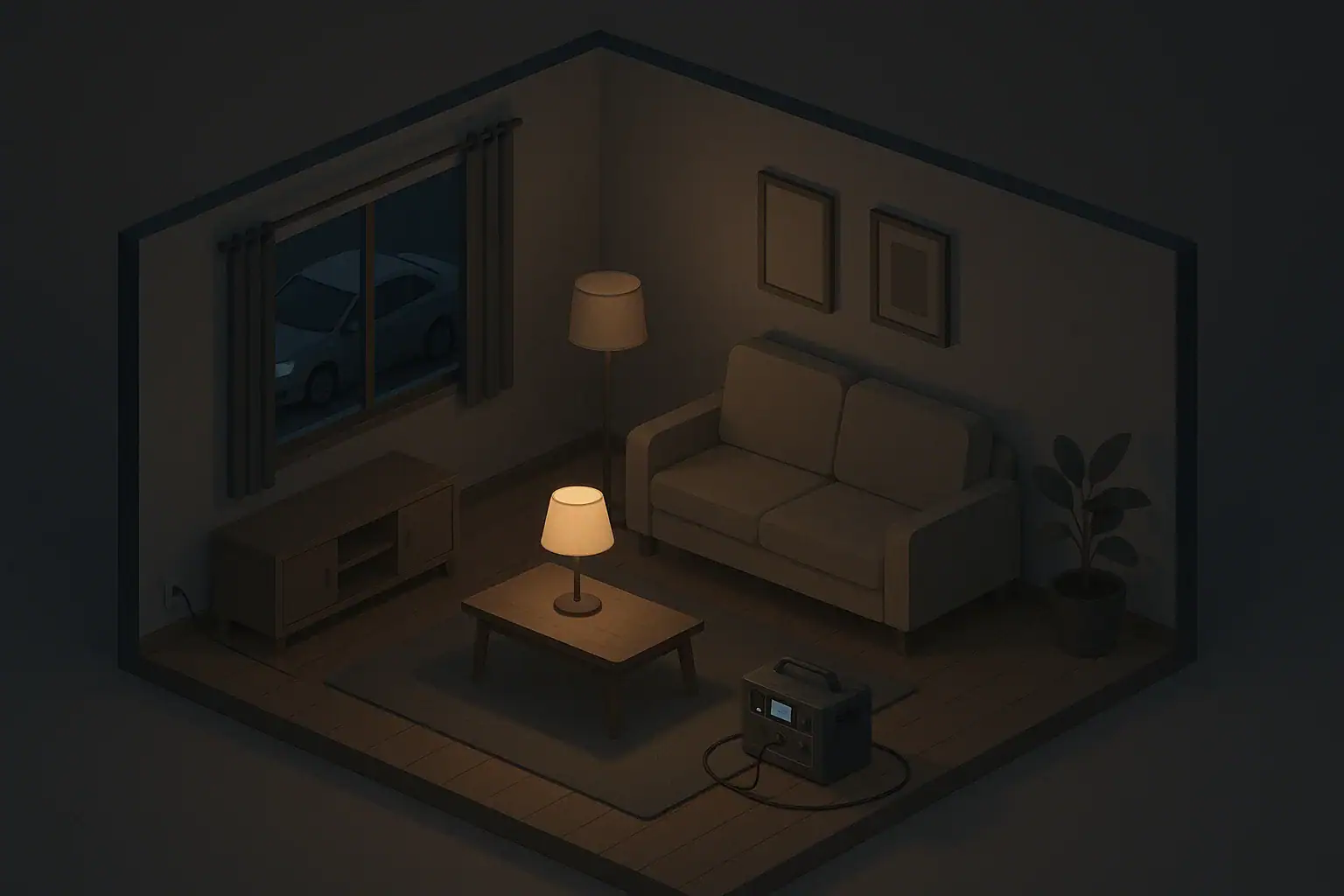
When the power goes out, your car can be a useful short-term backup power source. It is not a full home generator, but it can help keep a few essentials running until power returns.
Most modern vehicles have a 12V electrical system supplied by the car battery and charging system. With the right adapters and safe practices, you can use that system to:
- Charge phones and small electronics
- Run a small USB or 12V fan
- Power a small light or two
- Recharge portable battery packs or power banks
This approach fits well with calm, practical home readiness. It can be especially helpful for renters, apartment dwellers, and anyone without space for a larger generator.
This short guide summarizes practical options and safety considerations.
Why Use Your Car as a Backup Power Source?
When the power goes out, your car can be a useful short-term backup power source. It is not a full home generator, but it can help keep a few essentials running until power returns.
Most modern vehicles have a 12V electrical system supplied by the car battery and charging system. With the right adapters and safe practices, you can use that system to:
- Charge phones and tablets
- Run a small USB fan
- Power a small light or two
- Recharge portable battery packs or a compact power station
This approach fits well with calm, practical home readiness. It can be especially helpful for renters, apartment dwellers, and anyone without space for a larger generator.
Understanding 12V Power from Your Car
Most cars use a 12-volt direct current (DC) system. You can access this power in several ways, each with different limits and safety considerations.
12V Access Points in a Typical Vehicle
Common ways to tap into your car's 12V system include:
- Cigarette lighter / accessory outlet: Usually limited to low to moderate power. Best for small devices.
- USB ports: Great for phones and tablets. These provide 5V DC and are the safest, simplest option for charging small electronics.
- Direct battery clamps (with proper equipment): Used with some inverters or jumper packs. This can support higher loads but requires extra caution.
What You Can Safely Power from 12V
Your car's system is designed for the vehicle first, not as a household power plant. For readiness planning, focus on low-power essentials such as:
- Phones, tablets, and small radios
- Low-power LED lights
- Small USB fans (for comfort, not whole-room cooling)
- Charging small battery packs or a compact power station
Avoid connecting high-demand appliances like heaters, large space heaters, full-size refrigerators, or cooking devices directly to a small inverter in your car. These can overload the system or drain the battery very quickly.
Example values for illustration.
| Need | If this is your situation | Then consider |
|---|---|---|
| Phone charging only | You just need communication and basic info | Use built-in USB ports or 12V USB adapter |
| Small lights | You want a few hours of gentle lighting | Use USB or 12V LED lights while engine runs occasionally |
| Small fan | You need some airflow in warm weather | Use a low-power USB fan, not a large household fan |
| Charging a portable power station | You have a separate battery unit | Use car's 12V outlet with manufacturer-recommended cable |
| Running kitchen appliances | You are thinking of powering coffee makers or toasters | Generally avoid; plan no-cook or low-power meals instead |
| Medical or life-sustaining equipment | Someone relies on powered devices | Talk with the device provider about dedicated backup options |
What an Inverter Does (and When to Use One)
An inverter converts the 12V DC power from your car into 120V alternating current (AC) similar to standard household outlets in the US. This allows some small household devices to run from your vehicle.
Basic Types of Inverters
For home readiness, you will usually see two general types described:
- Lower-wattage inverters: Often used through the 12V accessory outlet for modest loads like small chargers.
- Higher-wattage inverters: Often connect directly to the battery with clamps, suitable for brief use with slightly larger loads, within safe limits.
Always follow the inverter's instructions, including how to connect it and what loads it can support. Do not exceed the current rating of your 12V outlet or wiring.
Realistic Uses for an Inverter in a Power Outage
During a short outage, an inverter might help with:
- Charging small laptop computers (within power limits)
- Powering low-wattage LED lamps
- Running a small battery charger for cordless tools or flashlights
It is still better to rely on low-power DC and USB options when possible, because they waste less energy and put less strain on your vehicle.
Inverter Placement and Ventilation
Inverters can get warm in use. When planning for outages:
- Place the inverter on a stable, non-flammable surface.
- Provide space around the vents so air can circulate.
- Keep it away from bedding, curtains, or paper piles.
- Avoid covering it with clothing or blankets, even in cold weather.
Protecting Your Car Battery
Your car battery is designed primarily for starting the engine, then being recharged by the alternator while you drive. Drawing power for your home changes how the battery is used, so it is important to protect it.
Engine On or Off?
Using the car battery with the engine off can drain it faster than many people expect. As a general rule of thumb for short-term readiness:
- For quick phone charging or short use of a small device, you may be able to use the battery with the engine off briefly.
- For anything longer or higher draw, plan to run the engine periodically so the alternator can recharge the battery.
Never run the engine in an enclosed area such as a closed garage due to the risk of exhaust buildup. Move the car outdoors or ensure very strong ventilation before letting it idle.
Simple Habits to Avoid a Dead Battery
To reduce the chance of being stranded with a drained battery:
- Use the lowest-power devices that meet your needs.
- Avoid leaving inverters or 12V devices plugged in when the car is off and unattended.
- Turn off interior lights and accessories when not in active use.
- If you are unsure, err on the side of running the engine occasionally while you use power.
Special Considerations in Cold or Hot Weather
Batteries are more stressed in temperature extremes:
- Cold weather: Batteries have reduced performance. After a night of powering devices, you may have less ability to start the car.
- Hot weather: Heat can shorten battery life over time. Avoid placing inverters or chargers directly on hot surfaces.
For winter storms and heatwaves, it helps to treat your vehicle as a backup for essentials only, not as your main comfort system.
Safety Essentials: Exhaust, Cables, and Fire Risk
Using a vehicle for power adds a few safety concerns beyond the usual blackout planning. A few careful practices go a long way.
Preventing Carbon Monoxide Buildup
Any time the engine is running, exhaust is produced. To reduce risk:
- Never idle the car in a closed garage or carport with restricted airflow.
- Keep the tailpipe clear of snow, leaves, or debris.
- Position the car outdoors where exhaust can disperse.
- Use a working carbon monoxide alarm in your home as part of regular safety planning.
Managing Cables Safely
Cables between the car and your devices can create tripping or damage risks, especially in the dark. Plan ahead to:
- Route cords along walls instead of across walkways.
- Use shorter cables when possible to reduce tangles.
- Avoid pinching cords in doors or windows where insulation or sharp edges could damage them.
- Keep connectors off wet surfaces.
Reducing Fire Risk
While uncommon, electrical problems can cause heat buildup. To lower risk:
- Use inverters and adapters within their stated power limits.
- Do not daisy-chain multiple power strips or adapters.
- Periodically feel for excessive warmth on inverters, plugs, or cords.
- Unplug devices when not actively needed, especially overnight.
Planning Loads: What to Power and for How Long
Because a car is a limited power source, thoughtful planning helps you get the most benefit without overdoing it. Focus on what truly matters during a short-term outage.
Prioritizing Devices During a Blackout
In most homes, highest priorities during an outage are:
- Communication (phones, basic internet access if possible)
- Information (radio or simple access to news and weather)
- Lighting (safe movement around the home)
- Comfort basics (a bit of airflow, some entertainment for kids)
Instead of trying to keep every device running, choose a small set of essentials and schedule charging time.
Using Your Car to Recharge Other Backup Options
One of the best uses of a vehicle during a blackout is to recharge other, more efficient backup systems, such as:
- Portable power banks for phones
- Rechargeable lanterns or flashlights
- A separate battery power station (within the car's safe charging limits)
This way, the car does not need to run constantly. You can periodically charge these devices and then bring them inside for quiet, exhaust-free use.
Integrating Car Power into a Simple Home Readiness Plan
Your vehicle is just one piece of a broader readiness picture. It works best alongside small, easy steps you can take around the home to reduce your dependence on any one system.
Complementary Non-Power Strategies
To make limited car-based power go further, combine it with low-tech options:
- Keep a few battery-powered or rechargeable LED lanterns.
- Use blankets, layers, and draft-stopping in winter to reduce need for powered heat sources.
- Plan a no-cook or low-cook pantry with foods that do not require long cooking times.
- Arrange simple paper-based contact lists and basic instructions for family members.
Checklist: Using Your Car Safely for Backup Power
Before relying on your car during an outage, it helps to practice once or twice on a normal day. Use a calm weekend afternoon to:
- Identify which outlets and ports your car has.
- Test charging a phone and a light from the car.
- Try routing cables safely into your home with doors or windows slightly open.
- Confirm that you can run the engine outdoors with the tailpipe clear and doors closed.
Example values for illustration.
| Device type | Typical watt range (example) | Planning notes |
|---|---|---|
| Smartphone charger | 5–20 watts | Low priority draw; easy to power from USB or 12V |
| Small LED lantern | 2–10 watts | Very efficient; good candidate for repeated charging |
| Tablet or small laptop | 20–80 watts | Reasonable for limited use through an inverter |
| Small USB fan | 2–10 watts | Helps with comfort; keep run times modest |
| Compact battery power station (charging) | 40–120 watts | Plan charging sessions while engine can recharge battery |
| Large household appliance | 500+ watts | Usually not practical or recommended from a car inverter |
Adapting for Different Homes and Households
How you use your car for power will look different in an apartment versus a house, or for families versus single adults. A few examples:
- Apartment dwellers: It may be easier to run a single extension cord to a central room for charging devices and a lantern. Coordinate with neighbors about shared parking areas and idling rules.
- Single-family homes: You might park in a driveway and choose one room as the "powered" zone where you bring charged lanterns and devices.
- Families with kids: Prioritize small comforts, like keeping a few devices charged for calm entertainment and a nightlight for children.
- Households with seniors or pets: Focus on safe lighting, simple communication, and temperature management using low-power fans or extra blankets as needed.
The goal is not to power everything, but to maintain safety, communication, and basic comfort during realistic short-term outages.
Keeping the Approach Calm and Sustainable
Using your car as a power source works best when it is part of everyday readiness, not a last-minute scramble. By understanding 12V power, inverters, and battery safety ahead of time, you can respond to outages in a steady, organized way without overloading your vehicle or your expectations.
Authoritative sources
Safety recommendations can change. Confirm critical details with current official guidance and local authorities.
- CDC: Carbon Monoxide Poisoning Basics
- USDA FSIS: Keep Food Safe During Emergencies
- U.S. CPSC: Battery Safety
Frequently asked questions
How long can I charge a smartphone from my car before risking a dead battery?
Smartphone chargers typically draw 5–20 watts, which is a small fraction of a car battery's capacity, so you can often recharge phones multiple times before exhausting the vehicle battery. Exact run time depends on the battery's state of charge, age, and other loads on the car. To avoid being stranded, limit charging sessions with the engine off and run the engine periodically so the alternator can replenish the battery.
Can I run a refrigerator or microwave from my car inverter?
Most household refrigerators and microwaves draw hundreds to thousands of watts and often have higher startup surges, which exceed the capability of small car inverters or accessory outlets. Running these appliances from a vehicle requires a properly sized inverter, substantial battery capacity, and careful wiring, so it is generally not recommended from a car alone. For heavy loads, use a dedicated generator or a purpose-built backup power system.
Is it safe to idle my car in the garage while using power?
No — idling a vehicle in a closed or poorly ventilated space can allow carbon monoxide to accumulate to dangerous levels. Always run the engine outdoors with the tailpipe clear of snow or debris, and never inside a closed garage. Use a working carbon monoxide alarm in your home as an additional safety measure.
How should I connect a high-wattage inverter to avoid damaging the car?
High-wattage inverters should be connected directly to the battery using appropriately sized gauge cables and a fuse or circuit breaker located close to the battery to protect against short circuits. Follow the inverter's instructions, avoid exceeding its continuous rating, and mount it on a stable, non-flammable surface with adequate ventilation. If you are unsure about wiring or load capacity, consult a qualified technician.
Can I charge a portable power station from my car, and what precautions should I take?
Yes — many portable power stations can be charged from a car via the 12V outlet or an inverter, but always use the manufacturer-recommended cable and respect the device's charging limits. Prefer charging sessions with the engine running so the alternator helps maintain the vehicle battery, and avoid charging in extreme temperatures. Monitor connections, avoid placing charging equipment on flammable surfaces, and unplug when charging is complete.
- Simple checklists and realistic planning
- Water, power, lighting, and pantry basics
- Family plans (kids, pets, seniors) and seasonal prep
Affiliate disclosure
As an Amazon Associate, we earn from qualifying purchases. Some links on this site may be affiliate links. If you buy through these links, we may earn a small commission at no extra cost to you. This helps support our content. Learn more.