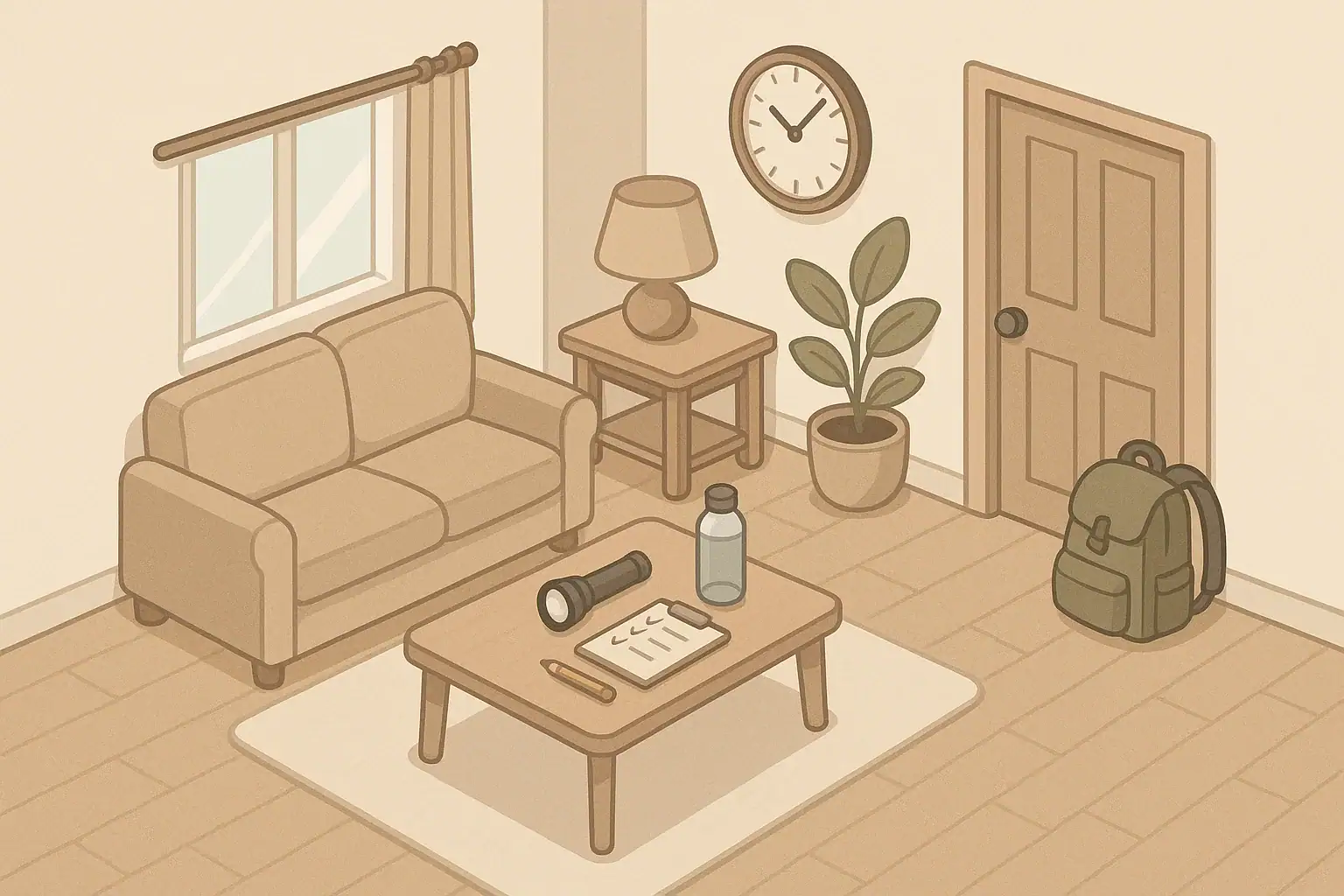
A weekly readiness reset is a short, repeatable routine that keeps your home prepared for small disruptions like brief power outages, boil-water notices, or being stuck at home for a day or two.
This guide walks you through a simple 10-minute weekly routine. You can do it on your own or with your household. The goal is not perfection. It is to keep the basics checked, topped up, and easy to find.
How the 10-minute reset works
The reset is one small loop you repeat every week:
- Same day and time (for example, Sunday evening)
- Same short checklist
- Stop at 10 minutes, even if you are not “done”
Over time, this keeps your supplies, information, and habits in good shape without a big weekend project.
Step 1: Quick safety and hazard scan (2 minutes)
Walk through your main living areas and look for anything that could turn a small problem into a bigger one.
- Clear exits and walkways so you can move safely in low light.
- Move flammable items away from stoves, heaters, and candles.
- Check that space heaters, if used, are stable and have space around them.
- Note any loose rugs, cords, or clutter that could cause trips in the dark.
If you see something you can fix in under a minute, do it now. If it needs more time, write it down for later.
Step 2: Lights and power basics (2 minutes)
In a short power outage, light and basic charging matter most. Each week, quickly confirm:
- Flashlights: Know where at least one flashlight is in each main area. Turn one on briefly to confirm it works.
- Batteries: Check that you have a small stash of the sizes your flashlights and radios use. Replace any that are corroded or leaking and dispose of them according to local rules.
- Power bank: If you use a portable phone charger, glance at the charge level. Plug it in while you do the rest of the reset if it is low.
Follow manufacturer instructions for all devices. Do not use damaged cords, batteries, or equipment.
Step 3: Water and simple food check (2 minutes)
Short disruptions often affect water or make quick meals harder. Once a week, do a fast check:
- Drinking water: Confirm you have at least a small buffer of safe drinking water on hand (for example, a few extra bottles or a filled container). Rotate older containers into regular use.
- Simple meals: Make sure you have a few ready-to-eat or easy-to-heat foods your household will actually eat, including options that do not require an oven.
- Special needs: Note any items for babies, older adults, or people with medical or dietary needs that are running low.
For guidance on safe drinking water and storage, you can review the U.S. Environmental Protection Agency’s page on emergency disinfection of drinking water. Always follow local public health and water utility instructions during an actual incident.
Step 4: Go-bag and key documents touchpoint (2 minutes)
You do not need a perfect go-bag to benefit from this step. The weekly goal is simply to keep the basics current and reachable.
- Location: Confirm your bag or basic grab-and-go items are in the same, easy-to-reach spot.
- Essentials: Glance inside for a flashlight, basic first-aid supplies, a small amount of cash if you use it, and a copy or list of important phone numbers.
- Documents: Make sure you know where key documents or backups are stored (for example, IDs, insurance information). You can keep copies in a waterproof pouch or secure digital storage.
For ideas on what to include, see the Federal Emergency Management Agency’s guidance on building a basic emergency kit. Adjust any list to your home, budget, and health needs.
Step 5: Communication and contact check (2 minutes)
A short check-in each week keeps everyone on the same page if plans change suddenly.
- Phone numbers: Confirm that key contacts are saved in your phone and at least one other place (paper or another person’s phone).
- Household plan: Briefly remind everyone where to meet if you cannot reach each other and who an out-of-area contact might be.
- Charging habits: Consider a simple rule, like plugging in phones when you go to bed, so they start most days above half charge.
For more detail on family communication planning, you can review Ready.gov’s page on making a plan with your household.
Making the reset easy to stick with
The reset works best when it feels light and repeatable, not like a chore.
- Attach it to a habit: Pair it with something you already do weekly, like trash night or a regular show.
- Use a tiny checklist: Keep a one-page list on the fridge or inside a cabinet. Check off items as you go.
- Share the load: Give each person one small job (for example, a child checks flashlights; another person checks water).
- Stop at 10 minutes: If you notice bigger projects, write them down. The reset is for quick wins, not deep cleaning.
Adapting the reset for your household
Every home is different. Adjust the steps so they fit your space, health needs, and local risks.
- Mobility or sensory needs: Place flashlights, medications, and key items where they are easy to reach and use. Consider backup batteries or power options for essential medical or mobility devices, following your clinician’s and manufacturer’s guidance.
- Children: Give age-appropriate tasks, like finding the flashlight or checking that a favorite comfort item is in the go-bag.
- Pets: Add a quick look at pet food, water bowls, leashes, and carriers.
- Local hazards: If you live in an area with specific risks (such as hurricanes, wildfires, or winter storms), add one or two checks that match local emergency management advice.
For medical conditions, life-support equipment, or complex home setups, ask your healthcare team or a qualified professional how to build safe backup plans. In any emergency, follow directions from local authorities first, even if they differ from your usual routine.
Frequently asked questions
What if I cannot finish all the steps in 10 minutes?
That is normal. The reset is meant to be small and repeatable, not complete. Do what you can in 10 minutes, note anything unfinished, and pick it up next week. Over time, the basics stay in better shape than if you waited for a perfect day.
How much water and food should I keep on hand?
Different agencies offer different guidelines, and needs vary by person, climate, and health. Many people start by keeping at least a small buffer of drinking water and several easy meals at home, then build up gradually as space and budget allow. During an actual event, follow instructions from your local water utility and public health department.
Do I need a full emergency kit before I start this routine?
No. The weekly reset is designed to work even if you are starting from almost nothing. Begin with what you already have, like a single flashlight or a few extra food items, and slowly add or improve pieces as you are able.
How often should I check smoke alarms and carbon monoxide alarms?
Manufacturer instructions and local codes vary. Many people use a monthly or seasonal reminder to test alarms and replace batteries as directed by the manufacturer. For general guidance, you can review the U.S. Consumer Product Safety Commission’s information on home fire safety and alarms, and follow local fire department advice.
- Simple checklists and realistic planning
- Water, power, lighting, and pantry basics
- Family plans (kids, pets, seniors) and seasonal prep
Affiliate disclosure
As an Amazon Associate, we earn from qualifying purchases. Some links on this site may be affiliate links. If you buy through these links, we may earn a small commission at no extra cost to you. This helps support our content. Learn more.