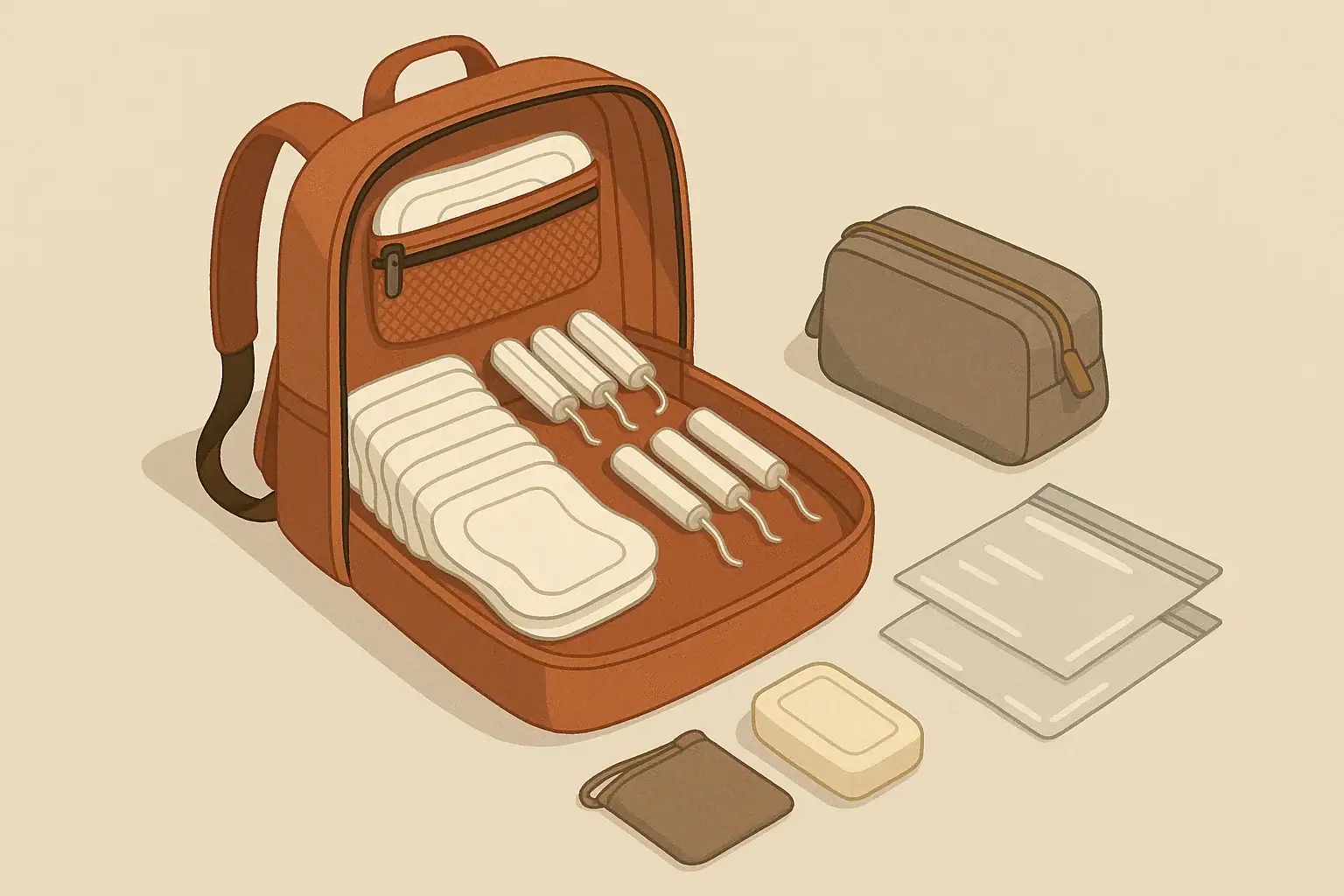
Why menstrual hygiene belongs in every go-bag
Menstrual supplies are just as important as water, snacks, and a flashlight. If you or anyone in your household menstruates, your go-bag should cover at least one full cycle away from home.
The main goal is simple: pack compact, familiar supplies you know how to use, and rotate them so they stay clean and usable. You do not need a huge stash in your bag. You need a small, organized kit that works for a few days of evacuation, sheltering with friends, or riding out a short disruption at home.
Below is a practical way to choose products, pack them small, and keep them up to date.
Decide what products you actually use
Start with what you or your family already use. An emergency is not the time to experiment with a completely new product type unless you have tried it in advance.
- Disposable pads – Simple to use, no insertion, easy to share if needed. Take more space but are very flexible.
- Tampons – Compact and discreet. Need clean hands and a bit more privacy to change.
- Menstrual cups or discs – Reusable and space-saving once you are comfortable with them. Require handwashing and a way to clean the cup.
- Period underwear or reusable pads – Comfortable and can reduce how many disposables you carry, but you must be able to wash and dry them.
For most go-bags, a mix works well: a small number of disposables plus any reusable method you already use confidently.
How much to pack for one person
Plan for at least one full cycle, assuming you might not be able to restock right away. Adjust for heavier or lighter flows based on your normal pattern.
- If you mainly use pads: around 12–16 regular pads plus 4–6 heavier pads or overnight pads.
- If you mainly use tampons: around 16–20 tampons in the absorbencies you normally use, plus 4–6 pads or liners as backup.
- If you use a cup or disc: your cup or disc, 2–4 pads or liners for backup, and a way to clean your hands.
- If you use period underwear: 2–3 pairs plus a few disposable pads in case you cannot wash and dry underwear easily.
For a household, multiply by the number of people who might need supplies. If you are unsure who will be with you, consider a small shared stash of pads, which are the most widely usable.
Make it compact and organized
A dedicated menstrual kit inside your go-bag keeps everything clean and easy to grab, even in a crowded shelter or friend’s spare room.
- Use a small pouch: A zippered fabric pouch, cosmetic bag, or pencil case works well. Choose something opaque for privacy.
- Group items: Keep pads and tampons in their own resealable bag inside the pouch to protect from moisture.
- Flatten packaging: Remove bulky cardboard boxes and keep only the individually wrapped items.
- Label discreetly: If multiple people share a go-bag, a small label like “Hygiene kit” helps everyone find it quickly.
Hygiene, disposal, and privacy
Good hygiene and discreet disposal can be harder away from home, especially if water or trash service is limited.
- Hand cleaning: Pack alcohol-based hand sanitizer (at least 60% alcohol) for times when soap and water are not available. The CDC explains how to use hand sanitizer effectively.
- Travel-size soap: A small bar of soap or travel bottle of liquid soap helps if you have access to water.
- Wipes: Unscented personal wipes or baby wipes can help you feel clean when you cannot shower. Do not flush wipes unless the package clearly states they are flushable and local plumbing can handle it.
- Disposal bags: Pack several opaque, resealable plastic bags or small dog-waste bags. You can wrap used pads or tampons and seal them until you find a trash can.
- Privacy: A light scarf or large shawl in your go-bag can help you create a bit of privacy in a shared space while changing products.
If you use a menstrual cup or disc, plan for how you will rinse it. Ideally, use clean running water and soap. If that is not available, you may need to rely more on disposable products until you have a safe way to clean the cup.
Rotation and shelf life
Most disposable menstrual products do not have a strict expiration date, but they can be damaged by heat, moisture, or crushing in a bag over time.
- Check your kit twice a year: Use a recurring reminder (for example, when you change smoke alarm batteries or review other emergency supplies).
- Inspect packaging: Replace any pads or tampons with torn wrappers, visible dirt, or moisture damage.
- First in, first out: Move older supplies from the go-bag into your regular bathroom stash and replace them with fresh items.
- Watch temperature: If your bag is stored in a very hot place (like a car trunk), check more often. Heat can weaken adhesives on pads and damage some packaging.
Reusable products also need attention:
- Menstrual cups/discs: Check for cracks, sticky spots, or changes in texture. Follow the manufacturer’s replacement and cleaning instructions.
- Period underwear and reusable pads: Store them clean and fully dry to prevent mildew. Inspect elastic and absorbent layers during your regular rotation check.
Planning for pain and comfort
Menstrual comfort can make a big difference during an already stressful situation.
- Pain relief: If you normally use over-the-counter pain relievers for cramps, talk with a healthcare professional about what is safe for you and how to store a small supply. Keep medicines in original or clearly labeled containers and follow package directions.
- Heat options: A small reusable heat pack that activates by bending a metal disk or a chemical hand warmer (used carefully and wrapped in cloth) can offer some relief if you do not have access to a heating pad. Follow the product’s safety instructions.
- Comfort items: Consider packing a spare pair of soft underwear, leggings, or other clothing that feels comfortable during your period.
For general emergency health planning, including medications, you can review guidance from Ready.gov on building an emergency kit and adapt it to your own medical needs.
Planning for teens, guests, and surprises
Emergencies do not wait for a convenient time in someone’s cycle. It also may not be obvious who will be with you when you need to leave quickly.
- Teens and preteens: If you have children approaching puberty, quietly add a small kit with pads, a spare pair of underwear, and a simple note or card explaining how to use them.
- Guests and extended family: If you might shelter others, keep a small extra stash of pads in your household emergency supplies, not just in your personal go-bag.
- Irregular cycles: If your cycle is unpredictable, consider carrying a mini kit in your everyday bag as well as in your go-bag.
Frequently asked questions
Can I keep menstrual supplies in a car go-bag?
You can, but heat and cold can be hard on products. If your go-bag lives in a car, check it more often. Look for warped pads, damaged wrappers, or any sign of moisture. Rotate those items into home use more frequently and replace them with fresh supplies.
Are menstrual cups safe to use in an emergency?
They can be, if you already use them comfortably and can keep your hands and the cup reasonably clean. You need access to clean water and soap to wash your hands and the cup. If you cannot wash properly, it may be safer to rely on disposable products until you have better hygiene conditions. Follow the cleaning and replacement instructions from the cup’s manufacturer and consult a healthcare professional if you have questions about what is right for you.
What if I start my period and do not have my go-bag?
Consider keeping a very small kit in your everyday bag, school backpack, or desk: a couple of pads or tampons, a few wipes, and a small disposal bag. At home, keep a larger backup supply with your general emergency items so you can quickly restock your go-bag after you return.
How do I talk with kids about menstrual supplies in our emergency kit?
Use simple, age-appropriate language. You might say that these supplies are for when bodies bleed once a month and that it is normal and healthy. Show them where the kit is and how to recognize it, so they know it is available if they ever need it. Encourage them to ask questions and involve them in checking and restocking the kit as they get older.
- Simple checklists and realistic planning
- Water, power, lighting, and pantry basics
- Family plans (kids, pets, seniors) and seasonal prep
Affiliate disclosure
As an Amazon Associate, we earn from qualifying purchases. Some links on this site may be affiliate links. If you buy through these links, we may earn a small commission at no extra cost to you. This helps support our content. Learn more.