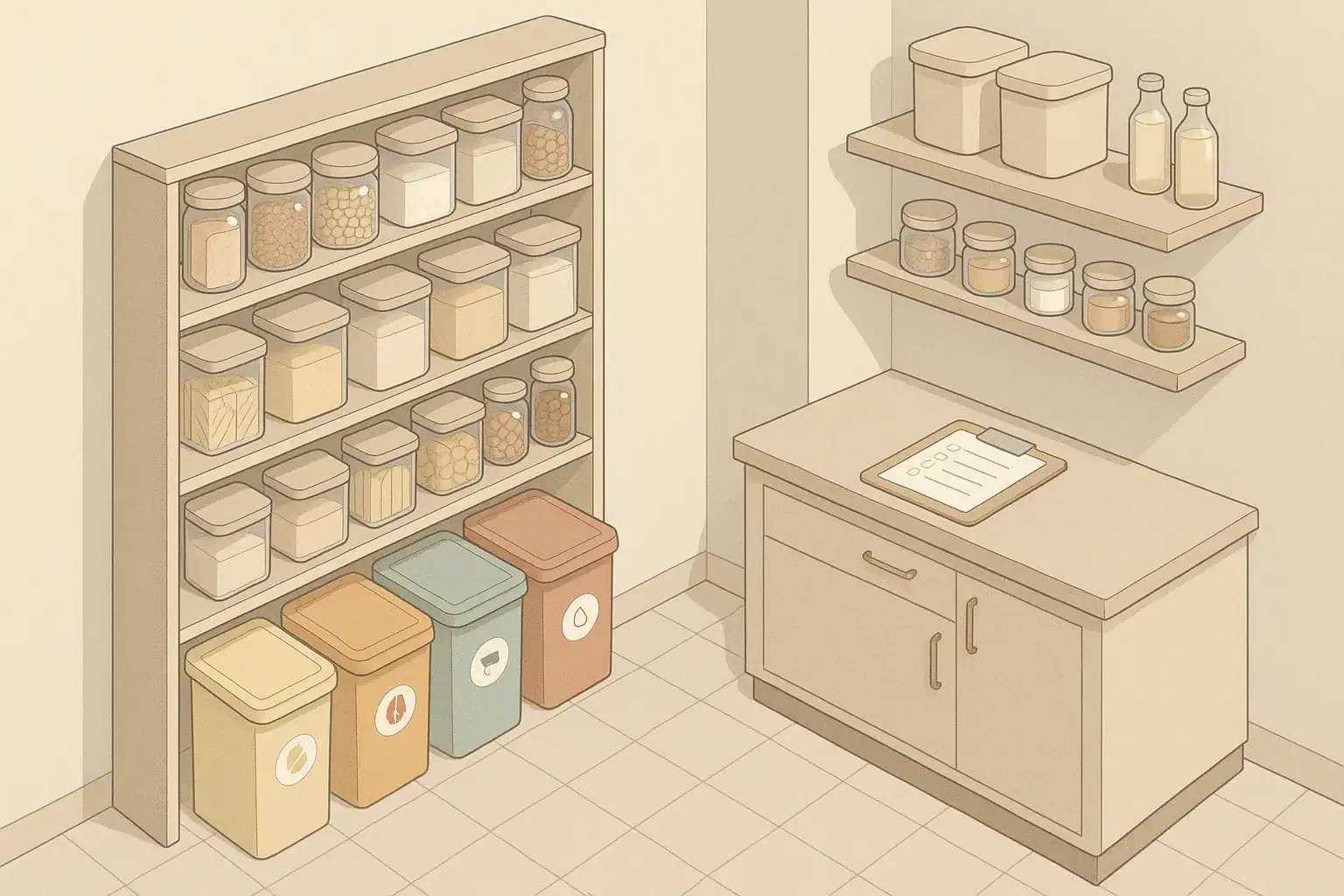
Why an allergy-safe emergency pantry matters
If someone in your home has food allergies, an emergency is not the time to improvise meals. Power outages, storms, or supply disruptions can make it harder to find safe foods or reach a familiar store.
An allergy-safe emergency pantry is a small, planned set of shelf-stable foods and supplies that:
- Use ingredients that are usually safe for your household
- Have labels you have already checked carefully
- Are stored to reduce cross-contact with allergens
- Include simple substitutes if your usual foods are not available
The goal is not perfection. The goal is to make it much easier to feed everyone safely when you are stressed, tired, or have fewer options.
Start with your household allergy profile
Before you buy anything, write down a simple allergy profile for your home. Keep it with your pantry supplies.
- List each person with a diagnosed food allergy or severe intolerance.
- Write the exact allergens (for example: peanut, tree nuts, milk, egg, wheat, soy, fish, shellfish, sesame).
- Note how strict you must be (for example: must avoid even tiny traces; or can tolerate “may contain” warnings only if discussed with a clinician).
- Add emergency contacts, including your allergy clinician if you have one.
- List prescribed medications such as epinephrine auto-injectors and antihistamines, and where they are stored.
Follow your clinician’s advice about what is safe for you. If you are unsure whether a type of product or precaution is right for your situation, ask a qualified medical professional.
Reading labels for your emergency pantry
In an emergency you may be reading labels by flashlight or in a hurry. Do the careful reading now, when you are calm, and keep only products you have already checked.
Know the major allergens and advisory statements
In the United States, packaged foods must clearly name the nine major food allergens when they are ingredients: milk, egg, fish, crustacean shellfish, tree nuts, peanuts, wheat, soybeans, and sesame. These may appear in the ingredient list or in a separate “Contains” statement.
Advisory phrases like “may contain,” “processed in a facility with,” or “made on shared equipment with” are not regulated in the same way. Different families and clinicians treat these warnings differently. For your emergency pantry, decide in advance which advisory statements you will avoid, based on medical advice.
Label-reading routine for pantry foods
For every item you add to your allergy emergency pantry:
- Read the full ingredient list slowly from top to bottom.
- Check for a “Contains” statement and compare it to your allergy list.
- Look for advisory statements such as “may contain” or “manufactured on shared equipment.” Decide if that is acceptable for your household.
- Check for less obvious names (for example: casein or whey for milk; albumin for egg; semolina or spelt for wheat).
- Mark safe items with a small colored sticker or a marker dot so you can spot them quickly later.
Re-check labels every time you restock. Formulas and manufacturing locations can change without obvious notice.
Preventing cross-contact in your pantry
Cross-contact happens when a safe food touches an allergen, even in small amounts. In a busy kitchen during a power outage or storm, it is easy for this to happen by accident. A few simple habits can lower the risk.
Separate storage
- Use dedicated shelves or bins for allergy-safe emergency foods. If possible, store them above foods that contain allergens so crumbs or spills are less likely to fall onto safe items.
- Keep original packaging when you can. If you must repackage (for example, into airtight containers), label the container with the brand, flavor, ingredient list (or a photo of it), and the date.
- Use clear labels such as “Safe for Alex – peanut-free” or “Contains milk – not safe for Sam.” Keep wording simple and obvious.
Dedicated tools and prep habits
Consider setting aside a small kit for preparing allergy-safe foods during an emergency:
- A cutting board used only for allergy-safe foods
- A knife, spoon, and spatula marked for safe use
- A small pot or pan reserved for safe foods if space allows
- Paper towels or clean cloths for wiping surfaces
When preparing food:
- Wash hands with soap and water before handling safe foods.
- Wipe or wash surfaces and tools before use.
- Open and serve allergen-containing foods away from the safe prep area when possible.
- Use separate serving utensils for each dish.
If water is limited, prioritize hand cleaning and wiping food-contact surfaces. If you cannot clean tools well, use disposable utensils or single-use items when available.
Choosing shelf-stable allergy-safe foods
Build your pantry around foods that match your allergies, your usual eating patterns, and what your household will actually eat. Rotate these foods into everyday use so they do not expire unused.
Core categories to consider
- Grains and starches that fit your needs, such as rice, oats, corn products, or other tolerated grains.
- Protein sources such as canned meats, beans, lentils, or shelf-stable alternatives that do not contain your allergens.
- Fruits and vegetables in cans, jars, or pouches with simple ingredients.
- Safe fats like oils or shelf-stable spreads that do not contain your allergens.
- Snacks that are clearly labeled and familiar, such as certain crackers, seeds, or dried fruits that you already use safely.
- Breakfast items such as safe cereals or instant hot cereals with simple ingredients.
- Comfort foods like safe cocoa mixes, broths, or simple desserts that can help during stressful times.
For each category, aim for at least a few different options so that if one product changes its ingredients or is unavailable, you still have alternatives.
Planning safe substitutes for common allergens
In an emergency, your usual brand or product may not be available. Planning general substitute ideas now can make it easier to adapt meals later. Always confirm safety by reading the label of any specific product you buy.
Examples of substitute ideas
- Instead of peanut or tree nut spreads: consider seed-based spreads or other protein foods that are safe for your household.
- Instead of cow’s milk: look for shelf-stable beverages or powdered options that do not contain your allergens and that you already tolerate in daily life.
- Instead of wheat-based products: use tolerated grains such as rice, corn, or other gluten-free options that you have used safely before.
- Instead of egg in simple recipes: some people use commercial egg replacers or specific ingredient combinations. Only use methods you have already tried safely and discussed with a clinician if needed.
- Instead of fish or shellfish: rely on other safe protein sources such as certain meats, beans, or lentils.
Write a short “substitution cheat sheet” and keep it in your pantry. Focus on ideas you already use successfully in your regular cooking.
Managing medications and emergency plans
Food allergy emergencies can still happen, even with careful planning. Your pantry is only one part of your safety plan.
- Keep prescribed epinephrine auto-injectors accessible, stored according to the manufacturer’s instructions, and within their expiration dates.
- Store a copy of your allergy action plan near your pantry and with your go-bag, if you have one.
- Teach household members how to recognize symptoms of a severe allergic reaction and when to call emergency services.
- Follow your clinician’s written instructions for when and how to use medications.
The U.S. Centers for Disease Control and Prevention (CDC) offers general information about food allergies and emergency response on its page on managing food allergies and anaphylaxis. This information does not replace advice from your own clinician.
Rotation, labeling, and simple meal ideas
An emergency pantry works best when it is part of your normal routine, not a forgotten box in the back of a closet.
- Date and organize foods so older items are used first. Place newer items behind older ones.
- Set a reminder every few months to check expiration dates, re-read labels on replacement items, and update your allergy profile if needed.
- Practice a few simple meals using only pantry items, such as rice with beans and vegetables, safe pasta with canned sauce, or safe cereal with shelf-stable milk alternatives.
- Note cooking needs (stove, no-cook, requires water) on a small card so you can quickly choose meals that match the situation.
By rotating and practicing with your pantry foods, you confirm that everyone will actually eat them and that they fit your allergy needs.
Frequently asked questions
How much allergy-safe food should I store?
Many households aim for at least several days of shelf-stable food that fits their allergies, and some plan for longer. The right amount depends on your location, typical weather risks, storage space, and medical needs. Local emergency management agencies often give general guidance on how many days of food to store; you can then adapt that guidance to your allergy-safe options.
Should I keep separate emergency food for the person with allergies?
It is often simpler and safer if most of your emergency foods are safe for the person with allergies, so you are not juggling two separate systems. If that is not realistic, clearly separate and label the allergy-safe foods and tools, and make sure everyone in the home knows which items are reserved for the person with allergies.
What if we must eat at a shelter or community site?
Bring your own clearly labeled allergy-safe foods if you can, along with your medications and a copy of your allergy action plan. When you arrive, tell staff or volunteers about the allergy and ask how food is handled. If you are unsure whether a food is safe, it is usually safer to avoid it and rely on your own supplies until you can confirm ingredients.
Can I rely on “free-from” or specialty products in an emergency?
Specialty products can be helpful, but they may be harder to find during disruptions. Include some in your pantry if they work well for you, but also plan simple meals built from basic ingredients with short, clear labels. Always read the label of each specific product, even if it is marketed as “free from” certain allergens.
- Simple checklists and realistic planning
- Water, power, lighting, and pantry basics
- Family plans (kids, pets, seniors) and seasonal prep
Affiliate disclosure
As an Amazon Associate, we earn from qualifying purchases. Some links on this site may be affiliate links. If you buy through these links, we may earn a small commission at no extra cost to you. This helps support our content. Learn more.