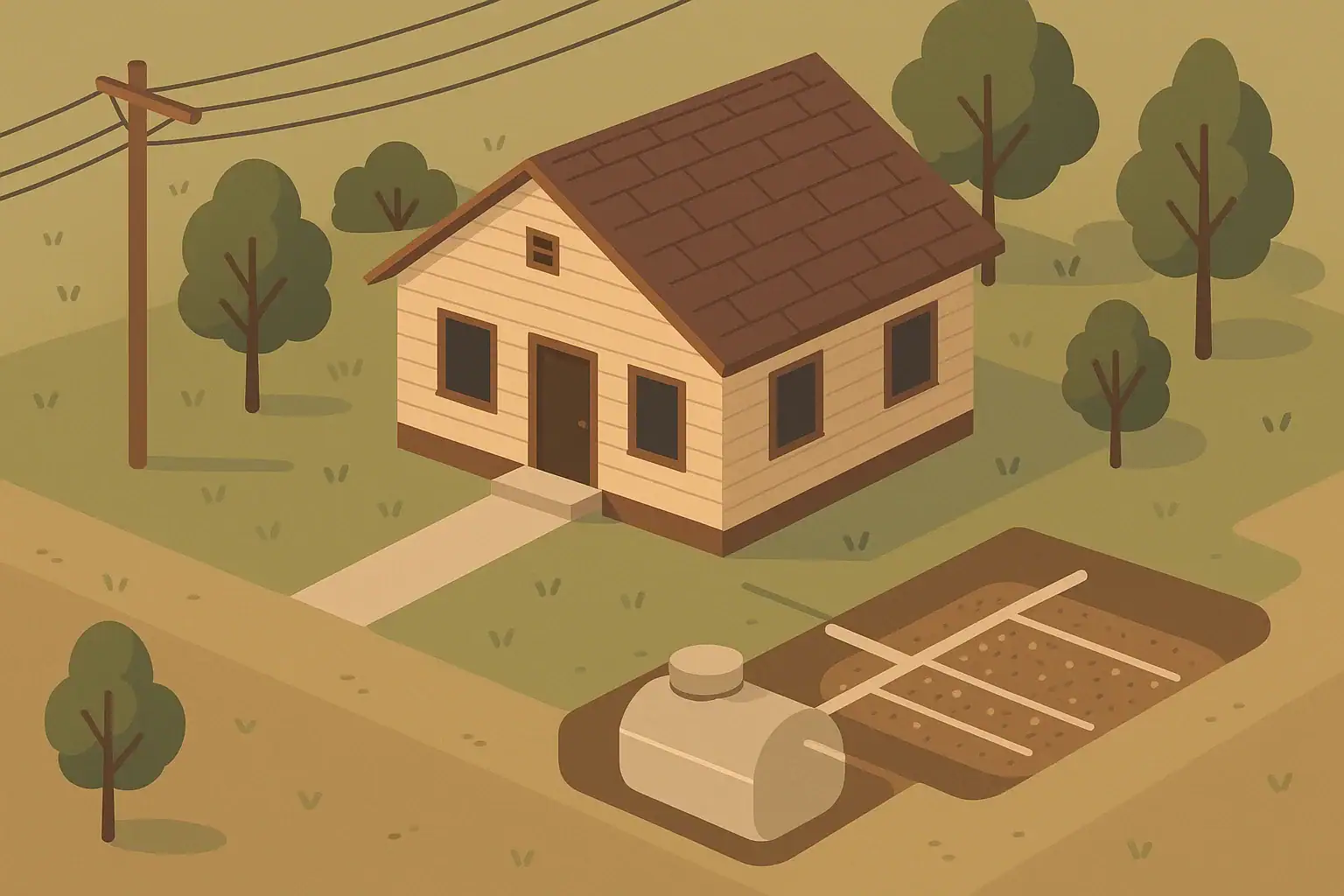
Can you use a septic system during a power outage?
In many homes, you can still flush toilets and use some water during a power outage, even with a septic system. The key question is whether any part of your system depends on electricity, such as a septic pump, grinder pump, or lift station.
If your septic system is fully gravity-fed, you can usually keep using toilets and water in moderation. If your system has a pump, you must treat it very carefully during an outage to avoid sewage backups or damage.
Because septic designs vary, local codes and your installer’s instructions should always come first. When in doubt, use less water and call a qualified septic professional or your local health department for guidance.
Step 1: Figure out what kind of septic system you have
Before an outage, it helps to know how your system works. If you are not sure, ask your installer, check your home records, or contact your local health or building department.
Common setups include:
- Gravity system: Wastewater flows from the house to the tank and out to the drain field by gravity only. No electrical parts in the septic system itself.
- Pump or lift station system: A pump moves wastewater from the tank to the drain field or from a lower level (like a basement bathroom) up to the main line.
- Grinder or ejector pump: Often used for basement bathrooms or where sewage must be pushed uphill.
- Advanced treatment unit: Some systems use aerators or other powered components to treat wastewater before it reaches the drain field.
Clues that you have a pump-based system include:
- A separate electrical breaker labeled for a septic pump or grinder pump.
- A control panel or alarm box near the tank or in the basement.
- A small separate tank (pump chamber) after the main septic tank.
Using toilets during a power outage
How you use toilets during an outage depends on whether your system relies on a pump.
If you have a gravity septic system
In a typical gravity system, toilets and drains can still work without power because wastewater flows downhill on its own.
To reduce the chance of overloading the tank and drain field while you may be home more than usual:
- Flush only when necessary (for example, after solid waste).
- Avoid long showers and unnecessary laundry or dishwashing.
- Spread out water use as much as possible.
If you notice slow drains, gurgling, or sewage odors, stop using water and contact a septic professional or your local health department.
If you have a septic pump, lift station, or grinder pump
When the power is out, your pump cannot move wastewater. However, the tank or pump chamber usually has some reserve capacity above the normal operating level.
That means you may be able to flush a limited number of times, but every flush fills that reserve space. Once it is full, sewage can back up into the house or surface outdoors.
During a power outage with a pump-based system:
- Use toilets as little as possible. Consider a temporary lined trash bag in a portable toilet or bucket for urine and, if needed, solid waste. Seal and dispose of bags according to local guidance once regular service is restored.
- Do not run large amounts of water (showers, laundry, dishwashers, or long sink use).
- Watch for alarms when power returns. Some systems will sound or flash if the water level is high.
For general emergency sanitation tips, the U.S. Centers for Disease Control and Prevention (CDC) offers guidance in its resource on sanitation and hygiene after disasters. Local rules for waste disposal may differ, so follow your local health department’s instructions if they conflict.
Using water safely when the power is out
Water use affects your septic system even if you are not flushing. Every gallon that goes down a drain ends up in the tank or pump chamber.
For gravity systems
You can usually:
- Wash hands as needed, using modest amounts of water.
- Take short showers instead of baths.
- Delay laundry and heavy dishwashing until power is stable.
Even with gravity systems, heavy water use during or right after an outage can stress the drain field, especially if the ground is saturated from storms.
For pump-based systems
With a pump, every bit of water you send down drains during an outage is stored in the tank or pump chamber until power returns.
To avoid overfilling:
- Limit water use to essentials like brief handwashing and minimal toothbrushing.
- Use hand sanitizer or disposable wipes for some cleaning tasks when appropriate.
- Post a simple note in bathrooms and at sinks reminding family members to conserve water.
If your home also relies on an electric well pump, your water supply may be limited during an outage. The U.S. Environmental Protection Agency (EPA) provides general information on private drinking water wells. Follow any boil water or usage advisories from your local water or health authorities.
What to do when power comes back on
When electricity returns, your septic pump or other components may start up automatically. A sudden surge of stored wastewater can stress the system.
Take these steps if your system has a pump or powered components:
- Listen and look for alarms. If a high-water alarm sounds or flashes, reduce water use and call your septic service provider.
- Check for obvious leaks or odors. Walk the area above the tank and drain field. If you see surfacing sewage, wet spots with strong odor, or hear unusual noises from the pump, contact a professional and keep people and pets away from the area.
- Bring water use back slowly. Start with normal handwashing and toilet flushing. Wait before running laundry or dishwashers so the system can catch up.
- Reset breakers only if you know what they control. If a septic or pump breaker is tripped and you do not know why, call a qualified electrician or septic technician before turning it back on.
If your home or yard was flooded, local or state health departments may issue specific instructions for septic systems. The EPA has general guidance on what to do with septic systems after a flood. Follow local directions if they differ.
Preparing your septic system for future outages
A little planning can reduce stress and the risk of damage during the next power loss.
- Know your system layout. Keep a simple sketch showing the tank, pump chamber (if any), drain field, and control panel location.
- Keep records handy. Save installation documents, maintenance reports, and any manufacturer instructions for pumps or treatment units.
- Service your system regularly. Routine inspection and pumping, as recommended by your local health department or installer, helps keep reserve capacity available.
- Talk with a professional about backup options. In some cases, a properly installed generator or battery backup may be appropriate for a septic or grinder pump. Follow the pump manufacturer’s instructions and all electrical and fuel safety rules.
- Plan for low-water living. Store some drinking water and supplies so you can cut back on water use without sacrificing basic hygiene.
If you use a portable generator to power any part of your home, including a well or septic pump, follow safety guidance from the U.S. Consumer Product Safety Commission on portable generator safety and carbon monoxide risks. Never run a generator indoors or in enclosed spaces.
When to call for help
Contact a qualified septic professional or your local health department if you notice:
- Sewage backing up into toilets, tubs, or floor drains.
- Strong sewage odors indoors or outdoors.
- Standing water or soggy areas over the tank or drain field that smell like sewage.
- Repeated tripping of the septic or pump breaker.
Do not enter septic tanks, pump chambers, or confined spaces. They can contain toxic gases and low oxygen levels that are immediately dangerous. Leave inspection and repair inside tanks or pits to trained professionals with proper equipment.
Frequently asked questions
Can I flush the toilet if the power is out and I have a septic pump?
You may be able to flush a few times because the tank or pump chamber usually has some reserve space. However, every flush fills that space, and once it is full, sewage can back up. Use toilets as little as possible until power is restored, and avoid other heavy water use.
Is it safe to use a generator to run my septic pump?
A properly sized and installed generator can sometimes power a septic or grinder pump, but it must be done according to the pump manufacturer’s instructions and electrical codes. Improper generator use can cause electrical hazards, equipment damage, or carbon monoxide poisoning. If you are unsure, consult a licensed electrician or septic professional, and follow official guidance on portable generator safety from the U.S. Consumer Product Safety Commission.
What should I do if sewage backs up during a power outage?
Stop using all water immediately and keep people and pets away from affected areas. If the backup is minor and contained, you may be able to clean it following public health guidance, but larger or repeated backups should be handled by professionals. Your local health department and the CDC’s information on sewage-contaminated floodwater and standing water can help you understand basic precautions. Follow local instructions if they differ.
Do I need to pump my septic tank after every long power outage?
Not usually. A power outage by itself does not mean the tank must be pumped. Pumping is based on tank size, household use, and inspection findings. However, if your system overflowed, backed up, or was flooded, a septic professional or local health department can advise whether pumping or repairs are needed.
- Simple checklists and realistic planning
- Water, power, lighting, and pantry basics
- Family plans (kids, pets, seniors) and seasonal prep
Affiliate disclosure
As an Amazon Associate, we earn from qualifying purchases. Some links on this site may be affiliate links. If you buy through these links, we may earn a small commission at no extra cost to you. This helps support our content. Learn more.