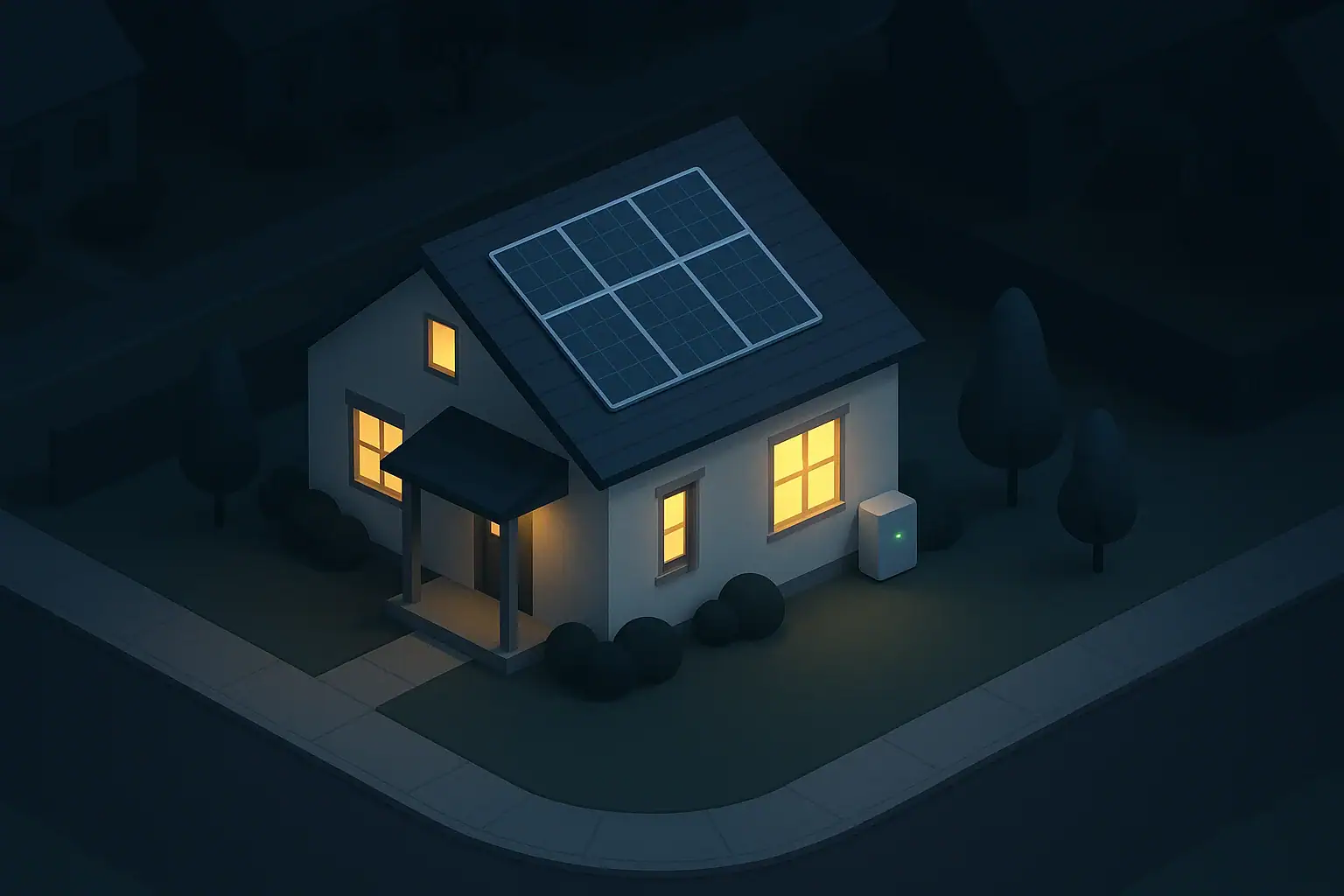
Do solar panels work during a power outage?
Most home solar systems shut off automatically during a power outage, even on a sunny day. The panels are still making electricity, but your standard grid-tied inverter turns off so it does not send power back onto the utility lines.
This automatic shutoff is a safety requirement. It protects utility workers who may be repairing lines and expects them to be de-energized. Without this protection, your home could accidentally feed power into damaged lines.
To keep anything running during an outage, you need extra equipment beyond basic rooftop panels. That usually means a battery system, a special “islanding” or backup-capable inverter, or a separate generator with a proper transfer switch.
Why grid-tied solar shuts off when the grid goes down
Most homes in the U.S. have a grid-tied solar system. In normal operation, your panels feed an inverter, which converts DC power from the panels into AC power that matches the grid. Your home uses what it needs, and extra power flows back to the utility.
When the grid fails, the inverter detects the loss of grid power and stops producing AC power. This is called anti-islanding protection. It is required by electrical codes and utility rules.
In simple terms:
- Panels alone cannot safely power your house during an outage.
- The inverter is the gatekeeper. If it senses the grid is down, it shuts off.
- No backup equipment usually means your home is dark like everyone else’s.
So if you have a typical grid-tied solar system and nothing else, you should plan as if you do not have power during an outage.
What changes when you add a battery backup?
A home battery system can let your solar panels keep working during an outage, but only if your system is designed for backup from the start (or properly upgraded).
In a solar-plus-battery setup with backup capability, the system can:
- Disconnect from the grid automatically when the power fails.
- Create its own mini-grid for your home using the battery and inverter.
- Use solar panels to recharge the battery while the grid is still down, within the limits of sun and system size.
During an outage, your home runs on the battery. The solar panels help refill it during the day, but they still pass through the inverter and follow its limits and safety rules.
What a battery can realistically power
Most residential batteries are sized to cover essential loads, not your entire home as if nothing happened. Common essentials include:
- Refrigerator and freezer
- Some lights and outlets
- Internet modem/router and phone charging
- Gas furnace blower or small mini-split (if the system is designed for it)
- Garage door opener or a few medical devices, if planned in advance
High-demand appliances can drain a battery quickly. Many systems are not designed to run:
- Central air conditioning for long periods
- Electric resistance heat or large electric water heaters
- Electric ranges or clothes dryers
- Large well pumps, unless the system is sized for them
Ask your installer or a licensed electrician which circuits are on your “backup” or “essential” panel and how long the battery is expected to last under different loads. In a long outage, you may need to ration power: keep only the most important items on and avoid unnecessary use.
Solar with no battery: are there any backup options?
If you have solar but no battery, you usually cannot use your panels during an outage. There are a few exceptions, but they are specialized and must be built into the system:
- Inverters with a dedicated daytime outlet: Some inverters offer a special outlet that can provide limited power when the sun is shining and the grid is down. This outlet is separate from your home wiring and has a power limit. You plug devices directly into it during an outage.
- Hybrid inverters ready for future batteries: These can be upgraded later with a battery and backup panel, but they still need that extra equipment to provide power during an outage.
If your system does not have these features, treat it as grid-only. For outage planning, focus on other backups like portable power stations, generators, or non-electric options.
Solar plus generator: how they can work together safely
Some homes use both solar and a fuel-powered generator for backup. This can work, but it must be designed and wired correctly to avoid dangerous situations or equipment damage.
Key points for safety and planning:
- Never backfeed a generator through a wall outlet or improvised connection. This can energize utility lines and seriously endanger workers and neighbors. The U.S. Consumer Product Safety Commission warns against this practice and recommends using a transfer switch or interlock installed by a qualified electrician. See their guidance on portable generator safety from the Consumer Product Safety Commission.
- Use a transfer switch or interlock so your home is either on the grid, on the generator, or on your solar/battery system, but not mixed in unsafe ways.
- Coordinate controls so the generator and solar/battery system do not fight each other. This usually requires a licensed electrician familiar with both systems.
- Follow carbon monoxide safety if you use a fuel generator. Operate it outdoors, far from windows, doors, and vents, and use working CO alarms as recommended by the Centers for Disease Control and Prevention’s carbon monoxide safety guidance.
If you already have solar and are considering a generator, or the other way around, talk with a licensed electrician and your local building department about what is allowed and what permits are needed.
Planning your home backup around solar
When you think about outages, it helps to separate your planning into short, medium, and longer events.
Short outages (minutes to a few hours)
For most short outages, you do not need your solar system to do anything special. Focus on:
- Flashlights or battery lanterns in known locations
- Charged power banks for phones
- Knowing how to manually open your garage door
- Keeping refrigerator and freezer doors closed
Medium outages (several hours to a day or two)
This is where a battery system or small generator can make a big difference. With solar and a battery designed for backup, you may be able to:
- Keep food cold
- Run a few lights and charge devices
- Operate a gas furnace blower or small heat pump for limited hours
If you do not have a battery, consider:
- Coolers and ice for food safety
- Non-perishable foods that do not require cooking
- Battery-powered fans or blankets and layers, depending on season
The U.S. Department of Agriculture offers guidance on food safety during power outages from USDA, including when to discard refrigerated and frozen items.
Longer outages (multiple days)
For longer outages, solar with a well-sized battery can help, but it is still limited by weather and system capacity. Cloudy days will reduce how much energy you can store. You may need to:
- Prioritize medical devices, refrigeration, and communication over comfort loads.
- Limit use of high-wattage devices like microwaves, toasters, and hair dryers.
- Have non-electric backups for cooking, within local fire and safety rules.
For any open-flame cooking or heating, follow local fire codes and manufacturer instructions, and consider guidance from Ready.gov’s power outage safety recommendations. Never use grills, camp stoves, or outdoor heaters inside your home or garage.
Questions to ask before you rely on solar for backup
Before counting on your solar system in an emergency, get clear answers to these questions from your installer or a licensed electrician:
- Does my current system provide any power during an outage? If yes, how much, to what outlets or circuits, and under what conditions?
- Is there a dedicated backup or essential loads panel? Which circuits are on it?
- Can my system be upgraded with a battery for backup? What additional hardware, permits, and inspections are required?
- Are there any limits from my utility or local code on how backup systems must operate?
- What maintenance or testing is recommended so the backup features work when needed?
Also check your local building department and utility for any specific rules about solar, batteries, and generators in your area. Local requirements and safety codes take priority over general advice.
Frequently asked questions
Can I plug appliances directly into my solar panels during an outage?
No. Standard rooftop solar panels produce DC electricity that must go through an inverter and proper wiring to be usable. Plugging appliances directly into panels is unsafe and can damage equipment. During an outage, your inverter normally shuts down, so you need a system specifically designed for backup, such as a battery with an appropriate inverter or a dedicated emergency outlet built into the system.
Will solar panels keep my refrigerator running in a blackout?
Only if your solar system is set up for backup. Basic grid-tied solar will not power your refrigerator during a blackout. With a battery-backed system and an essential loads panel, the refrigerator is often one of the first circuits people choose to keep powered. How long it can run depends on your battery size, how efficient the refrigerator is, and what else you are powering.
Is it safe to work on my solar system during a power outage?
Solar equipment can remain energized even when the grid is down. Panels in daylight produce voltage whether or not the inverter is running. Do not open equipment, move wiring, or attempt repairs yourself during an outage. If you suspect damage or a hazard, stay clear and contact a licensed electrician or your solar installer. In emergencies involving fire, shock risk, or downed lines, follow instructions from local emergency services and your utility.
Do I need permits to add a battery or generator to my solar system?
In many U.S. jurisdictions, adding a battery or generator requires electrical permits and inspections, and sometimes utility approval. This helps ensure the system is wired safely and will not endanger workers or neighbors. Check with your local building department and utility before starting any work, and use a qualified professional for design and installation.
- Simple checklists and realistic planning
- Water, power, lighting, and pantry basics
- Family plans (kids, pets, seniors) and seasonal prep
Affiliate disclosure
As an Amazon Associate, we earn from qualifying purchases. Some links on this site may be affiliate links. If you buy through these links, we may earn a small commission at no extra cost to you. This helps support our content. Learn more.