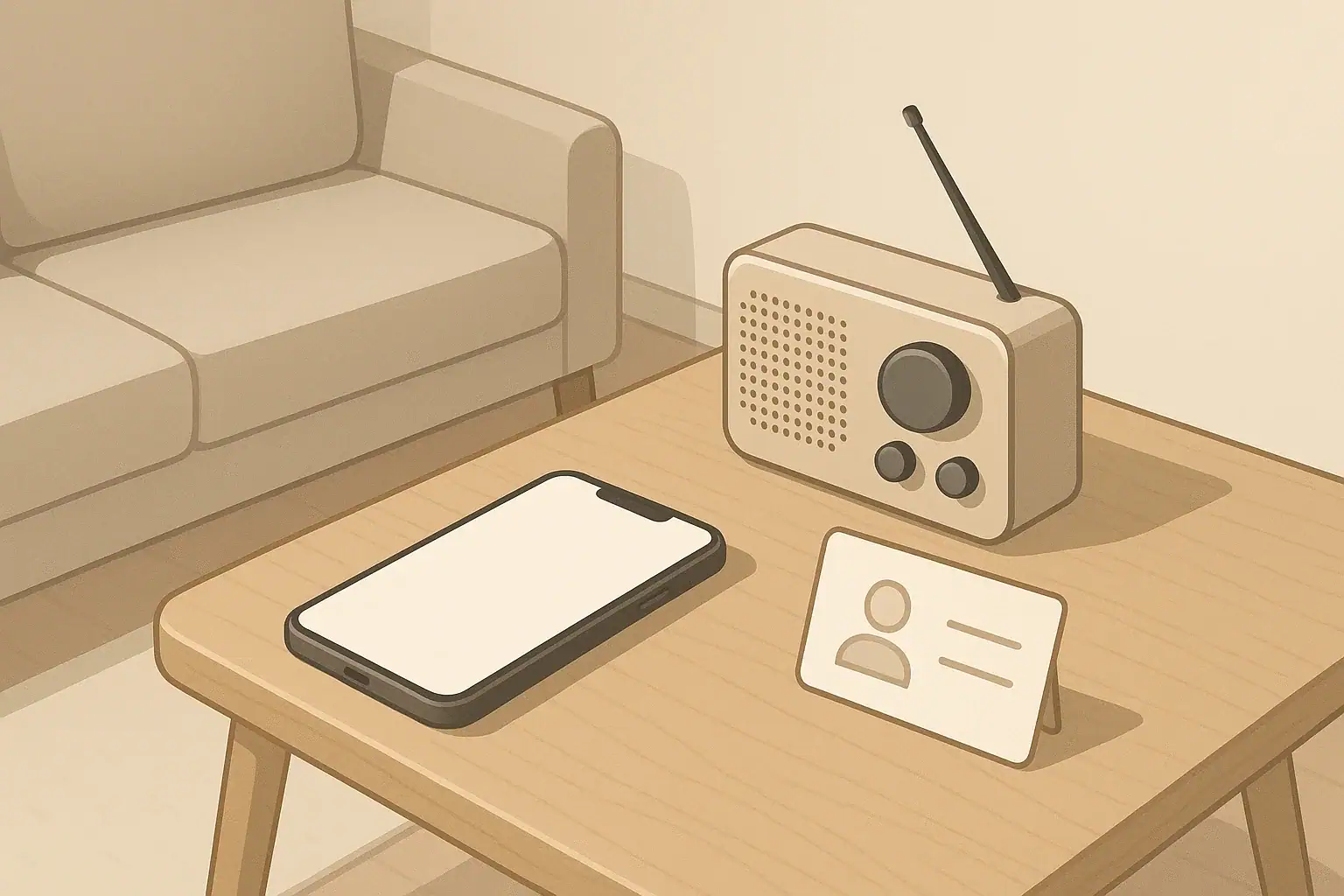
Why Emergency Communication Planning Matters for Deaf and Hard-of-Hearing Households
Emergencies are stressful for everyone, but they can be especially confusing and isolating if you are deaf or hard-of-hearing and information is shared mainly by sound. Sirens, public address announcements, and door knocks may not be accessible. A clear communication plan closes those gaps so you are not relying on luck or last-minute improvising.
This type of planning is not about worst-case scenarios. It is about having simple, realistic steps for short-term events like weather warnings, power outages, local fires, or evacuations. A thoughtful plan helps you and the people who support you know how to share information quickly and clearly, even when power or cell service is limited.
Every household is different. Some people use American Sign Language (ASL), some use spoken English with hearing aids or cochlear implants, some rely on captioning or text, and many use a mix. Your communication plan should match your actual daily communication style and living situation, whether you live alone, with family, or with roommates.
Step 1: Understand Your Household’s Communication Needs
Start by looking at who lives in your home and how each person prefers to communicate. This helps you choose tools and backup methods that actually work in real life, not just in theory.
Identify primary communication modes
List how each person communicates most comfortably in everyday situations. For example:
- ASL or other signed languages
- Spoken communication with hearing aids or cochlear implants
- Text-based: texting, messaging apps, email, written notes
- Visual communication: lip-reading, gesture, pictures
- Vibration-based alerts for phones or devices
Also note any support needs, such as requiring an interpreter, needing time to put on hearing devices, or needing strong lighting for lip-reading or sign.
Consider where you live and your typical day
Your plan will look different if you live in an apartment versus a single-family home, in a city versus a rural area, or if you spend much of the day away from home. Think about:
- Home layout: Can you see the front door? Are bedrooms far from the main entrance?
- Building type: Do you rely on building fire alarms only, or do you have your own smoke and carbon monoxide alarms?
- Daily routine: Work hours, school schedules, and when people are usually home or away.
- Technology use: Do you keep your phone near you? Do you often turn it to silent or airplane mode?
This overview will guide your choices for alerts, equipment, and backup communication paths.
Example values for illustration.
| Task | Why it matters | Notes |
|---|---|---|
| List each person’s preferred communication mode | Prevents confusion during stress | Include signing, text, speech, or mix |
| Document assistive devices used | Ensures spare batteries and chargers are ready | Hearing aids, cochlear implants, visual alert systems |
| Map typical locations during the day | Supports realistic contact and meetup plans | Home, work, school, frequent errands |
| Note visual and vibration alert options at home | Helps catch alarms and messages quickly | Lights, bed shakers, vibrating phones |
| List people outside the home who can sign or text | Creates a backup communication network | Neighbors, coworkers, nearby family or friends |
| Record any language or interpretation needs | Supports clear communication with responders | ASL, other signed language, or captioning |
Step 2: Set Up Accessible Alerts for Common Emergencies
Next, decide how you will notice that something is wrong. For hearing households, this is often automatic: they hear a siren, a knock, or a loudspeaker. For deaf or hard-of-hearing households, you may need to build a combination of visual and vibration alerts.
Alerts inside the home
Focus on how you will notice:
- Smoke or fire alarms
- Carbon monoxide alarms
- Weather warnings and evacuation notices
- Someone at the door or in the hallway
Common strategies include:
- Visual alerts: Alarms or systems that flash lights in multiple rooms.
- Vibration alerts: Bed shakers, vibrating devices, or vibration features on phones.
- Phone-based notifications: Government alerts, messaging apps, and local notification systems, if available.
If you live in a shared building, learn how fire alarms work and whether your unit has any accessible add-ons. You can also talk with property managers about visual or vibration alert options for your unit.
Staying informed about local conditions
In many emergencies, information changes hour by hour. Consider:
- Enrolling in local text-based emergency alert programs, if offered.
- Using accessible weather and alert apps with strong visual notifications.
- Having a battery-powered or hand-crank radio if you have someone in the household or support circle who can listen and then sign or text you the important parts.
If you rely on captions or real-time text for updates, think about what happens in a power outage and what low-tech backup you would use.
Step 3: Build Your Emergency Contact List and Communication Tree
An emergency contact list is more than names and numbers. For deaf or hard-of-hearing households, it should also show who can communicate in your preferred language or method and who can help bridge communication with others if needed.
Who to include on your list
Consider organizing contact information into groups:
- Household members: Everyone who lives with you, plus their work or school contact options if appropriate.
- Nearby support: Neighbors, friends, roommates, or family within walking or short driving distance who can check on you or relay messages.
- Out-of-area contact: Someone who lives in another city or state who can act as a central contact if local phone networks are overloaded.
- Medical or support services: Clinics, interpreters or interpreting services you regularly use, and any case managers.
For each contact, note:
- Best way to reach them (text, call, video relay, messaging app)
- Languages they use (for example, ASL and English)
- Whether they can help share information with emergency responders if needed
Create a simple communication tree
A communication tree is a planned order of who contacts whom. This avoids everyone trying the same person at once or missing someone entirely. For example:
- You text your out-of-area contact to say you are safe.
- The out-of-area contact updates other family members.
- A nearby friend agrees to check on you in person if you do not respond to messages within a certain time.
Keep the tree short and easy to remember. The goal is to know who you will contact first, and who will contact you if something happens in your area.
Step 4: Plan for Power Outages and Device Dependence
Many deaf or hard-of-hearing people rely heavily on powered devices: hearing aids, cochlear implant processors, phones, tablets, visual alert systems, and internet-based messaging. During a power outage, these tools may not work for long without planning.
Prioritize essential devices
List devices that are critical for communication and safety, such as:
- Hearing aids or cochlear implant processors and their chargers
- Phones and tablets used for text, video calls, or relay services
- Visual alert systems for alarms
- Portable lights needed to see signing or lip-reading clearly
Estimate roughly how long each device usually runs on a charge under normal use. These are only examples, but some households find their phone batteries last about a day, while hearing device batteries may last anywhere from part of a day to several days depending on the type and use.
Simple backup power options
Think about what fits your space and budget. Common options include:
- Extra disposable batteries for hearing devices, flashlights, and small radios.
- Rechargeable power banks for phones and small electronics.
- Rechargeable lanterns instead of candles for safer lighting.
- Solar chargers for small devices if you have access to sunlight.
Use labels or color-coding to know which power bank is for which device, and keep charging cables together in one pouch. Try to keep everything at least partly charged during severe weather seasons in your area.
Low-tech communication backups
If power and data services are down or weak, digital communication may be limited. Plan for low-tech backups such as:
- Paper notepads and pens for written communication.
- Printed phrase cards for basic messages like “I am deaf,” “I use ASL,” or “Please write information.”
- Simple picture boards, especially helpful for children, seniors, or people who use limited written language.
Store these in your go-bag or emergency drawer so they are easy to find in the dark.
Step 5: Make Communication Visible During an Emergency
In a crisis, responders, neighbors, and others may not realize you are deaf or hard-of-hearing. Clear, calm visual communication can make interactions smoother and faster.
Prepare basic information cards
Consider preparing a small set of information cards you can point to or hand to others. Examples of what you might include:
- “I am deaf” or “I am hard-of-hearing.”
- Your preferred communication method: “I use ASL,” “Please text,” or “Please write.”
- Any mobility or support needs that affect evacuation.
- Name and phone numbers of your main contacts.
Keep copies in your wallet, emergency kit, and by the bed. For some people, larger-print versions are easier to use in low light.
Lighting for signing and lip-reading
Good lighting is not only about safety; it is a communication tool. During a power outage or nighttime emergency, it can be hard to see someone’s hands or face. Plan for:
- At least one lantern or broad-beam light in each main room where you might gather.
- Lights placed so they shine on faces and hands instead of directly into eyes.
- Small, hands-free lights (such as clip-on or head-worn lights) that allow you to sign or write while your path is lit.
Test different setups in the dark to see what works best for your space.
Step 6: Coordinate with Neighbors, Building Managers, and Local Services
You do not need to handle emergencies entirely alone. A few quiet conversations in advance can make a big difference during an actual event.
Talk with neighbors and building staff
If you feel comfortable doing so, let trusted neighbors, roommates, or building managers know that you are deaf or hard-of-hearing and share a few key details:
- Best way to get your attention in an emergency (for example, knocking in a particular way, using lights, or texting you).
- Where your apartment or room is located in the building.
- Basic evacuation needs, such as needing extra time for stairs or needing to collect devices before leaving.
You can also ask if the building has any written emergency procedures and how fire alarms or other systems connect to visual alerts.
Know local resources
Depending on your area, there may be services that can help you prepare or respond to emergencies, such as:
- Community organizations serving deaf and hard-of-hearing people.
- Local emergency management offices that offer accessible alerts or registration options for people with access and functional needs.
- Interpreter or relay services you already use, and how they work during widespread outages.
Keep basic information about these services in your emergency folder so you do not have to search for it during a stressful moment.
Step 7: Practice, Review, and Involve Everyone in the Household
An emergency communication plan works best when everyone in the home understands it and has practiced at least a few steps. Practice does not need to be intense or frightening. It can be a simple, calm walkthrough.
Do short practice drills
Every few months, choose one scenario and walk through what each person would do. For example:
- Nighttime power outage: Practice finding flashlights, turning on visual alerts, and sending a quick text or message to your out-of-area contact.
- Local wildfire smoke or weather warning: Practice checking alerts, closing windows, and confirming where to meet if you need to leave.
- Building fire alarm: Practice how neighbors or roommates will alert you, how you will grab your go-bag, and where you will exit.
Focus on keeping the steps simple and repeatable. Adjust the plan based on what you learn each time.
Include children, seniors, and pets in planning
If your household includes children, older adults, or pets, think through their specific communication needs:
- Children: Use age-appropriate language, pictures, and simple rules like “If the lights flash, come to the living room.” Practice signing or pointing to key items they might need to bring, such as a comfort item.
- Seniors: Make sure devices are easy to reach and operate. Large-print instructions and clear light switches can help.
- Pets: Plan how you will communicate about pets with neighbors or responders if they need to help you evacuate with animals.
Review your plan at least once a year and after any big life changes like moving, changing jobs, or adding new devices to your home.
Example values for illustration.
| Who to contact | Method | Fallback | Meeting point note |
|---|---|---|---|
| Out-of-area relative | Text message | Email if data works | No meeting; they inform others you are safe |
| Nearby friend who signs | Messaging app | In-person knock with agreed light signal | Apartment entrance or building lobby |
| Neighbor in same hallway | Door knock and light flashing | Written note slipped under door | Shared stairwell landing |
| Household member at work | Text then messaging app | Contact their workplace main line | Pre-agreed spot outside building or nearby park |
| Interpreter or support service | Relay or messaging platform | Schedule later call when stable | No physical meeting; remote support only |
| Local emergency services | Regional text or relay option if available | Written note shown in person | Front of building or curbside pickup point |
Putting Your Plan in Writing
Once you have thought through alerts, contacts, power, and low-tech backups, take time to write your communication plan in clear, simple language. Keep copies:
- Printed and stored in an easy-to-reach location in your home.
- Saved on your phone or tablet, if you use one.
- Shared with key contacts like neighbors, nearby friends, and your out-of-area contact.
Your plan does not need to be perfect or complicated. A short, realistic plan that you actually update and practice will serve you better than a long document you never use. As your life, technology, and household members change, adjust your plan so it continues to reflect how you really communicate every day.
Authoritative sources
Safety recommendations can change. Confirm critical details with current official guidance and local authorities.
- CDC: Carbon Monoxide Poisoning Basics
- U.S. CPSC: Battery Safety
- CDC: Guidelines for Cleaning Safely After a Disaster
Frequently asked questions
How can I be sure I receive official emergency alerts if I am deaf or hard of hearing?
Enroll in local text-based alert programs and use accessible alert apps that provide strong visual notifications and persistent banners. Also register with your local emergency management if they offer a registry for people with access and functional needs so they can provide appropriate accommodations. Keep an out-of-area contact who can receive voice updates and relay critical information to you by text or sign.
What visual or vibration alert options work best for an apartment unit?
Strobe or flashing-light adapters for smoke and CO alarms, bed shakers, and vibrating phone accessories are common and effective choices. Smart lighting or visual alert modules placed where you sleep and in main living areas help ensure you see alarms even if you are in another room. Talk with your building manager about approved installation options for shared alarms and consider portable devices if building-wide changes aren’t possible.
How do I involve neighbors and building staff in my emergency communication plan without causing awkwardness?
Have a short, direct conversation or leave a written note explaining how best to get your attention in an emergency and where your unit is located. Offer one or two simple actions they can take, such as flashing a hallway light or sending a quick text, so responsibilities are clear without requiring a big commitment. Share copies of your basic information card so they know how to interact with first responders if needed.
What should I pack in a go-bag for someone who is deaf or hard of hearing?
Include extra batteries for hearing devices, chargers and a labeled power bank for phones or tablets, a portable lantern, and printed communication cards that state your preferred method of communication. Also pack a notepad and pen, copies of your emergency contact list, and any medical or device manuals that emergency personnel might need. Keep these items in an easy-to-grab pouch so you can collect them quickly during an evacuation.
What is the best way to communicate with emergency responders if I am deaf during an evacuation?
Carry a clear information card that states “I am deaf” and your preferred communication method, and show it to responders or shelter staff on arrival. Where available, use regional text-to-emergency-number services or ask dispatch to connect an interpreter or relay service; otherwise be prepared to communicate with writing or simple pictograms. If you have critical medical needs, include that information on the card so responders can act quickly.
- Simple checklists and realistic planning
- Water, power, lighting, and pantry basics
- Family plans (kids, pets, seniors) and seasonal prep
Affiliate disclosure
As an Amazon Associate, we earn from qualifying purchases. Some links on this site may be affiliate links. If you buy through these links, we may earn a small commission at no extra cost to you. This helps support our content. Learn more.